Abstract
Nutritional interventions play a key role in enhancing postoperative recovery through anti-inflammatory, immunoregulatory, and metabolic effects. However, evidence across different nutrients and surgical settings remains heterogeneous. This review aimed to summarize both the molecular mechanisms and clinical outcomes of nutritional strategies supporting recovery after surgery. Relevant studies were identified through systematic searches of the PubMed, Web of Science, and Scopus databases from January 2000 to February 2025, including randomized controlled trials (RCTs), systematic reviews, and meta-analyses focusing on enteral nutrition, parenteral nutrition, and immunonutrition. Evidence from more than 50 clinical studies indicates that enteral immunonutrition (EIN) reduces postoperative infectious complications by approx. 30% and shortens hospital stay by 2–3 days. Early enteral feeding within 24–48 h improves gastrointestinal recovery and lowers overall morbidity. Omega-3-enriched nutrition modulates inflammatory and immune responses without increasing the risk of adverse events. Emerging technologies, such as nutrigenomics and digital monitoring, further enable individualized nutritional management. Nutritional interventions represent a promising nonpharmacological approach to optimizing postoperative recovery by integrating molecular insights with clinical practice. Standardization of protocols and long-term evaluation remain priorities for advancing evidence-based, personalized nutrition within Enhanced Recovery After Surgery (ERAS)-aligned surgical care.
Key words: postoperative care, nutritional support, Enhanced Recovery After Surgery (ERAS), immunonutrition, enteral nutrition
Introduction
Postoperative recovery is a critical area in modern medicine that significantly impacts patient outcomes and quality of life (QoL). However, surgery induces a series of complex physiological and metabolic changes, including an acute inflammatory response, immunosuppression, delayed tissue repair, and disorders of energy metabolism.1, 2 These factors collectively increase the risk of postoperative complications, such as infections, poor wound healing, and muscle atrophy, thereby delaying the recovery process.3, 4, 5 Therefore, identifying effective interventions to promote postoperative recovery has become a key focus of clinical research. In recent years, nutritional interventions have gained attention as an area of active research due to their noninvasive nature, cost-effectiveness, and multi-target effects.6, 7, 8
Studies have demonstrated that specific nutrients, such as ω-3 fatty acids, glutamine, and vitamin D, play significant roles in suppressing postoperative inflammation, enhancing immune function, and promoting tissue repair.9 For instance, ω-3 fatty acids alleviate inflammatory responses by regulating the NF-κB (nuclear factor kappa-light-chain-enhancer of activated B cells) signaling pathway,10, 11 while glutamine has been shown to enhance T-cell activity and mitigate postoperative immunosuppression.12 These molecular mechanisms provide a biological rationale for integrating nutritional strategies into perioperative management frameworks and guidelines, such as Enhanced Recovery After Surgery (ERAS) protocols and the European Society for Clinical Nutrition and Metabolism (ESPEN) guidelines. Moreover, an optimized combination of enteral nutrition (EN) and parenteral nutrition (PN) has been shown to significantly reduce postoperative complications.13 Despite the increasing number of related studies, notable gaps remain in our understanding of the specific molecular mechanisms, individual nutritional requirements, and standardized clinical intervention protocols. In clinical practice, nutritional interventions have been increasingly integrated into perioperative management for various surgical populations, including patients undergoing gastrointestinal, hepatobiliary, and orthopedic procedures. The use of nutritional support within ERAS and ESPEN guideline frameworks has demonstrated measurable benefits in reducing complications, shortening hospital stays, and improving functional recovery. These frameworks emphasize early enteral feeding, immunonutrition, and metabolic optimization as essential components of postoperative care. Incorporating these clinical perspectives provides a practical foundation for understanding how molecular mechanisms translate into real-world recovery outcomes.
At present, the role of nutritional interventions in postoperative recovery lacks a comprehensive theoretical framework. On the one hand, the influence of different types of surgery and individual patient variability on nutritional needs requires further exploration. On the other hand, the precise pathways through which nutritional interventions regulate inflammation, immunity, and tissue repair at the molecular level remain inadequately understood. Additionally, many clinical studies lack long-term follow-up data, making it difficult to evaluate the long-term effects of nutritional interventions on recovery and QoL. Therefore, there is an urgent need to systematically integrate existing research findings to clarify the specific mechanisms and optimize nutritional intervention strategies.
Objectives
This work is a comprehensive narrative review that integrates molecular and clinical evidence on perioperative nutritional interventions, with the aim of informing clinical decision-making regarding the timing of EN and PN, the role of immunonutrition, and the use of ω-3-enriched formulas. First, it explores the molecular mechanisms by which nutritional interventions modulate inflammation, immune function, and tissue repair. Second, it reviews the clinical applications of nutritional interventions across various postoperative recovery contexts. Finally, it analyzes research challenges and future directions in this field, providing a scientific basis for optimizing postoperative recovery strategies.
Materials and methods
This review was conducted as a comprehensive narrative literature review. Relevant studies were identified through systematic searches of the PubMed, Web of Science, and Scopus databases for articles published between January 2000 and February 2025. The search strategy included combinations of the following terms: “postoperative recovery,” “nutritional intervention,” “enteral nutrition,” “parenteral nutrition,” “immunonutrition,” “ω-3 fatty acids,” and “Enhanced Recovery After Surgery.”
Original research articles, randomized controlled trials (RCTs), systematic reviews, and meta-analyses focusing on the effects of perioperative nutritional interventions on postoperative outcomes were included. Non-English-language articles, animal studies, case reports, and conference abstracts were excluded. Each study was evaluated for methodological quality and relevance to clinical practice, and the findings were synthesized narratively according to the phase of care: preoperative, postoperative, and recovery.
Molecular mechanisms of nutritional interventions in postoperative recovery
Regulation of postoperative inflammatory responses by nutritional interventions
Control of acute postoperative inflammation
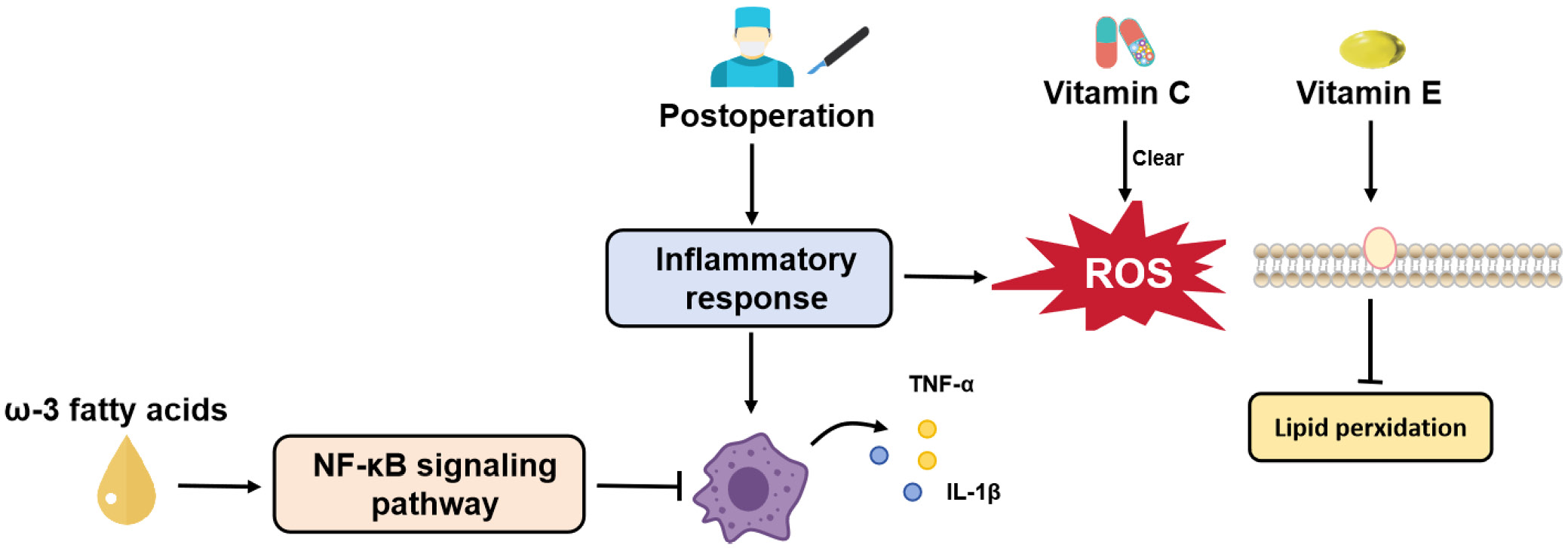
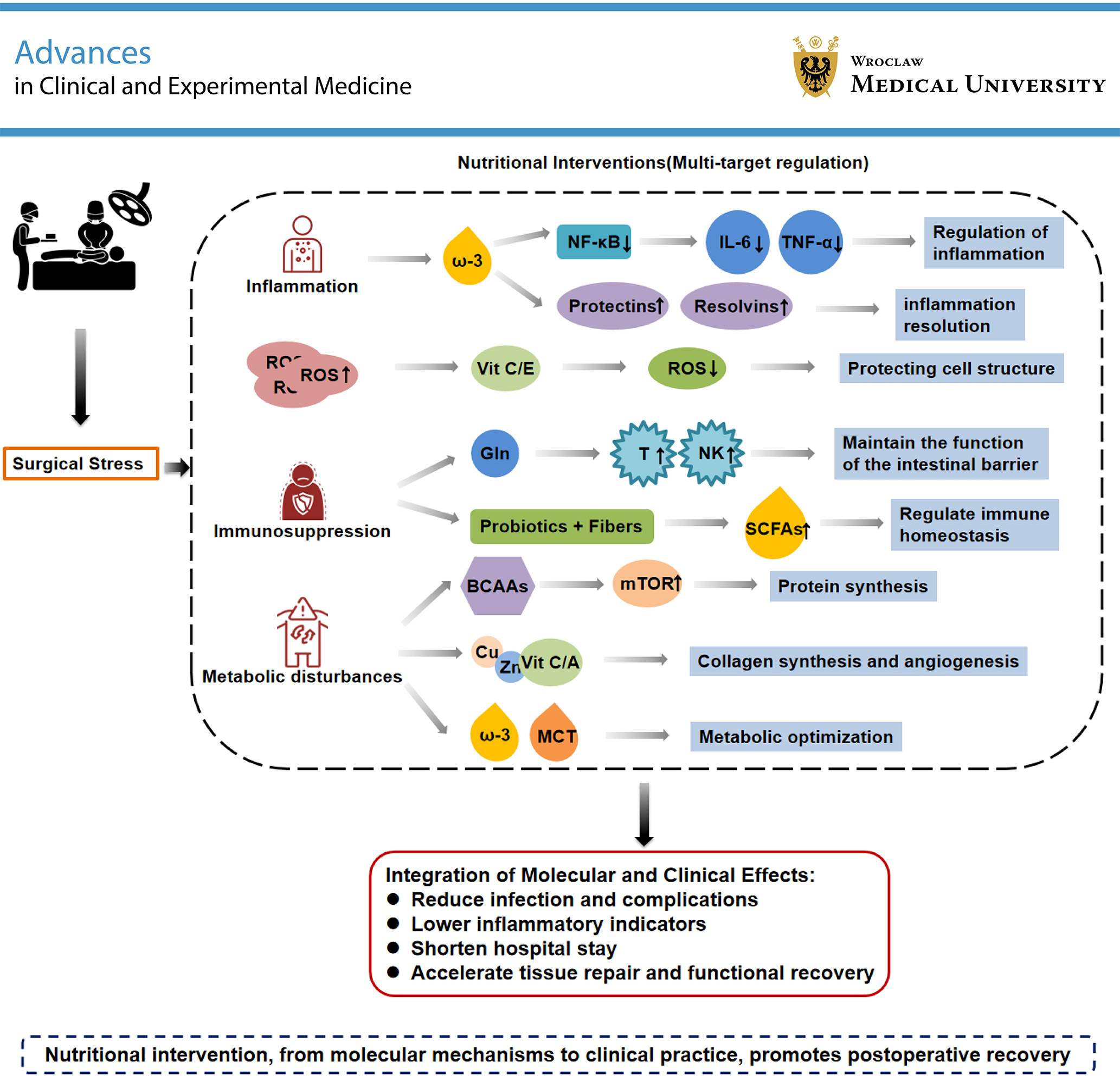
Postoperative inflammation is both a physiological response to surgical trauma and a critical phase of tissue repair.14 However, excessive or prolonged inflammation may cause secondary tissue damage, delay functional recovery, and contribute to postoperative complications. Research suggests that nutritional interventions can regulate postoperative inflammation at the molecular level, thereby mitigating its adverse effects.15 Among these interventions, ω-3 fatty acids, a group of polyunsaturated fatty acids with anti-inflammatory properties, inhibit the production of proinflammatory cytokines, such as interleukin-6 (IL-6) and tumor necrosis factor alpha (TNF-α), by modulating the NF-κB signaling pathway, thereby alleviating the inflammatory response. Additionally, ω-3 fatty acids can be converted into specialized lipid mediators, such as resolvins and protectins, which promote the resolution of inflammation and reduce inflammation-induced tissue damage.16, 17 These mechanisms provide a theoretical basis for the nonpharmacological management of postoperative inflammation.
Alleviation of oxidative stress
Surgical trauma is often accompanied by increased oxidative stress, characterized by a marked increase in reactive oxygen species (ROS) production.18 Excessive ROS can compromise the integrity of cell membranes and cause oxidative damage to proteins and DNA, thereby exacerbating postoperative tissue injury and functional impairment.19 Therefore, controlling the level of oxidative stress is a critical step in promoting postoperative recovery. Antioxidants have been shown to exert significant protective effects by reducing oxidative stress. For example, vitamin C, a water-soluble antioxidant, directly scavenges ROS, prevents the propagation of free-radical chain reactions, and protects cells from oxidative damage.20 Vitamin E, a fat-soluble antioxidant, is incorporated into cell membranes and stabilizes the lipid bilayer, thereby preventing lipid peroxidation.21 Furthermore, the synergistic action of these 2 vitamins can enhance antioxidant capacity and stabilize the postoperative tissue microenvironment. A recent study by Castillo et al.22 highlighted that the combined use of antioxidants may have a more pronounced effect on alleviating postoperative oxidative stress, offering new avenues for developing refined nutritional intervention strategies (Figure 1).
Modulation of postoperative immune function by nutritional interventions improvement of postoperative immunosuppression
The physiological stress response triggered by surgery often leads to an immunosuppressive state, particularly in the early postoperative phase. This immunosuppression not only reduces the body’s ability to combat infection but also increases the risk of postoperative complications, such as sepsis and wound infections. Nutritional intervention is regarded as a potentially effective strategy for addressing this issue. Glutamine, the most abundant free amino acid in the human body, plays a crucial role in maintaining normal immune function.23, 24 Studies have shown that postoperative glutamine supplementation significantly enhances T-cell proliferation and increases the activity of natural killer (NK) cells.25 These effects are particularly important during postoperative recovery, as T cells and NK cells are essential for defense against pathogenic infections. Additionally, glutamine promotes repair of the intestinal mucosal barrier, indirectly improving systemic immune function and reducing the incidence of postoperative bacterial translocation.26, 27 These findings suggest that glutamine is a multifunctional immunonutrient with substantial benefits for postoperative recovery.
Gut microbiota regulation and immune recovery
Surgical stress and postoperative antibiotic use often disrupt the balance of the gut microbiota, resulting in a reduction in beneficial bacteria, such as Lactobacillus and Bifidobacterium, and overgrowth of opportunistic pathogens.28 Dysbiosis of the gut microbiota may further suppress host immune function and increase the risk of postoperative infections. Therefore, restoring gut microbiota balance through nutritional interventions is a critical strategy for promoting immune recovery after surgery. Probiotics and dietary fiber have been widely studied and used to modulate the gut microbiota. Probiotics restore immune homeostasis by competitively excluding pathogenic bacteria and modulating gut immune responses.29, 30 Moreover, dietary fiber is fermented in the gut to produce short-chain fatty acids (SCFAs), such as acetate, propionate, and butyrate.31, 32 Short-chain fatty acids serve as the primary energy source for intestinal epithelial cells and activate immune-related pathways, including those mediated by G-protein-coupled receptors 41 and 43 (GPR41/43), thereby promoting anti-inflammatory responses and enhancing systemic immune function.33 For instance, butyrate enhances the function of regulatory T cells (Tregs), alleviating postoperative inflammation and ameliorating immunosuppression.34 Recently, Trone et al. demonstrated that the combined use of probiotics and dietary fiber may have a synergistic effect, thereby optimizing postoperative immune regulation strategies.35 This finding provides new avenues for developing precise nutritional intervention plans for postoperative recovery.
The role of nutrition in supporting postoperative tissue repair and regeneration
Effects of proteins and amino acids on postoperative wound healing
Tissue repair after surgery is a critical component of the recovery process and is highly dependent on an adequate supply of protein and amino acids. Surgical trauma induces a hypermetabolic state characterized by increased protein degradation and a heightened demand for protein synthesis. Adequate protein intake provides essential substrates for new tissue formation, supports collagen synthesis, and promotes cell proliferation. Leucine, an essential amino acid, is particularly important for postoperative recovery. According to Holowaty et al., leucine accelerates muscle and wound repair by activating the mTOR signaling pathway, thereby promoting protein synthesis.36 Additionally, leucine stimulates fibroblast activity and enhances collagen matrix production, which is vital for wound healing.37 Other branched-chain amino acids (BCAAs), such as valine and isoleucine, also play supportive roles in cell repair and regulation of inflammation. Postoperative patients often experience impaired protein synthesis or excessive protein catabolism; therefore, supplementation with high-protein diets or specific amino acid formulations can effectively promote wound healing, shorten recovery time, and reduce the incidence of postoperative complications.
Promotion of angiogenesis and tissue regeneration by micronutrients
Micronutrients play a crucial role in tissue repair after surgery. Zinc and copper are essential cofactors for numerous enzymes involved in collagen cross-linking and metabolic regulation. Zinc enhances extracellular matrix (ECM) remodeling by activating metalloproteinases and promotes fibroblast and keratinocyte activity, thereby expediting wound closure.38 Copper plays a unique role in angiogenesis, acting as a critical regulator of vascular endothelial growth factor (VEGF) signaling pathways, thereby improving blood supply to the wound, facilitating nutrient and oxygen delivery, and creating optimal conditions for tissue regeneration.39 Vitamin C, an essential cofactor in collagen synthesis, aids in converting procollagen into mature collagen, enhancing the strength and elasticity of wound tissue. Vitamin A regulates epithelial cell proliferation and differentiation and plays a key role in wound epithelialization. The synergistic effects of multiple micronutrients provide comprehensive support for tissue repair and angiogenesis. Clinical studies have demonstrated that postoperative supplementation with a combination of micronutrients significantly improves the quality of wound healing and reduces the risk of infection.40 These findings provide a solid basis for developing micronutrient supplementation protocols tailored to postoperative patients. According to the ESPEN micronutrient guideline,41 the recommended supplementation ranges are as follows: zinc, 3 mg/day intravenously (i.v.; up to 12 mg/day in loss states and 30 mg/day in major burns); copper, 0.3 mg/day in PN (1 mg/day in EN; 4 mg/day i.v. in severe deficiency); vitamin C, 100 mg/day (rising to 200 mg/day in chronic oxidative stress and 2 g/day i.v. during critical illness); and vitamin E, 100 mg/day for deficiency repletion. These ranges reflect the evidence-based safety levels summarized by ESPEN and should be adjusted according to individual clinical conditions.
The role of nutritional interventions in postoperative metabolic balance
Regulation of postoperative metabolic disorders
Surgical trauma triggers a series of metabolic responses, placing patients in a stress state characterized by an increased metabolic rate, catabolism, and insulin resistance. Without timely intervention, this state can exacerbate protein degradation, muscle loss, immune dysfunction, and delayed tissue repair, thereby prolonging postoperative recovery. Nutritional interventions play a pivotal role in managing postoperative metabolic disturbances. Certain nutrients have shown promising effects on metabolic regulation after surgery. For instance, BCAAs, such as leucine, valine, and isoleucine, not only serve as direct substrates for protein synthesis but also activate the mTOR signaling pathway to reduce protein breakdown, thereby facilitating muscle and tissue repair. Furthermore, BCAAs improve insulin sensitivity, stabilize blood glucose levels, and mitigate the hypercatabolic state associated with postoperative stress. Lipid emulsions, a key component of PN, provide an alternative energy source and reduce reliance on glucose metabolism, thereby significantly improving postoperative metabolic disturbances. A study by Klek indicates that lipid emulsions containing ω-3 fatty acids exhibit anti-inflammatory properties, further promoting metabolic stability.42
Optimization of postoperative energy metabolism
During postoperative recovery, patients often have increased energy requirements. However, traditional high-carbohydrate diets may lead to hyperglycemia, thereby increasing the risk of infections and other complications. Identifying efficient and metabolically favorable energy sources has become a focus of nutritional interventions. Medium-chain triglycerides (MCTs) have attracted attention because of their unique metabolic properties. Unlike long-chain fatty acids, MCTs are rapidly absorbed and metabolized directly in the liver to generate ketone bodies, thereby providing an efficient energy source for patients. Ketone bodies serve as an alternative energy substrate to glucose, offering anti-inflammatory and antioxidant benefits that help alleviate postoperative inflammation and improve cellular function. Additionally, ketone metabolism does not significantly elevate blood glucose levels, thereby helping to avoid complications associated with high-carbohydrate diets, such as hyperglycemia. Studies suggest that incorporating MCTs into postoperative nutritional regimens or using ketogenic diets to modulate energy metabolism can significantly accelerate recovery, reduce postoperative fatigue, and improve overall QoL.43 These findings provide important support for the precise management of energy metabolism during postoperative recovery.
Clinical applications of nutritional interventions in postoperative practice assessment of nutritional needs
Evaluation of preoperative nutritional status
Preoperative nutritional status is a critical factor influencing postoperative recovery outcomes. Malnourished patients are at higher risk of postoperative complications, including delayed wound healing, increased infection rates, and prolonged hospital stays. Therefore, a comprehensive assessment of nutritional status before surgery is essential for designing effective nutritional intervention plans. Common parameters used to evaluate nutritional risk include body mass index (BMI), serum albumin concentration, and lymphocyte count. Patients with a BMI below 18.5 kg/m or a serum albumin concentration below 30 g/L are typically considered malnourished. Additionally, tools such as the Subjective Global Assessment (SGA) and Nutritional Risk Screening 2002 (NRS-2002) are widely used to identify patients at high nutritional risk. These tools integrate patient history, physical examination findings, and laboratory indicators to provide an objective basis for preoperative nutritional intervention decisions. Early intervention is particularly important for patients at risk of malnutrition. In summary, preoperative nutritional support significantly improves immune function and the capacity for recovery while reducing postoperative complications.
Personalized nutritional intervention strategies
Nutritional needs during postoperative recovery vary depending on individual patient characteristics and the type of surgery performed. Personalized nutritional intervention strategies should take into account factors such as nutritional status, basal metabolic rate, the severity of surgical trauma, and the risk of postoperative complications. For patients undergoing digestive system surgery, postoperative EN is often prioritized to support recovery of gastrointestinal function, given the direct impact of such procedures on food intake and nutrient absorption. For patients unable to tolerate EN, PN is necessary to provide essential energy and nutrients. In patients undergoing cancer surgery, among whom preoperative malnutrition is often highly prevalent, high-protein, high-calorie dietary interventions are particularly critical. Personalized interventions must also align with individual metabolic characteristics. For example, diabetic patients should follow low-sugar, high-fiber diets to control blood glucose fluctuations, while patients with obesity need to meet postoperative energy demands without excessive fat intake. Emerging precision nutrition approaches, such as those based on genomic and metabolomic data, also offer new insights into postoperative nutritional management. In summary, comprehensive preoperative nutritional assessment and personalized intervention strategies are key to optimizing postoperative recovery outcomes and providing patients with more scientifically grounded and effective therapeutic support.
Nutritional interventions in preoperative, postoperative, and recovery phases
Preoperative nutritional interventions
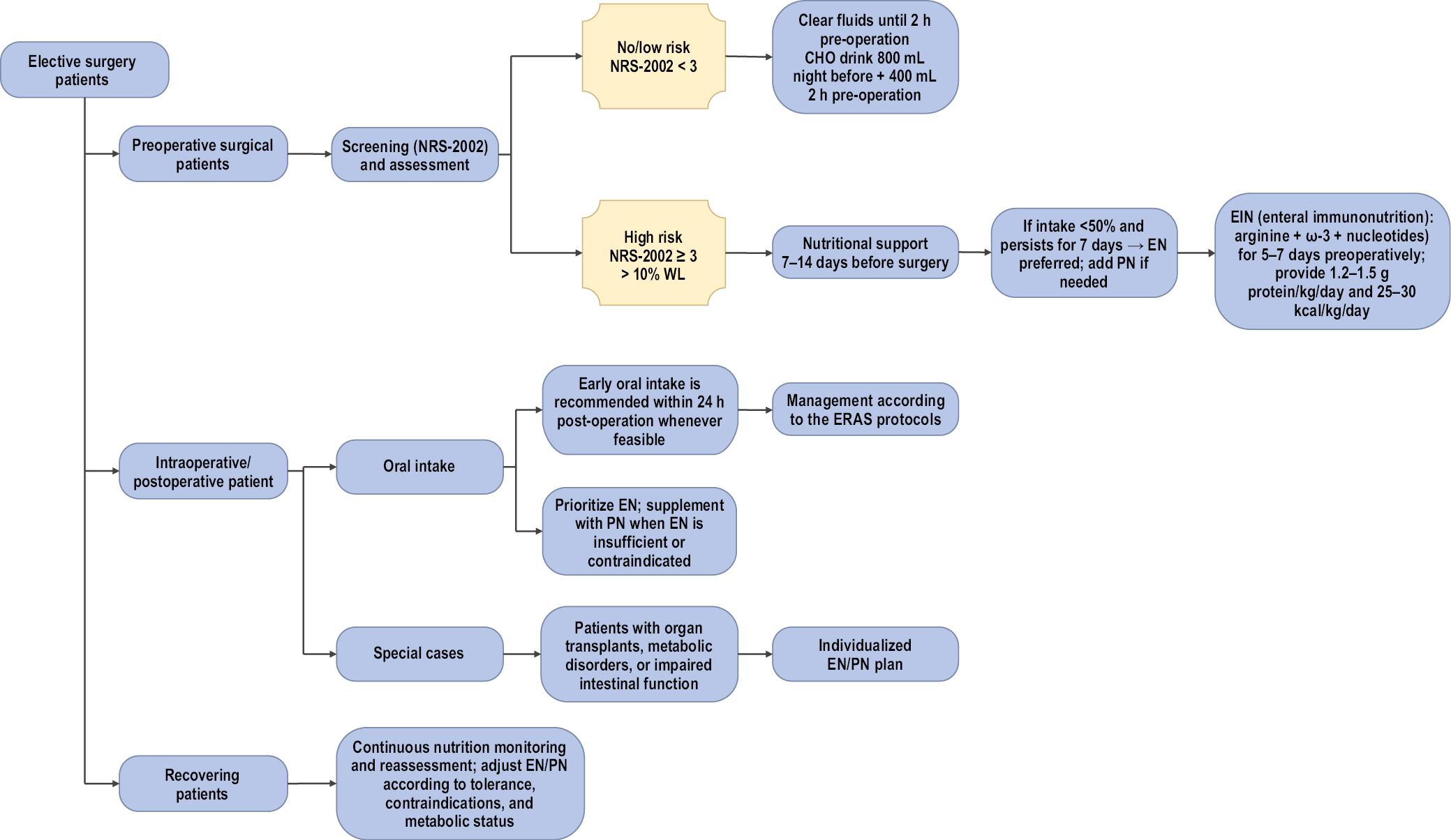
Preoperative nutritional status is crucial for postoperative recovery. Adequate preoperative nutritional reserves enhance the body’s ability to cope with surgical trauma and reduce the incidence of postoperative complications. Nutritional interventions are particularly important for malnourished patients. High-protein, high-calorie diets are typically recommended preoperatively to enhance energy reserves and the capacity for protein synthesis. Protein intake is central to preoperative nutritional interventions, as it supports immune function and provides essential substrates for tissue repair and cell proliferation. For patients requiring additional support, specialized medical nutrition formulas, such as immune-enhancing nutritional supplements, may be introduced. These products are rich in ω-3 fatty acids, glutamine, and antioxidants, which can effectively reduce postoperative inflammation and promote immune recovery. Studies have shown that the longer high-risk patients receive preoperative nutritional support, the more pronounced the effects of the intervention.6 Preoperative nutritional support for 7–14 days is generally recommended to sufficiently improve nutritional status and enhance postoperative resilience.
Postoperative nutritional support
Postoperative patients have significantly increased nutritional requirements due to trauma, inflammation, and metabolic disturbances. However, in the early postoperative period, patients often face challenges such as loss of appetite and reduced digestive and absorptive capacity, making the choice of nutritional support method crucial. Enteral nutrition is generally the preferred method of postoperative nutritional support, as it not only provides sufficient energy and nutrients but also helps maintain intestinal mucosal barrier function, thereby reducing the risk of bacterial translocation and infection.44 The earlier EN is initiated, the better the recovery outcomes for patients. For patients with temporarily impaired gastrointestinal function or those unable to tolerate EN, PN is used to meet nutritional requirements. Parenteral nutrition provides necessary energy and nutrients directly via intravenous administration; however, long-term PN use may increase the risk of infection and metabolic disturbances.45 Therefore, transition to EN as early as possible is recommended. Modern postoperative nutritional support also emphasizes immune-enhancing nutrients, such as glutamine, arginine, and ω-3 fatty acids. These nutrients regulate inflammatory responses, enhance immune function, and promote tissue repair, thereby accelerating postoperative recovery.
Nutritional management during the recovery phase
Nutritional management during the recovery phase is crucial for sustaining postoperative recovery outcomes and improving patients’ QoL. While short-term postoperative nutritional support focuses on meeting basic needs, medium- to long-term management emphasizes the optimization of dietary composition and metabolic status. During recovery, patients should gradually resume a regular diet while ensuring sufficient protein and energy intake to maintain muscle mass and support tissue repair. Diets rich in vitamins and minerals can enhance immune function and improve overall health. Additionally, targeted dietary supplementation is recommended to address potential postoperative nutrient deficiencies, including deficiencies in iron, zinc, and vitamin D. For postoperative patients with chronic diseases, such as diabetes or obesity, nutritional management during recovery must take their specific conditions into account and include individualized interventions. For instance, diabetic patients should strictly control carbohydrate intake, while patients with obesity should reduce total energy intake without compromising nutritional requirements. Wobith et al. highlighted that systematic nutritional management can significantly improve long-term recovery outcomes, including shorter recovery time, reduced recurrence rates, and better QoL.46 Therefore, nutritional interventions during the recovery phase should be an integral component of postoperative care (Figure 2).
Clinical research and efficacy analysis
Summary of clinical research findings
In recent years, clinical research into nutritional interventions for postoperative recovery has increased significantly, with substantial progress achieved, particularly through RCTs. Numerous studies have demonstrated the efficacy of various nutritional interventions in promoting postoperative recovery, providing robust evidence for their use in clinical practice. An RCT involving patients undergoing abdominal surgery demonstrated that, compared with traditional postoperative dietary management, enteral immunonutrition (EIN) significantly reduced postoperative infection and complication rates and shortened hospital stays; however, EIN had no effect on noninfectious complications (Table 1).47, 48, 49, 50 Another study found that a 2-week preoperative diet incorporating immune-enhancing formulas resulted in greater preoperative weight loss, reduced postoperative pain, and lower C-reactive protein (CRP) and liver enzyme levels compared with high-protein formulas or standard diets (Table 2).51, 52, 53, 54, 55 A prospective clinical trial reported that lipid emulsions containing ω-3 polyunsaturated fatty acids (PUFAs), administered to patients after liver resection, effectively controlled inflammation, preserved liver function, and reduced complication rates and length of hospital stay (Table 3).56, 57, 58, 59 Collectively, these studies consistently support the positive impact of systematic nutritional interventions on postoperative recovery.
Efficacy evaluation metrics
Several key metrics are used to evaluate the effectiveness of nutritional interventions, including postoperative infection and complication rates. Postoperative patients often face an increased risk of infection due to reduced immune function, and nutritional interventions play a crucial role in mitigating this risk by improving immune function and reducing inflammation. For example, appropriate supplementation with immune-enhancing nutrients, such as glutamine and ω-3 fatty acids, significantly reduces the incidence of surgical site infections and pneumonia, as well as severe complications, such as sepsis. Therefore, nutritional interventions are an indispensable adjunctive strategy for reducing postoperative infection rates.
In addition to infection rates, the duration of hospital stay and healthcare costs are important parameters for assessing the impact of nutritional interventions. The length of hospital stay is closely related to the rate of postoperative recovery, and appropriate postoperative nutritional support has been shown to significantly shorten hospitalization. For instance, in patients undergoing surgery for gastrointestinal malignancies, early initiation of EN improved recovery efficiency, reduced postoperative complications, and decreased healthcare resource utilization.54 Furthermore, such interventions can lower overall medical expenses, underscoring their value from an economic perspective. Nutritional interventions therefore help balance improved recovery efficiency with reduced financial burden.
Functional recovery metrics reflect improvements in patients’ overall physical performance after surgery. These metrics include muscle strength, mobility, and the ability to perform activities of daily living, which are often key goals of postoperative recovery. Surgical trauma and postoperative inflammation can increase protein catabolism, whereas nutritional interventions that support protein synthesis and tissue repair can accelerate functional recovery. For example, adequate protein and amino acid supplementation in the early postoperative phase significantly improved muscle strength, which is critical for long-term recovery and improved QoL.60
Finally, QoL scores serve as a comprehensive measure of postoperative recovery outcomes. These scores assess not only physical function but also psychological well-being and social participation, with commonly used tools including the 36-Item Short Form Health Survey (SF-36) and the EuroQol 5-Dimension Questionnaire (EQ-5D). Comprehensive nutritional interventions combining protein, micronutrients, and immune-enhancing nutrients significantly improve QoL, particularly by enhancing psychological wellbeing and restoring social engagement. These effects extend beyond the early recovery phase and can profoundly influence long-term patient outcomes. Thus, QoL scores are an indispensable component when evaluating the effectiveness of nutritional interventions.
Integrating these evaluation metrics allows clinical research to comprehensively reflect the practical effects of nutritional interventions across multiple dimensions. This approach not only provides a scientific foundation for developing more precise and effective intervention plans but also offers new directions for optimizing postoperative nutritional support strategies.
Technologies and emerging trends in nutritional interventions
Nutrigenomics and personalized nutritional interventions
With the rapid development of omics technologies, nutrigenomics offers new tools for exploring personalized nutritional interventions. By integrating data from genomics, transcriptomics, metabolomics, and microbiomics, nutrigenomics reveals interindividual differences in nutrient requirements and metabolic responses, thereby enabling precision nutritional strategies. For instance, genomic data can identify genetic variations in key metabolic pathways and predict an individual’s capacity to metabolize specific nutrients. Metabolomics enables real-time monitoring of postoperative patients’ metabolic status, providing dynamic feedback for optimizing nutritional plans. Research indicates substantial potential for precision nutritional interventions in postoperative recovery. For example, supplementation with specific micronutrients, such as folic acid or vitamin D, in patients with certain genetic variants can effectively improve postoperative immune and metabolic function.61 Additionally, dietary interventions targeting the gut microbiota, informed by microbiomics data, have been shown to significantly alleviate postoperative inflammation and improve immune function.62, 63 These findings highlight that nutrigenomics provides a solid scientific foundation for developing personalized nutritional intervention strategies.
Development of novel nutritional formulations
Traditional postoperative nutritional support has primarily focused on meeting basic energy and nutrient requirements. However, recent advances in novel nutritional formulations have emphasized functionality and specificity. For instance, immune-enhancing formulas enriched with glutamine, arginine, and ω-3 fatty acids can effectively lower the risk of postoperative complications by modulating inflammatory responses and enhancing immune function. Nutritional formulations containing antioxidants, such as vitamins C and E, are intended to reduce oxidative damage, thereby promoting tissue repair. Functional foods and supplements derived from natural products are emerging as new areas of focus in postoperative recovery. For example, plant-derived polyphenols, which exhibit anti-inflammatory and antioxidant properties,64 have been used to mitigate postoperative inflammatory responses. Similarly, the combined use of probiotics and prebiotics can optimize the balance of the gut microbiota, further enhancing postoperative immune recovery and metabolic regulation.65 In the future, the development of novel nutritional formulations will increasingly focus on personalized approaches tailored to specific types of surgery and patient characteristics.
Digital technology in nutritional management
Digital technologies are revolutionizing postoperative nutritional management by enabling real-time monitoring and targeted interventions through wearable devices and artificial intelligence (AI). Wearable devices continuously monitor physiological parameters, such as body weight, temperature, heart rate, and activity levels, providing important reference data for adjusting nutritional support during recovery. For example, changes in body weight and fluid status can be used to assess hydration and energy balance, helping optimize nutritional support plans. AI technologies use big-data analytics to predict postoperative nutritional requirements and assess the risk of potential complications. AI models based on pre- and postoperative data can generate personalized nutritional recommendations, including energy intake, macronutrient ratios, and specific micronutrient supplementation.
Furthermore, smartphone applications and telemedicine platforms facilitate seamless communication between patients and healthcare teams, enhancing adherence to nutritional interventions and improving their effectiveness. As digital technologies continue to evolve, integrated nutritional management systems combining AI, the Internet of Things (IoT), and smart sensors are expected to be applied more widely in postoperative recovery. This technology-driven approach not only improves the precision and efficiency of interventions but also provides patients with higher-quality, personalized care.
Current status and challenges
Limitations of molecular mechanism research
Despite significant progress in understanding the molecular mechanisms underlying nutritional interventions, many unresolved issues remain. Current research primarily focuses on the effects of individual nutrients, such as glutamine or ω-3 fatty acids, with limited exploration of interactions among multiple nutrients and their combined impact on postoperative recovery. Additionally, most studies rely on in vitro experiments or animal models, leaving the applicability of their results to postoperative recovery in humans uncertain. For instance, the influence of different types of surgery and interindividual variability on molecular pathways remains unclear, hindering the translation of research findings into clinical practice. Moreover, studies at the molecular level often overlook the complex relationship between nutritional interventions and patients’ overall physiological status. Postoperative inflammation and immune regulation involve intricate interactions among multiple signaling pathways, and the ways in which nutrients dynamically modulate these pathways to promote recovery remain inadequately understood. Future research should adopt systems biology approaches and integrate multi-omics technologies, such as metabolomics, proteomics, and transcriptomics, to comprehensively elucidate the mechanisms of nutritional interventions.
Challenges in clinical practice
In clinical practice, balancing the need for standardized nutritional intervention protocols with the demand for individualized care remains a major challenge. Although unified clinical nutrition guidelines, such as the ESPEN Practical Guideline for Clinical Nutrition in Surgery,41 are available, variation in their adoption and adherence across institutions remains a major obstacle. This lack of standardization not only limits the comparability of research outcomes but also reduces the efficiency of clinical implementation. On the other hand, postoperative nutritional needs vary significantly among individuals due to factors such as age, basal metabolic status, and type of surgery, which influence specific nutrient requirements. Achieving personalized nutritional support within a standardized framework remains an unresolved issue.
Additionally, adherence to postoperative nutritional interventions poses a challenge in clinical settings. Some patients may find it difficult to fully comply with nutritional plans because of postoperative discomfort, psychological stress, or financial constraints, thereby limiting the effectiveness of interventions. Future clinical studies should focus on strategies to improve adherence and satisfaction, such as psychological support, digital technologies, and telemedicine.
Moreover, the quality and applicability of existing evidence vary across types of surgery. Parenteral nutrition may increase the risk of catheter-related infection and metabolic complications, while excessive micronutrient supplementation, such as zinc, copper, or antioxidants, can cause toxicity. The optimal dose and duration of immunonutrition remain uncertain. Larger, well-designed trials are needed to improve the quality of evidence and guide safe, standardized practice.
Future research directions
Integration of multidisciplinary research strategies
Research on nutritional interventions in postoperative recovery should emphasize multidisciplinary collaboration and integration, particularly by bridging basic research and clinical application. Multi-omics technologies, such as genomics, metabolomics, and microbiomics, offer powerful tools for analyzing the dynamic effects of nutritional interventions. For example, metabolomics can help identify metabolic changes in postoperative patients and clarify which nutrients play key roles in repair and recovery, while microbiomics can reveal how the gut microbiota regulate immune function and support strategies involving probiotics and dietary fiber. Systems biology methods can integrate these omics data to construct comprehensive models of nutritional metabolic networks, providing insights into the multilayered regulatory effects of nutritional interventions at the molecular level. Such approaches not only clarify complex mechanisms but also provide theoretical support for developing precise and individualized intervention strategies. Future research should also focus on dynamically monitoring postoperative metabolic states and integrating omics technologies to optimize intervention strategies, thereby enabling real-time, precision nutritional support.
Strengthening cross-disciplinary collaboration
Advancing the research and application of nutritional interventions requires combining expertise from clinical nutrition, surgery, immunology, and data science to develop innovative and effective strategies. Surgery provides the clinical context and identifies the need for nutritional interventions, while clinical nutrition enables the design of scientifically sound dietary and nutritional support plans based on postoperative conditions. Immunology research sheds light on how specific nutrients regulate inflammation and immune responses, offering new insights into the prevention of postoperative infections and complications. Furthermore, data science and AI play critical roles in optimizing intervention plans. Nutritional models based on big-data analytics can predict postoperative recovery trajectories in different patients and generate personalized nutritional recommendations. For example, AI algorithms can dynamically adjust the energy and nutrient composition of nutritional formulas based on pre- and postoperative physiological parameters, thereby improving the precision of interventions. Future research should emphasize cross-disciplinary collaboration and the joint development of digital nutrition management platforms that enhance patient adherence and improve the overall effectiveness of postoperative interventions.
Limitations of the study
This review has several limitations. The included studies vary in terms of types of surgery, nutritional protocols, and outcome measures, which introduces heterogeneity and limits direct comparability. Some sections rely on mechanistic or observational data rather than randomized evidence, and no quantitative meta-analysis was conducted. These factors should be considered when interpreting the findings. Future large-scale, standardized RCTs are needed to validate the conclusions and strengthen the evidence base.
Conclusions
Nutritional interventions play an important role in postoperative recovery by reducing inflammation, enhancing immune function, promoting tissue repair, and optimizing metabolic balance. Existing studies suggest that nutritional interventions may help shorten recovery time, reduce complications, and improve patients’ QoL. However, current research on nutritional interventions has several limitations, including an incomplete understanding of molecular mechanisms, a lack of standardized intervention protocols, and insufficient integration of individualized needs into clinical practice. Further high-quality, multidisciplinary research is needed to address these gaps. By integrating cutting-edge technologies, such as nutrigenomics, metabolomics, and microbiomics, future studies will be able to reveal the mechanisms of nutritional interventions more comprehensively and provide scientific evidence for precision nutritional support. In clinical practice, developing more systematic and standardized postoperative nutritional management guidelines, together with individualized plans, will help optimize patient outcomes. This approach not only enhances the effectiveness of interventions but also advances the field of postoperative recovery, benefiting a broader range of patients. In summary, nutritional interventions represent a promising strategy for supporting postoperative recovery. Continued research and implementation will further improve patient outcomes and promote integration between medicine and nutritional science.
Use of AI and AI-assisted technologies
Not applicable.