Abstract
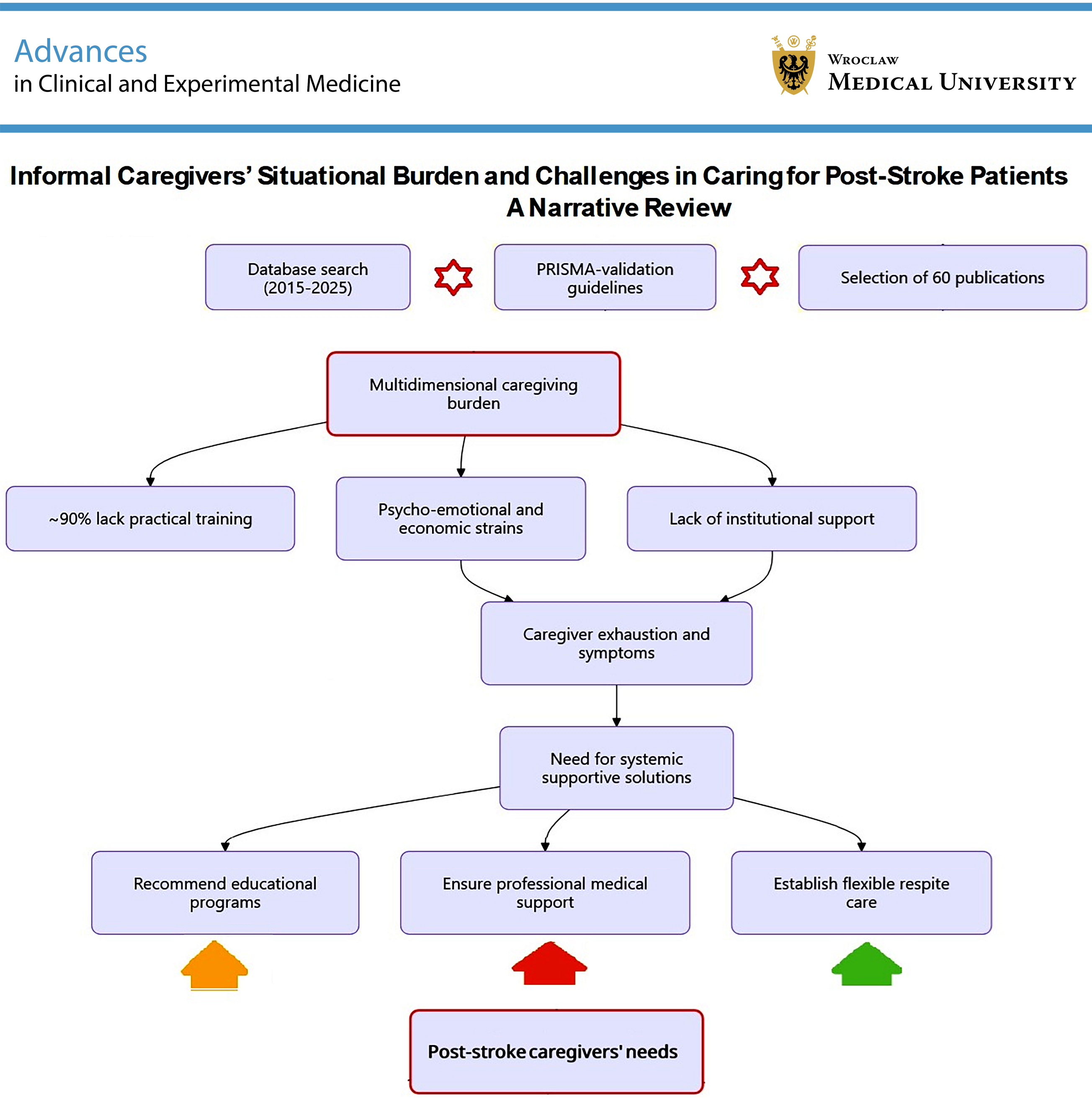
Stroke is a leading cause of long-term functional disability and often requires caregiver support during recovery. Informal caregivers of post-stroke patients face multiple challenges related to medical and nursing competence, workload, and access to information. These challenges remain insufficiently explored and inadequately addressed in healthcare systems. Using predefined criteria, we searched PubMed and Google Scholar for English-language studies involving human participants and published between January 2015 and August 2025 on issues related to informal caregiving. After initial abstract screening, we selected 60 relevant publications from each database for discussion in this narrative review, using a PRISMA-based approach. The findings reveal a multidimensional caregiving burden, with nearly 90% of caregivers reporting shortages in practical knowledge and skills training. They also often face psycho-emotional and economic strain, compounded by a lack of institutional support and social isolation. Caregivers experience chronic frustration and exhaustion, leading to depressive and somatic symptoms, while also lacking adequate medical attention. Their needs are largely unsupported and unmet by available institutional support. There is a lack of systemic solutions to integrate caregiving responsibilities with personal activities and preventive healthcare. These issues necessitate urgent research and the implementation of effective supportive interventions to enhance the quality of life of post-stroke caregivers. Key recommendations include developing standardized educational programs implemented at hospital discharge, ensuring access to professional medical support, and establishing flexible respite care services to prevent caregiver burnout. Caregivers’ psychosocial and somatic wellbeing is essential for the successful rehabilitation and recovery of post-stroke patients.
Key words: caregivers, quality of life, disability, stroke patients, psycho-emotional burnout
Introduction
Stroke is one of the most devastating human pathologies and a leading cause of long-term disability worldwide. Recovery outcomes are difficult to achieve and depend on variable loss of brain plasticity due to neuronal mitochondrial dysfunction following ischemia/reperfusion (I/R) episodes associated with oxidative stress and the resulting dysfunctional sensorimotor performance.1 Maintaining an acceptable standard of living for stroke survivors is extremely difficult. Most studies show that approx. 20–30% of stroke survivors experience limitations in activities of daily living, and approx. 30% have difficulties with instrumental activities of daily living. The informal caregiving burden remains high for up to 1 year after stroke, with functional dependency on caregivers.2, 3, 4 Stroke survivors discharged to an inpatient rehabilitation facility have more than twice the 1-year survival rate of those discharged to nursing facilities.5 Proper institutional care is important, as only a fraction of low-functioning post-stroke patients survive when deprived of care.
Care supports recovery from the acute physical and emotional consequences of stroke and is essential for the long-term management of sustainable recovery. Caregivers’ work is also essential for reducing the high socioeconomic burden of stroke on public healthcare systems. Nonetheless, informal caregivers face numerous problems, including insufficient knowledge of caregiving principles and limited psychological and medical support, despite demanding and exhausting working conditions and a lack of formal support from healthcare policymakers.6 The situation of informal caregivers of post-stroke patients is an important but under-researched area.
Objectives
Therefore, in this study, we focused on the issues that make caregivers’ work difficult and hinder their efforts to support patient rehabilitation. To this end, we investigated the most recent literature on the subject in major medical databases. We aimed to provide a concise analysis of caregivers’ status, the drawbacks and deficiencies limiting their work, and the educational shortcomings they perceive. We also offer a viewpoint on preventive measures to avoid a decline in caregivers’ work effectiveness and psychophysical resilience, which may adversely affect rehabilitation processes in post-stroke patients.
Materials and methods
This article is a desk review of the most relevant publications on the work-related problems encountered by caregivers of post-stroke patients and possible ways of addressing these problems. The literature was assessed by both authors of this article. We retrieved English-language articles on studies conducted in human participants aged 18 years or older and published in PubMed and Google Scholar between January 2015 and August 2025. Our search strategy in PubMed, a curated source of biomedical literature, used the Medical Subject Headings (MeSH) vocabulary. We designed the following complex search string, emphasizing the role of post-stroke caregivers: (“Disability Evaluation” AND “Stroke” AND “Caregivers”) OR (“Patient Compliance” AND “Rehabilitation” AND “Stroke” AND “Caregivers”) OR (“Social Support” AND “Caregivers” AND “Stroke”). We paid particular attention to publication originality, relevance to the main topic of this review, proper formulation of aims and outcomes, evidence-based findings, fact-checked data, and neutral presentation by the source authors. The screening included:
− original reports of randomized controlled trials (RCTs), meta-analyses, systematic reviews, and psychosocial studies;
− reports on work-related and health problems experienced by caregivers of post-stroke patients;
− issues hindering caregivers’ efforts to care for and rehabilitate patients;
− reports on the association between treatment outcomes and complications and patient caregiving;
− caregivers’ perceptions of limitations in accessing preventive healthcare measures and patient care-oriented educational resources.
Published conference proceedings, case reports, commentaries, short communications, redundant articles, promotional materials, and publications lacking controlled research or otherwise failing to meet academic standards were excluded.
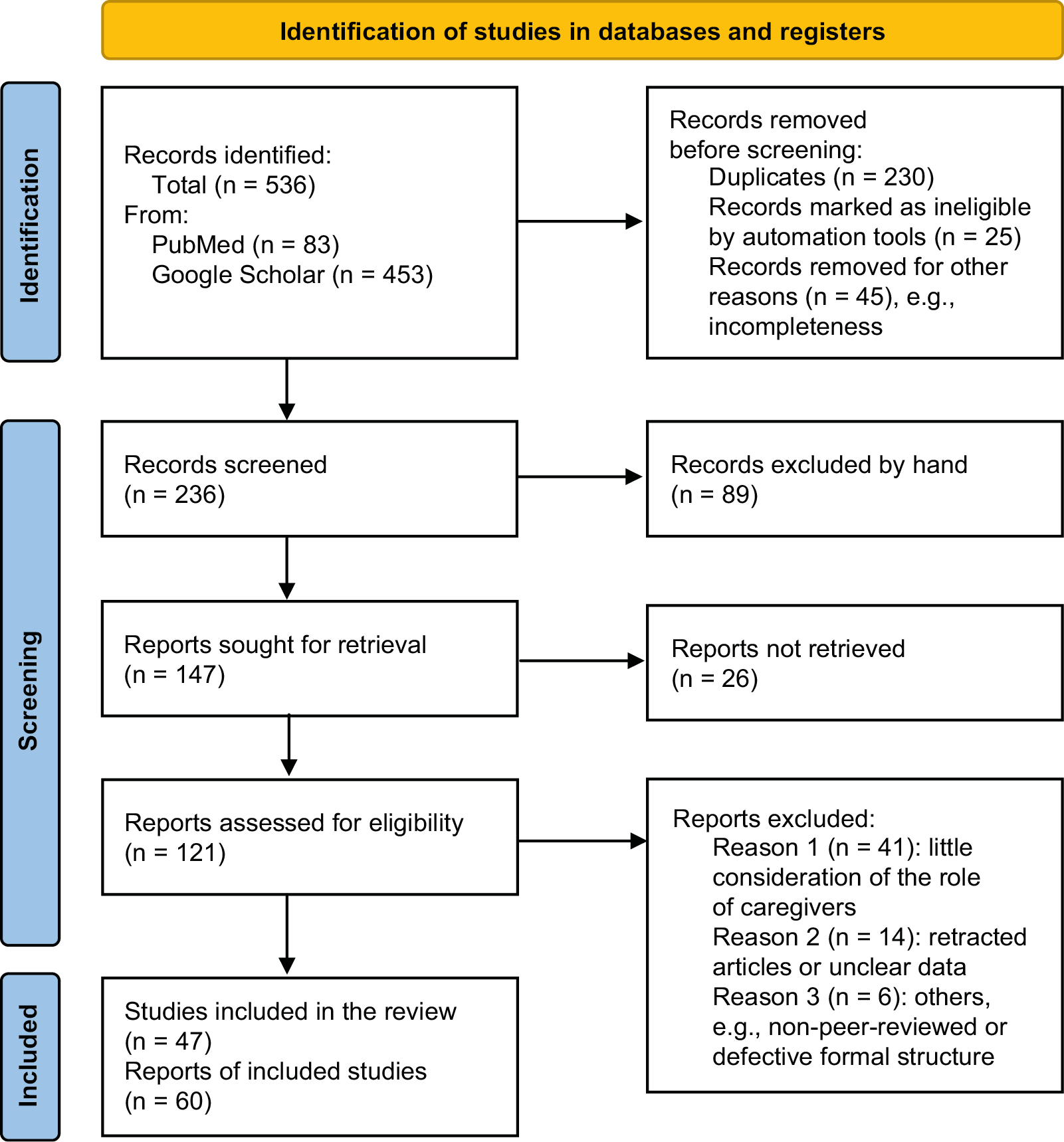
We employed a multistage screening process to retrieve articles from the databases, in line with the standard sequential Preferred Reporting Items for Systematic Reviews and Meta-Analyses (PRISMA) guidelines for review reporting, as shown in Figure 1. The database search yielded a total of 536 articles: 83 in PubMed and 453 in Google Scholar. The articles were further screened for thematic relevance to the work of informal caregivers of post-stroke patients according to the pre-established criteria outlined above.
Briefly, after abstract screening, we removed duplicate records and records marked as ineligible by automated tools or for other reasons. The remaining 236 records were evaluated based on how well their titles and abstracts met the predefined substantive criteria, which led to the exclusion of 89 manually selected reports. Of the remaining 147 records, 121 were successfully retrieved for detailed eligibility assessment. Only full-text files in accessible document formats, including PDF, DOC, DOCX, ODT, and RTF, were retrieved; the remaining 26 records, which were available only as executable files or archives, such as EXE, JS, and ZIP files, were automatically discarded. The assessment selected 60 papers, covering 47 studies, for further discussion in this review.
Results and discussion
Knowledge, information, and education about stroke recovery and care
Caregivers’ insufficient medical competence appears to be a significant issue. Empirical studies indicate that the vast majority of caregivers (86.7%) report a need for training in key skills, including self-care, safety supervision, and functional rehabilitation, with 62.7% identifying multiple needs.7 Another study showed that 87.3% of caregivers had poor knowledge of patient positioning, which may increase the incidence of contractures and secondary complications.8 With regard to nutrition, 28% of caregivers did not modify food consistency for patients with dysphagia, thereby increasing the risk of aspiration and respiratory infections.9, 10, 11
Pressure ulcer prevention in post-stroke patients reveals a critical vulnerability, particularly after hospital discharge, as demonstrated by the marked increase in pressure injury prevalence from 3.06% in clinical settings to 17.25% in the home environment. This significant increase is likely attributable to substantial deficits in caregiver preparedness, as 67.5% of caregivers had never received formal training in pressure ulcer prevention, and 50% had poor knowledge of appropriate management techniques.12, 13, 14, 15
Likewise, 33.8% of caregivers were not fully competent in supporting post-stroke physical activity, which may reduce the effectiveness of rehabilitation.16, 17, 18 They did not receive adequate training in the use of specialized aids for musculoskeletal exercises, despite their crucial role in restoring motor function.19 In addition, 87% of caregivers had poor knowledge of post-stroke patient positioning and other specific aspects of post-stroke care.8, 16 A lack of skills in ergonomic patient transfer techniques increases the risk of musculoskeletal injuries affecting both caregivers and patients.20, 21 Only slightly more than 20% of caregivers receive adequate institutional support, which may reduce care efficiency and quality of life for all those involved.22, 23
In response to these deficits, 80% of caregivers expressed a need for systematic training, including recognition of the signs and symptoms of clinical deterioration and specialized long-term care techniques.24 The paucity of hands-on instruction among caregivers of post-stroke patients represents a significant therapeutic barrier in fundamental domains of long-term care. Studies show that educational instruction could increase compliance with clinical guidelines from the current 58% to more than 81%.10
Caregivers’ psychosocial health problems
The overall wellbeing of informal caregivers, understood as a dynamic interplay between individuals’ psycho-emotional state and their social environment, particularly the work-related environment, is profoundly affected. Empirical studies show that only a small proportion of caregivers receive systematic psychological support, even though as many as 67% of this population experience symptoms of chronic exhaustion associated with long-term caregiving responsibilities.25, 26 Deficits in psychological interventions may increase the emotional burden, particularly when high-intensity psycho-emotional needs remain unmet.
The coordination of interdisciplinary non-hospital care also shows systemic dysfunction, with only a small proportion of caregivers receiving precise instructions on how to collaborate with community nursing or physiotherapy staff.27 As a result, the organization of necessary services is delayed, increasing the risk of both insufficient patient care and psycho-emotional complications among caregivers.28, 29 Despite these alarming indicators, the availability of psychotherapeutic interventions remains insufficient, meaning that caregivers are often left to deal with psychological challenges on their own.
Unmet emotional needs among caregivers of post-stroke patients represent an important but underexplored clinical problem. Studies show that caregivers experience frustration in interactions with care recipients, which may manifest as communication difficulties, feelings of helplessness, and conflicting caregiving roles. Caregiving involves sacrifices in daily responsibilities and social engagement, resulting in strain, aggravation, anxiety, sleep disturbances, and loss of control.30, 31 Moreover, the physical disability of stroke survivors takes a psycho-emotional toll on primary family caregivers.
Reciprocal changes in attitudes, reported by 53.6% of caregivers, include the emergence of affective lability with heightened emotional tension, leading to frustration that manifests as dysfunctional relationships within caregiver–patient dyads.32, 33 Studies show that about 40% of caregivers experience anxiety or clinically evident depression.23, 34 About 1/3 of caregivers report the regular use of psychotropic agents as a consequence of chronic exposure to stress and psycho-emotional overload, which may further increase the risk of depressive disorders and dyssomnia.35, 36, 37 Limited access to psychotherapeutic interventions often leads to self-medication, generating a risk of iatrogenic effects, including cognitive dysfunction.38
Reduced social interaction is a significant functional problem among caregivers of post-stroke patients, affecting 60% of this population and occurring particularly among women who provide independent care.39, 40 Impaired interpersonal functioning may manifest as withdrawal from family gatherings, cultural events, and recreational activities.31 Among caregivers of post-stroke patients, sex-based differences in social isolation show significant variation, with women affected more often than men, which is associated with disparities in the distribution of caregiving responsibilities and differing sociocultural expectations.40, 41 Women are more likely to reduce or discontinue their professional activity, which intensifies social marginalization. The psychological consequence of this chronic isolation has been shown to correlate with an increased likelihood of developing depressive disorders.33, 42 Deficits in emotional support and limitations in interpersonal relationships may induce chronic stress and lead to deterioration in quality of life.
Caregivers’ health barriers
The lack of systematic assessment of caregivers’ health stems partly from neglect of their self-care and respite needs and partly from limited access to preventive healthcare and specialist resources. Half of caregivers report an increased frequency of respiratory infections, gastrointestinal dysfunction, and exacerbations of chronic conditions during the first months of caregiving. Worsening health status correlates with the accumulation of caregiving burden.18, 43 On average, caregivers spend at least 5–8 h per day on caregiving tasks for older and ill individuals, including feeding, patient transfer, and monitoring of vital signs, which reduces their ability to meet their own biological needs.44, 45
Chronic physical and psychological burden intensifies health dysfunction, as long-term exposure to caregiving stress correlates with increased cortisol levels, thereby increasing the likelihood of developing hypertension.46, 47 Despite clear somatic manifestations of exhaustion, only a small percentage of caregivers undergo systematic diagnostic and preventive procedures.48, 49 Caregivers’ neglect of preventive checkups contributes to health deterioration and decreases the likelihood of implementing effective care, thereby intensifying the burden on both caregivers and their patients.6, 50
Deficits in material support
Lack of material support represents a significant challenge for caregivers of post-stroke patients. Only a small percentage of caregivers gain access to in-kind support in the form of necessary medical devices, such as pressure-relieving mattresses and hygiene products, which may reduce the effectiveness of nursing procedures.51, 52, 53 Likewise, only a small percentage receive financial support to offset expenses related to pharmacotherapy, rehabilitation, or specialized nutritional protocols.
Deficits in material support are directly correlated with the deterioration of socioeconomic conditions. Caregivers report a reduction in household income resulting from changes in employment status or increased caregiving expenses.2, 54 Limited access to essential equipment and financial resources intensifies the psycho-emotional burden on caregivers and increases the risk of clinical complications in patients, such as pressure ulcers and secondary infections.
Systemic problems and barriers in the healthcare system
With regard to formal support, most caregivers report a lack of understanding of administrative procedures for formal documentation of disability and subsidization of medical equipment, which may prevent them from enforcing their entitlements.55 Only half of caregivers receive information about possible financial benefits that are essential for covering the costs of pharmacotherapy and medical and rehabilitation aids.22, 56
The coordination of interdisciplinary out-of-hospital care shows significant dysfunction, as only a small proportion of caregivers receive precise instructions on how to cooperate with community care staff, which delays the implementation of necessary services during patients’ transition from hospital to home care. The lack of clear procedures and communication often leads to ineffective care coordination.57 Moreover, rest breaks and respite care are available to only about 15% of caregivers, despite 73% reporting symptoms of extreme overload.58
Systemic dysfunction in information flow among post-stroke caregivers results in a lack of consistent guidelines for support programs. This facilitates emotional strain and the development of affective and anxiety disorders, which may, in turn, reduce the quality of care provided to post-stroke patients.59
Limitations of the study
This study has limitations. The relevance of publications retrieved from a database is subject to inherent selection bias related to the assessors’ interests, experience, and perspectives. A different perspective may lead to different interpretations of the same issue or event. To mitigate perceptual bias and improve review reporting, we detailed the selection process using the internationally recognized PRISMA flow diagram. Another limitation may be the non-exhaustive nature of the search, as it was confined to PubMed’s MeSH-controlled syntax and Google Scholar, thereby omitting literature indexed in PubMed Central (PMC) and other, albeit smaller, life science repositories.
Although PubMed and Google Scholar are among the most widely used and comprehensive sources of academic literature, the scope of the literature search imposes certain constraints. The search was restricted to English-language articles, which may have introduced geographical or cultural bias and potentially omitted relevant publications indexed elsewhere. Moreover, the exclusion of grey literature, including governmental reports, clinical guidelines, and unpublished dissertations, together with the defined temporal scope of the search, may have resulted in the omission of both contemporary practical data and older foundational works in the field. We also did not conduct a formal methodological quality appraisal of the included studies, meaning that the conclusions were based on evidence of varying scientific rigor.
These limitations underscore the need for future comprehensive systematic reviews and meta-analyses to assess the prevalence and severity of caregiver burden. This requires a more inclusive search strategy encompassing multiple databases, multilingual publications, grey literature, and critical methodological scrutiny of the included research. There is a pressing need for studies that elucidate both universal and culture-specific barriers among caregivers, which is essential for developing tailored support systems. Subsequent analyses should also evaluate the efficacy of specific interventions, such as psychotherapy, respite care, and online training, and investigate the long-term health and economic consequences of post-stroke caregiving for the family unit.
Conclusions
Despite the limitations outlined above, we believe that we have demonstrated that informal caregivers of post-stroke patients are not exempt from professional burnout. Caregiver burden remains an underexplored research area. Caregivers experience high levels of psycho-emotional and physical stress, leading to depression and anxiety. They also experience social isolation and marginalization, which are exacerbated by limited access to respite care, preventive healthcare measures, and social and educational support in caregiving tasks. Understanding the factors underlying family caregivers’ perceptions of sacrifice and psychosomatic strain is essential for implementing a holistic care plan.
From a practical perspective, caregivers experience knowledge gaps in specific caregiving skills, such as patient positioning to prevent and manage contractures and pressure ulcers, dietary modifications to prevent dysphagia-related complications, and safe patient transfer techniques. They also experience a significant lack of institutional and administrative support and often neglect their own health needs, with only a fraction having access to respite care. All these factors may adversely affect the quality of care and the psychosomatic health of both caregivers and patients.
Quantitative rather than merely descriptive findings are needed to precisely assess the true magnitude of caregivers’ inadequate work–life balance, which often causes them to discontinue caregiving. Our study reveals gaps in research on routine challenges faced by family caregivers in their daily practice. It also highlights the need for longitudinal research focusing on caregivers’ health. There is an urgent need to implement systemic solutions that integrate caregiving responsibilities with caregivers’ personal activities to counteract burnout and improve wellbeing.
Use of AI and AI-assisted technologies
Not applicable.