Abstract
Background. Ethyl glucuronide in maternal hair (hEtG) is increasingly used in epidemiological research as a biomarker of alcohol consumption during pregnancy and prenatal alcohol exposure, as it provides objective, long-term evidence of alcohol consumption.
Objectives. To understand postpartum women’s perceptions of and reactions to hEtG results indicating alcohol use during pregnancy.
Materials and methods. The study involved 150 postpartum women and their newborns. Maternal hair samples were analyzed for hEtG concentrations using gas chromatography–tandem mass spectrometry (GC–MS/MS). Data included survey responses on self-reported alcohol use during pregnancy and medical record information on the course of pregnancy and neonatal health. Two years later, participants were offered the opportunity to receive their hair analysis results, and their reactions were qualitatively analyzed.
Results. The hEtG analysis indicated alcohol consumption at some point during pregnancy in 50% of the women. Among these, 10% had hEtG concentrations consistent with excessive alcohol use. Self-reported data indicated alcohol use before pregnancy recognition in 32% of participants and alcohol use when knowing about pregnancy in only 3%. There was no clear association between self-reports and hEtG results. At the 2-year follow-up, when informed of their positive hEtG results, participants expressed a range of reactions grouped into 7 themes: disengagement and indifference; reassurance based on the child’s health; rejection and denial; surprise and confusion; seeking alternative explanations; concerns about research validity; and acceptance or ambiguous acknowledgment.
Conclusions. Maternal hair testing is a valuable tool for investigating prenatal alcohol exposure; however, positive results are frequently questioned or denied by participants. While discussions often focus on possible alternative explanations for elevated hEtG levels, such as external contamination, the most plausible explanation remains actual alcohol consumption during pregnancy. Nonetheless, the stigma associated with such behavior and/or fear of legal or social consequences may lead to persistent denial, highlighting the challenges of interpreting and communicating biomarker results in sensitive contexts.
Key words: ethyl glucuronide, maternal exposure, prenatal alcohol exposure, pregnancy, biomarkers
Background
In the field of psychoactive substance use, epidemiological assessments are primarily based on self-report data.1 However, such data are prone to various sources of error, including imprecise recall, lack of attention, and the tendency to present oneself in a socially desirable manner.2, 3 While careful question design can reduce recall-related errors,4 mitigating social desirability bias remains particularly challenging,2 especially when the topic is highly stigmatized.
Among the general population, self-reports of alcohol and other substance use tend to underestimate actual consumption. For instance, survey-based estimates typically capture only 30–60% of the alcohol consumption suggested by sales statistics5 or illicit drug use as compared with biological marker results.6 It is reasonable to assume that underreporting may be even more severe in contexts where the behavior is socially condemned.
Alcohol consumption during pregnancy has been consistently associated with a broad spectrum of adverse developmental, behavioral, cognitive, and physical outcomes in offspring, commonly referred to as fetal alcohol spectrum disorders (FASD).7, 8 Beyond the significant medical and psychological implications, maternal alcohol use during pregnancy, in some jurisdictions,9 although not in Poland, may also lead to legal and social repercussions, including reports of child abuse or neglect and subsequent involvement of child protective services.
These consequences help to create a highly stigmatized context surrounding alcohol use during pregnancy. Approximately 80% of the general population disapprove of alcohol use in pregnancy.10 Mothers of children diagnosed with FASD are perceived more negatively than women with serious mental illness or substance dependence, or those who have been incarcerated.11 The public opinion study in which participants were asked to rate differences and disdain toward women who consume alcohol during pregnancy and toward biological mothers of children with FASD indicated that women who consumed alcohol during pregnancy are even more stigmatized than biological mothers of children with FASD.12 Unsurprisingly, many women are reluctant to disclose prenatal alcohol use in either surveys or clinical interviews, underscoring the need for alternative data collection methods.13
Given that in Europe there are no mandatory laws prohibiting drinking during pregnancy, several countries have established warnings on every container of alcohol recommending abstinence during pregnancy.14 Nevertheless, many pregnant women continue to consume alcohol,15 and therefore, accurate and objective assessment of alcohol consumption during pregnancy is essential for epidemiological research, clinical risk assessment, and intervention development.
Biomarkers are increasingly used in epidemiological research to address these limitations, especially in studies on alcohol use during pregnancy. Alcohol biomarkers can be detected in various biological matrices from both the mother and the newborn.16, 17, 18 One such biomarker, ethyl glucuronide in hair (hEtG), accumulates over time and has been extensively utilized to detect chronic alcohol use over prolonged periods.19, 20 As a result, hEtG is used in diverse fields, including forensic science and medical research, to assess both abstinence and chronic alcohol use.21 Compared with biomarkers found in meconium or cord blood, which reflect only recent to medium-term exposure, hEtG in maternal hair provides a detection window for the entire pregnancy. Given that scalp hair grows at approx. 1 cm per month, a 9-cm segment cut shortly after delivery can reflect alcohol use throughout pregnancy.22
Recent research has highlighted factors such as external contamination (e.g., from ethanol-based hand sanitizers), certain clinical pathologies (e.g., renal dysfunction), and the ongoing debate over the optimal cutoff value, which can influence results.13, 21, 22 However, current biomarkers and screening tools for prenatal alcohol exposure (PAE) are generally more reliable at ruling out exposure than at detecting all affected individuals.
Not surprisingly, epidemiological data obtained through anonymous biological sampling often reveal higher rates of PAE than survey-based data.23, 24, 25, 26, 27, 28 Existing research indicates that hEtG analysis has very high specificity (ranging from 71% to 100%) but variable sensitivity, ranging from 0% to 97%, with a median value of 23%, indicating that moderate alcohol use may frequently go undetected.26 Investigations by different authors, using various laboratory techniques, samples from healthy individuals and patients with different pathologies, and various cutoffs, show positive predictive values (PPV) ranging from 38% to 100% and negative predictive values (NPV) from 19% to 100%.29
Objectives
While positive hEtG results provide highly probable biological evidence of exposure, the experience of receiving these results, especially when the findings contradict a participant’s beliefs about their consumption, self-identity, or personal habits, remains largely unexplored. Although there is some evidence that patients are generally in favor of alcohol screening by their physicians30 and appreciate biomarker testing in outpatient alcohol-dependence treatment,31 there is a gap in research concerning patients’ attitudes toward these approaches during the perinatal period. This study addresses the need to explore pregnant women’s perspectives on and reactions to their hEtG biomarker results. Specifically, the aim of this study is to understand women’s perceptions of biomarker-based feedback regarding their alcohol use. To our knowledge, this is the first study to examine how women perceive the results of an objective measure of their alcohol consumption during pregnancy.
Materials and methods
This study is a comprehensive longitudinal investigation that tracks mothers and their children from the perinatal period through the first 2 years of life. Phase 1 of the study aimed to assess the prevalence and patterns of alcohol consumption during pregnancy using 1) hEtG concentrations in hair, 2) a standard medical interview conducted at hospital admission, and 3) a structured questionnaire. Associations between hEtG levels, maternal characteristics, and pregnancy outcomes were also examined. The description and results of phase 1 have already been published,32 and therefore we present them here only as background for the presentation of phase 2. Phase 2 investigates the relationship between maternal alcohol consumption during pregnancy (as determined by hEtG levels in phase 1) and the health and neurodevelopmental outcomes of the child at 24–27 months of age. During re-recruitment for phase 2, each participant had the opportunity to learn the results of her hEtG analysis. In this article, only data collected during the re-recruitment process are analyzed and discussed.
Setting and participants
The study was conducted at the Obstetrics and Gynecology Clinic of the Institute of Mother and Child in Warsaw, Poland, between June 2022 and January 2023, with follow-up conducted 2 years later (2024–2025). The study complied with the Declaration of Helsinki and received approval from the Ethics Committee of the Institute of Mother and Child (approval No. 17/2024).
A sample of postpartum women was recruited at random, although not systematically, from among patients who gave birth at the clinic. Recruitment depended on research staff availability and clinic accessibility and was limited to hours that did not interfere with the clinic’s normal operations. Therefore, over 8 months, the research team collected data on a total of 36 days. Another key recruitment factor was the patient’s wellbeing when a research team member visited. Patients who were sleeping or reported feeling unwell were not recruited.
Women were eligible if their newborns did not require urgent or specialized medical care. Those excluded were minors, women unable to complete an interview due to cognitive, linguistic, or health limitations, and mothers of newborns diagnosed with genetic diseases.
Trained research staff conducted recruitment using communication techniques informed by motivational interviewing.33 The motivational interviewing approach aimed to establish warm, nonjudgmental communication with patients using nonstigmatizing language, reflective listening, and open-ended questions34 to reduce stigma-related reporting bias.35, 36, 37
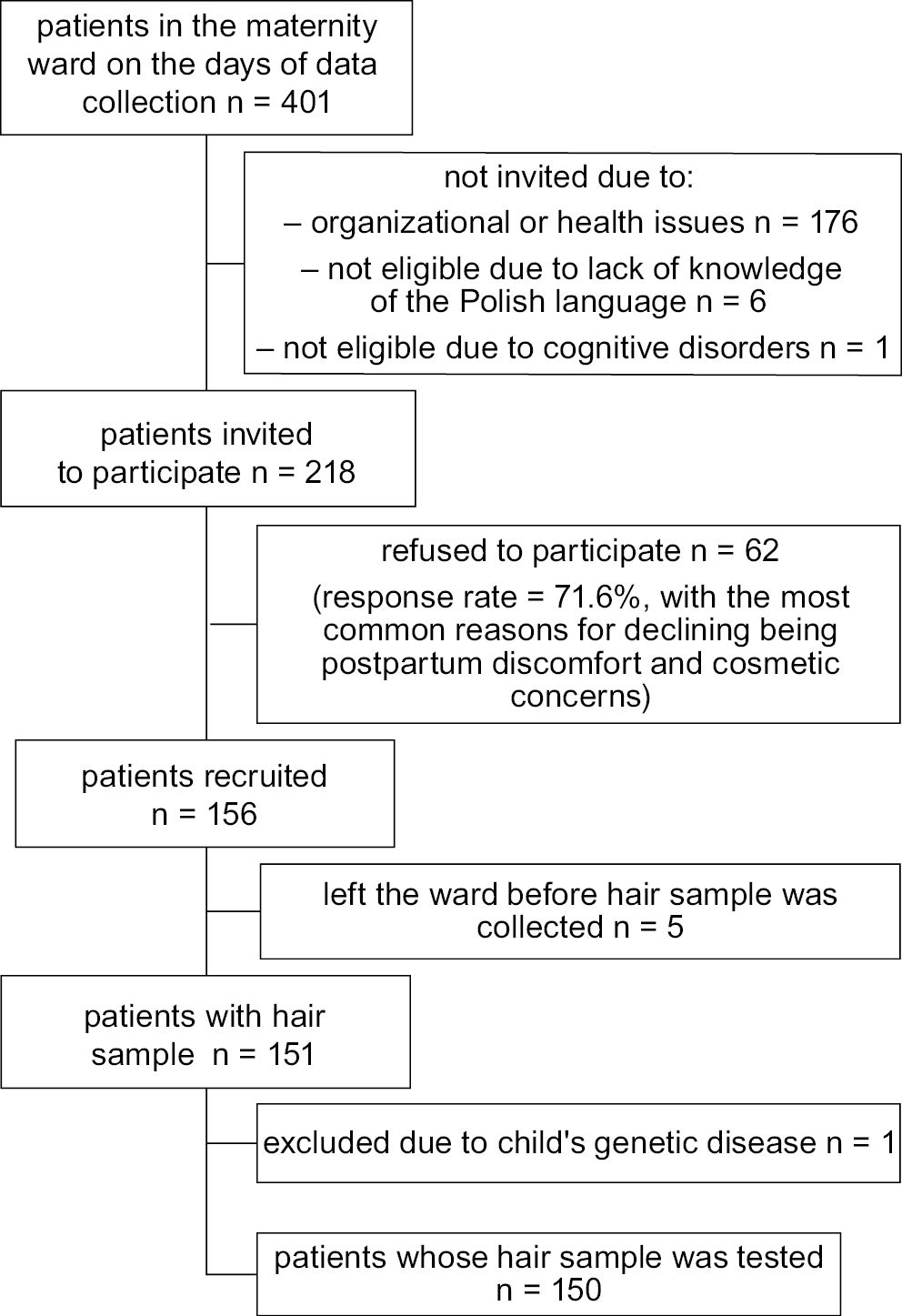
A total of 401 patients were admitted to the ward during the recruitment period. Figure 1 presents the patient flow. The most common reasons for declining participation were postpartum discomfort and cosmetic concerns related to hair sampling.
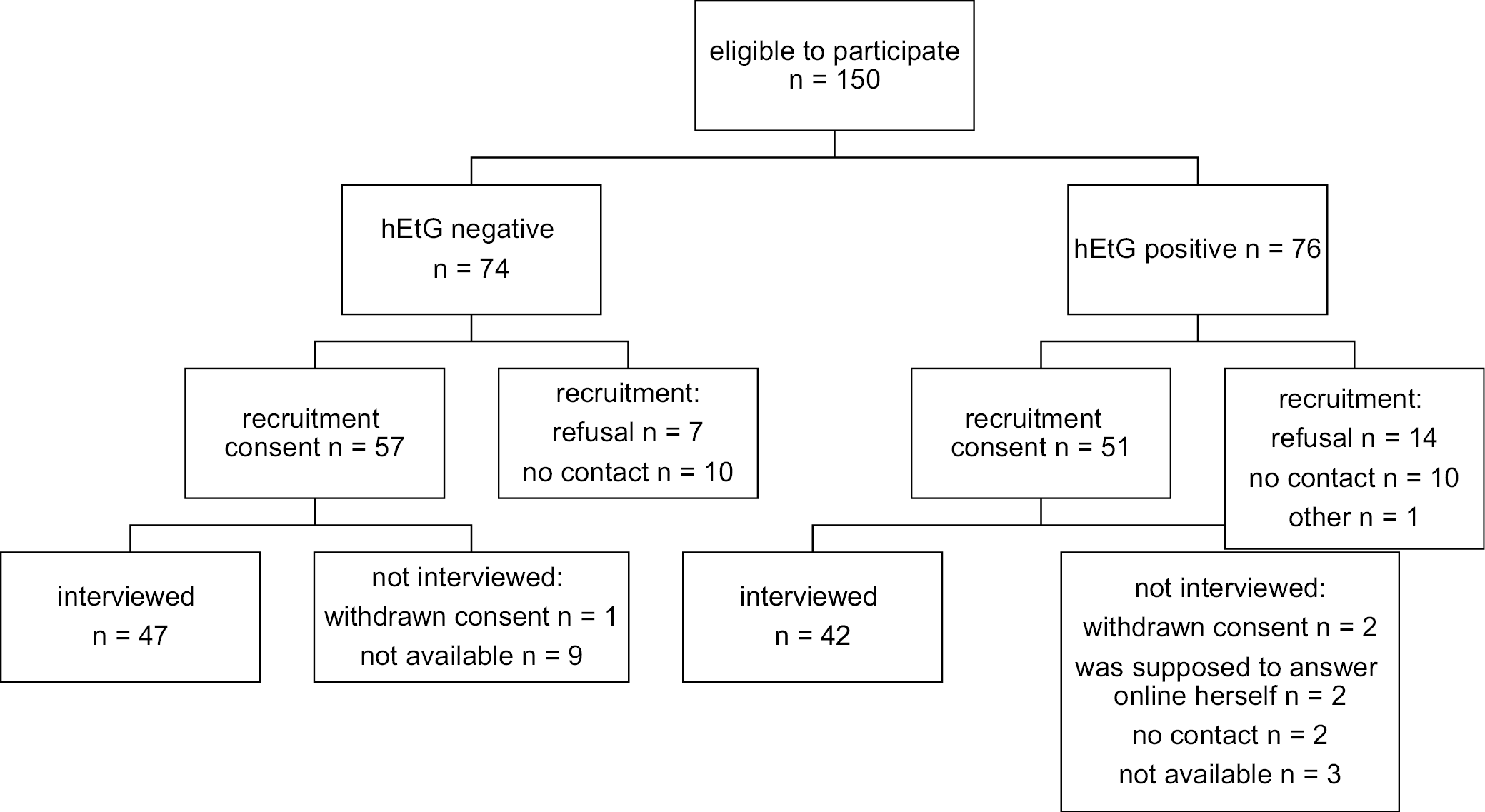
Approximately 2 years postpartum, participants were recontacted by phone and invited to participate in phase 2 of the study. The two-arm cohort study involved participants from phase 1: 1) mothers with positive hEtG results (n = 76) and 2) mothers whose hair analysis did not indicate alcohol consumption during pregnancy (n = 74). Overall, 59.3% of the original sample were successfully re-recruited, including 55.3% of those with positive and 63.5% of those with negative hEtG results (Figure 2). Several women declined immediately; in some cases, contact was not feasible, and in 1 case, the interview was not possible due to a child’s death. Some women who initially consented later withdrew during scheduling, while others could not find time for the interview.
Data collection procedures
In phase 1, written informed consent was obtained from all study participants for an interview about their sociodemographic characteristics, health behaviors, pregnancy and delivery, and newborn health, and for the collection of a hair sample for analysis of EtG concentration. Due to the sensitive nature of the data collected, participant confidentiality was ensured by using identification codes distinct from hospital identification numbers and by separating study data from medical records. A structured interview included the following components: 1) Alcohol Use Disorders Identification Test – Concise (AUDIT-C)38 – a 3-item screening test asking about drinking frequency, quantity, and the number of occasions involving at least 4 drinks in the 3 months prior to pregnancy; 2) a parallel set of questions about alcohol use during pregnancy; 3) a retrospective assessment based on the Timeline Follow-back method,4 in which the participant was asked to mark on a calendar dates relevant to her most recent pregnancy (date of the last menstrual period, pregnancy recognition, 1st visit to the doctor, etc.) and personal life (e.g., a birthday, holiday, etc.), identify the last occasion on which she drank alcohol, and then recall previous drinking occasions. Information on alcohol consumption collected using these 3 methods allowed us to create indicators of occasional and risky drinking before pregnancy, drinking after conception but before learning about the pregnancy, and drinking after pregnancy recognition.
Hair samples were collected postpartum during phase 1. Each sample was securely labeled and stored in a closed envelope to prevent contamination and ensure proper identification. The samples were then shipped at room temperature to the Istituto Superiore di Sanità (ISS) in Rome, Italy, for analysis.
At follow-up, the initial data (presented in this article) were collected during participant re-recruitment. Given the sensitive nature of the conversation, recruiters first sought to ensure that the patient was comfortable speaking on the phone at the time. If not, they scheduled the interview for a more convenient time. During the structured telephone conversation based on a written script, the recruiters discussed the purpose and procedure of phase 2 and, with the respondent’s consent, disclosed the results of her hair sample analysis for EtG concentration. The recruiters recorded mothers’ reactions to the invitation as close to verbatim as possible. If necessary, attempts to establish telephone contact were repeated at least 5 times on subsequent days and at different times. If there was no response, an invitation to make contact was also sent via text message or email.
Biological sample analysis
Hair samples collected during phase 1 were inspected for integrity upon arrival at ISS and stored appropriately until analysis. To assess alcohol use across the 3 trimesters, hair samples of sufficient volume (n = 135 out of a total of 150) were divided into three 3-cm segments corresponding to the 1st (6–9 cm), 2nd (3–6 cm), and 3rd (0–3 cm) trimesters of pregnancy. This segmentation approach, based on an average hair growth rate of approx. 1 cm per month, enables trimester-specific estimation of cumulative alcohol exposure. Samples too small to be divided (n = 15) were analyzed in their entirety, indicating alcohol exposure at any time during pregnancy. The analysis was performed using validated gas chromatography–tandem mass spectrometry (GC–MS/MS), following validated procedures.39 Ethyl glucuronide (EtG) concentrations were interpreted according to international guidelines18: ≤5 pg/mg: abstinence; 5–30 pg/mg: occasional to moderate drinking (equivalent to 2–4 drinks per day on several days per week); ≥30 pg/mg: heavy drinking (≥4 drinks per day on several days per week).
Data analysis
Quantitative analysis of phase 1 results has already been described.32 In phase 2, descriptive statistics (frequencies) were used to characterize participants in this phase and compare them with those who took part only in phase 1. Differences between these 2 groups were examined using the χ2 test and Fisher’s exact test for dichotomous variables (with the exception of age, for which the t-test was used), with a significance threshold of p < 0.05. The respondents’ perceptions of the hEtG analysis results were analyzed qualitatively. Because our primary research question was “How do respondents react to information about the results of the analysis of their own hair sample?”, we used a bottom-up approach to identify categories in the data, following methodological guidance for presenting qualitative analyses in interdisciplinary research.40 In line with the principles of traditional grounded theory and current quality standards for its application,41, 42 all statements were recorded and initially coded into key categories. Three independent researchers verified the initial coding, identified emerging ideas, categorized the data into topics, and formulated the key themes.
Results
Participant characteristics
The mean age of phase 2 participants was 33 years (Table 1). The majority held a higher education degree, had permanent employment, were married, lived in Warsaw, rated their economic situation as good or very good, and had planned the pregnancy. The only statistically significant difference between those who participated in both phases and those who took part only in phase 1 was educational attainment, which was higher among participants in both phases (Table 2).
Alcohol consumption during pregnancy and pregnancy outcomes
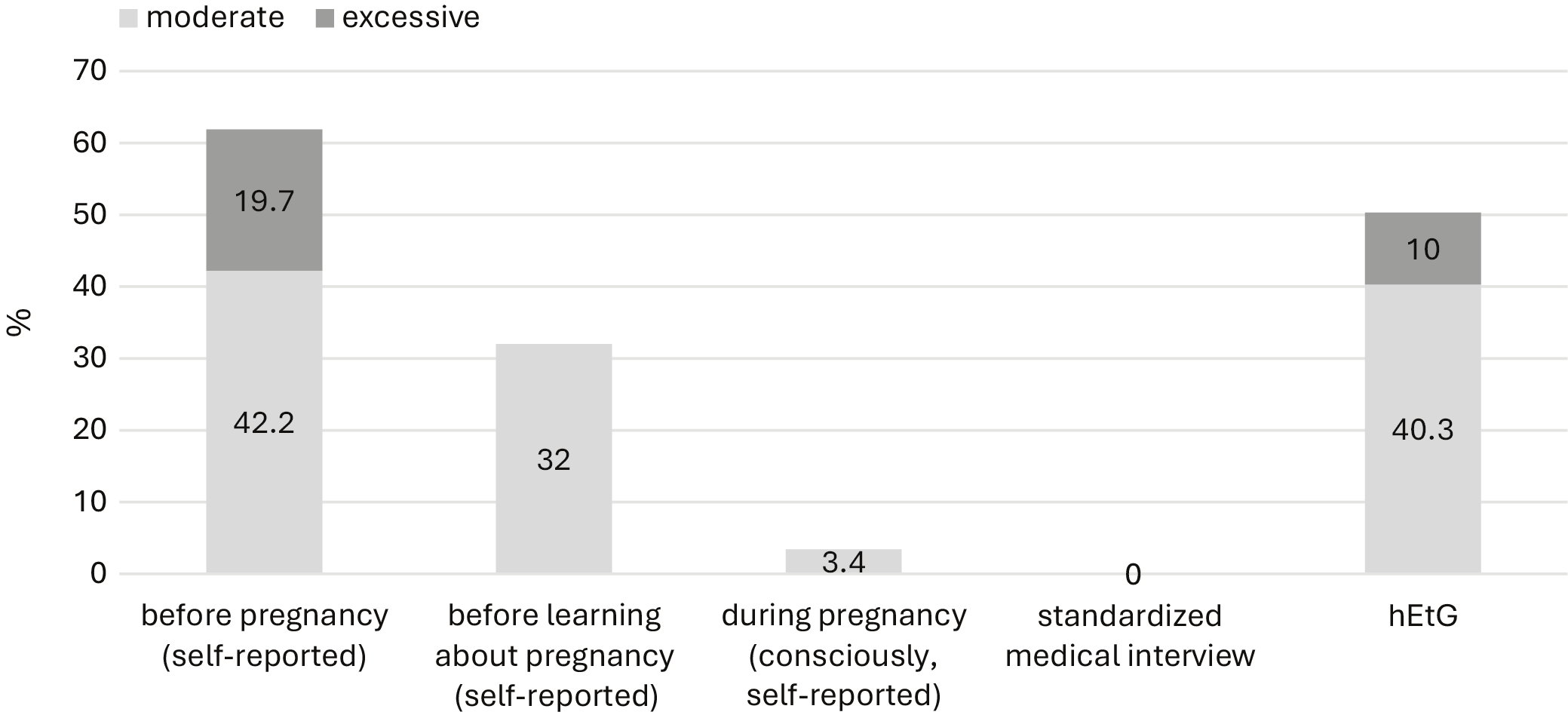
The results of phase 1 have already been described and discussed in detail elsewhere.32 From the perspective of phase 2, the key information from phase 1 is each patient’s hEtG result, not the statistical analysis of the study sample. We briefly present the most important findings and their interpretation in Table 323, 24, 25, 26, 27, 28, 29, 43, 44, 45 and Figure 3. These results indicate that 50% of patients drank alcohol during pregnancy, including 10% who drank heavily. An increased risk of low birth weight was also found among infants whose mothers drank alcohol during pregnancy.
Perception of hEtG
Analysis of participant responses to the disclosure of hEtG results revealed seven primary themes (Table 4). These themes reflect a range of emotional, cognitive, and behavioral reactions, especially among women whose results indicated PAE. The categories were not fully separable, so one person’s reactions could encompass more than one category.
Many participants, particularly those with negative hEtG results, did not engage with the information provided, probably taking it for granted (Theme 1). For participants with positive hEtG results, the lack of a verbal reaction was harder to interpret. Some women even ignored the opportunity to learn about or discuss the result, immediately redirecting the conversation to issues related to the next stage of the examination, i.e., assessing the child’s health in the 2nd year of life. Moreover, researchers could not rule out the possibility that the lack of interest in receiving or discussing the results was due to the context of the telephone conversation, which is not conducive to discussing this topic (despite the participant’s initial declaration that she could talk freely at that moment).
Several mothers justified their lack of concern or participation by emphasizing their child’s good health and development, implicitly framing the test results as irrelevant (Theme 2). Similar comments were also made by mothers who firmly denied alcohol use during pregnancy, emphasizing not only the child’s health but also how caring and responsible they were.
A prominent theme (Theme 3) among mothers with positive hEtG results was firm denial of alcohol consumption during pregnancy, often accompanied by emotional protest and rejection of the test’s validity. Some respondents reinforced their statements of abstinence during pregnancy by describing the support they received from loved ones.
Some participants expressed disbelief without antagonism or strong emotional responses (Theme 4). Their comments reflected cognitive dissonance or attempts to make sense of unexpected results. One of the mothers admitted that she had abused alcohol in the past while denying drinking during pregnancy.
Some women hypothesized about environmental or physiological factors that could have caused false-positive results, especially those who self-identified as abstinent (Theme 5). Such reactions were often accompanied by expressions of disbelief and surprise.
One participant explicitly raised concerns about how potentially inaccurate data could affect public health reporting and personal reputation (Theme 6). However, the denial and rejection described above could also, in some cases, suggest doubts about the study’s validity.
Few participants accepted the result without protest (Theme 7). These responses were often brief or marked by inquiries about medical consequences rather than denial. In the researchers’ view, in some cases, the lack of verbal comment also expressed acceptance and acknowledgment of the result.
Discussion
While national surveys in Poland have reported a decline in alcohol consumption during pregnancy, from 17% in 200543 to 5% in 201746 and 7% in 2020,44 the results of this study suggest that actual alcohol use remains high but that the willingness to report it has decreased. This may reflect successful public health campaigns that increase awareness47 without a corresponding shift in actual behavior.48 Therefore, prevention efforts should extend beyond information campaigns and aim to foster real behavioral change. Motivational interviewing has shown promise in this area, especially when focused on reducing alcohol use and improving preventive effectiveness.49, 50 However, evidence also suggests that, in some contexts, increased awareness does not necessarily reduce alcohol consumption.13
There is also an urgent need to strengthen perinatal care systems so that professionals are better equipped to recognize the risk of PAE and intervene effectively. This involves not only updating protocols and increasing knowledge and skills in FASD prevention, but also motivating physicians, midwives, and nurses to initiate discussions about alcohol use with women of reproductive age and/or verify alcohol use via biomarker analysis.
Although qualitative studies have shown how reluctant women are to accept the results of biological sample analysis, these remain the best available objective measures of alcohol consumption during pregnancy. The types of reactions identified among women included rejection and denial, confusion, a search for alternative explanations, indifference, and cautious acceptance. The reactions to hEtG disclosure were often emotionally charged and defensive. These findings underscore the importance of ethical sensitivity in communicating hEtG results and reinforce the need for confirmatory testing and supportive dialogue in clinical and research contexts.
Beyond conscious misreporting, unconscious psychological mechanisms may also influence participants’ responses.51 Participants’ disengagement and indifference may be interpreted as avoidance – a form of self-defense involving the dismissal of uncomfortable thoughts or feelings, or suppression, the conscious blocking of undesirable information. Denial, which involves rejecting external reality, allows one to focus on internal explanations and reassurance. It is understandable that a woman may want to protect her self-image when faced with information that contradicts her view of herself as a responsible, caring mother. Internalizing negative beliefs and feelings may lead to self-stigma, which is also associated with anticipating societal stigma.52, 53
General health messaging, such as “zero alcohol during pregnancy” or “any amount can harm your baby,” while well-intentioned, may contribute to the stigmatization of women who drink during pregnancy. These messages risk labeling such women as irresponsible or “bad” mothers52 and may inhibit open communication with healthcare providers. Moreover, these messages can be perceived as paternalistic and disrespectful of women’s autonomy.54 While the recommendation for complete abstinence during pregnancy should remain firm, communication strategies might benefit from emphasizing risk reduction and supporting informed decision-making without judgment or moralizing.
Even if we assume that most denials of hEtG results reflect stigma avoidance, the risk of false-positive biomarker results must be discussed. Although hEtG is a well-established and highly specific biomarker for detecting high levels of alcohol consumption, it has limitations, particularly low sensitivity for moderate drinking and individual variability in EtG incorporation.55 While false negatives are more common, research suggests that false positives may occur in approx. 13% of cases.26
Low (below our cutoff point of 5 pg/mg) but detectable hEtG concentrations have been documented in abstinent adults56, 57 and in young children living in households with substance-using caregivers.56 Moreover, elevated hEtG levels have been observed in individuals with kidney or liver disease and diabetes58, 59 – though none of these conditions were present in our study participants, aside from isolated cases of gestational diabetes.
There is no evidence that hEtG levels above 5 pg/mg can be caused by frequent use of ethanol-based hand disinfectants,60 but prolonged exposure of hair to alcohol-based perfumes may increase hEtG levels, resulting in false-positive results.61 Cosmetic hair treatments represent an additional source of analytical interference that warrants consideration. Oxidative procedures such as bleaching and permanent dyeing have been shown to substantially reduce hEtG concentrations through chemical degradation or physical removal of EtG from the hair matrix, potentially leading to false-negative results.61, 62, 63 In vitro studies have demonstrated that hEtG can disappear entirely from hair following a strong bleaching treatment61 and that all common coloring procedures, including henna, markedly reduce EtG content, in some cases to below the limit of detection.63 The specific types of hair treatments should be documented at the time of sample collection and considered during result interpretation.64 A false-positive result caused by the application of a hair gel in an abstinent patient after liver transplantation was also reported.65 Therefore, we cannot exclude the influence of accidental contamination of hair samples on the hEtG analysis results.
Because we cannot definitively rule out false-positive hEtG results in some cases, it is important to distinguish analytical uncertainty from psychological phenomena. Rejection, the search for alternative explanations, and concern about validity cannot be explained solely by analytical error. Psychological defense mechanisms are activated with great intensity when information, whether true or false, is perceived as threatening and challenges one’s identity or self-image. This is particularly the case in the highly stigmatizing context of alcohol consumption during pregnancy.
The analysis of reactions among participants who tested positive suggests that disclosing biomarker findings is a highly sensitive issue. Further research is needed to determine the best methods for discussing such results with patients and making them useful in planning and delivering health interventions.
It should be emphasized that, while underestimation of alcohol use is the major threat in population-level epidemiological analyses based on hEtG,26 false-positive results may pose a threat to the individual. They may have serious implications for individual-level assessments of child health, family dynamics, and maternal wellbeing. Thus, interpreting biomarker results requires caution, and findings should be communicated to participants with sensitivity. When hEtG results inform therapeutic, social, or legal interventions, confirmation with additional biomarkers should be required.
Limitations of the study
This study has several limitations to consider when interpreting the findings. First, the sample was relatively small and was drawn from a single hospital, which limits the generalizability of the findings.32
The recruitment process was adapted to hospital workflow and prioritized maternal wellbeing, reducing the standardization of data collection.32 Furthermore, participants’ awareness of the study objectives and the purpose of collecting hair samples may have influenced their consent. Participants who may have consumed alcohol during pregnancy may have been particularly reluctant to re-engage in the study during the follow-up period.
However, it is difficult to assess the impact of recruitment bias on the qualitative data collected in the 2nd phase of the study. Given the participants’ relatively good socioeconomic circumstances, they may not have been accustomed to discussing their lifestyle with others (e.g., medical or social workers). Expanding on this idea, one could hypothesize that individuals in more disadvantaged circumstances, benefiting from various forms of social support, would be more open to discussing alcohol consumption during pregnancy. It could also be argued that in a small town or rural environment, where there is less social anonymity than in a large city, responses to the hEtG results would differ. However, future research should verify these assumptions.
Moreover, only mothers participated in the study, and the research team made every effort to ensure that women felt comfortable discussing their hEtG results and that no one (e.g., the child’s father) influenced their responses. Therefore, the results reflect only the women’s perspective. However, in the future, it would also be worthwhile to explore men’s attitudes toward the results of biological sample analysis indicating possible prenatal alcohol exposure in their child.
Second, the qualitative analysis is based on participants’ verbal reports during follow-up, which may have been influenced by social desirability, recall bias, or the passage of time since childbirth. Although a structured, multistage grounded theory approach enhanced transparency and reliability,40, 41, 42 the interpretation of qualitative findings may still reflect contextual and disciplinary perspectives.
Third, although highly specific, the hEtG assay has limited sensitivity for detecting moderate alcohol consumption and may produce false positives under certain rare conditions, which may have influenced participants’ reactions.
Fourth, reliance on a single biomarker without confirmatory testing with other biological measures (which could not be included in this project for financial reasons) limits the certainty of individual-level conclusions, although it remains informative for population-level estimates.
Finally, as with all studies addressing socially sensitive topics, psychological and emotional factors may have influenced both participation and self-reporting patterns.24, 27, 52, 53 Replication of these findings in larger, more diverse samples and the inclusion of multibiomarker approaches are recommended to improve validity and strengthen the evidence base for future research.
Conclusions
This study confirms that the prevalence of PAE, detected by hEtG, is substantially higher than that suggested by self-reported data, even among highly educated and socioeconomically advantaged women. Although hEtG offers a valuable and objective measure of alcohol consumption during pregnancy, the frequent denial or questioning of positive results highlights the complexity of interpretation and the role of effective communication of biomarker results in preventing women from feeling guilty or stigmatized.
Denial and questioning of objective results are likely influenced by social desirability bias, fear of negative judgment, self-stigmatization, and concerns about the potential consequences of sharing results with family members or professionals with whom the family or child may have contact. However, further studies are needed to better understand women’s reactions.
Public health strategies should integrate objective biomarker monitoring with effective and nonjudgmental communication and, where possible, confirm positive results across multiple biomarkers before applying them in clinical, social, or legal contexts. Strengthening perinatal care systems by training health professionals to openly and respectfully discuss alcohol use with women of reproductive age is crucial for preventing FASD. Future research should validate multibiomarker approaches and explore psychological factors that influence self-reporting. Clinically, these findings highlight the need for healthcare providers to communicate biomarker results sensitively and manage patients’ denial or distress while maintaining a supportive, nonjudgmental approach.
Data Availability Statement
The participants in this study did not provide written consent for their data to be shared publicly; therefore, due to the sensitive nature of the research, the supporting data are not available.
Consent for publication of personal information
Not applicable.
Use of AI and AI-assisted technologies
Not applicable.