Abstract
Poor nutritional status and suboptimal dietary patterns are strongly associated with adverse outcomes in patients with chronic heart failure (CHF), including increased mortality, reduced functional capacity, and a higher risk of hospitalization. This scientific statement from the Polish Society of Dietetics summarizes the current evidence and provides clinically oriented guidance on the role of nutrition in the management of CHF. It outlines the key components of nutritional care across the spectrum of CHF, including screening, assessment, dietary strategies, and supplementation. The main features of evidence-based nutritional management in CHF include: 1) routine nutritional screening using validated tools and structured assessment incorporating the GLIM criteria; 2) identification of malnutrition, cachexia, sarcopenia, and sarcopenic obesity; 3) individualized dietary management tailored to the HF phenotype and clinical status; 4) prioritization of dietary patterns rich in plant-based and minimally processed foods, with the Mediterranean diet as the dietary model supported by the strongest evidence; 5) avoidance of excessive sodium intake and unnecessary fluid restriction in stable patients; 6) ensuring adequate energy intake and protein intake to preserve lean body mass; and 7) targeted, rather than routine, use of micronutrient supplementation, with particular consideration of iron deficiency.
Key words: dietitians, dietary patterns, heart failure, nutritional status, nutrition therapy
Introduction
Heart failure (HF) is a complex clinical syndrome affecting an estimated 64 million people worldwide and representing one of the leading causes of hospitalization and mortality across all age groups.1 Despite significant advances in pharmacological and device-based therapies, prognosis in chronic HF (CHF) remains poor, with 5-year mortality rates exceeding 50%.2 Alongside established risk factors, diet and nutritional status play a pivotal yet underrecognized role in the clinical course of CHF, influencing disease progression, functional capacity, quality of life, and clinical outcomes across the full spectrum of HF phenotypes.2, 3 CHF is additionally characterized by a high burden of multimorbidity, frailty, inflammation, and metabolic disturbances, all of which may substantially influence nutritional status and clinical management.2 No dedicated evidence-based nutritional guidance for patients with HF has been developed to date by a dietetic professional society in Poland or Central Europe.
This scientific statement from the Polish Society of Dietetics (PTD) aims to bridge this gap by synthesizing the current evidence on diet and nutrition across the full spectrum of CHF management, from nutritional screening and assessment to dietary strategies, supplementation, and practical clinical implementation. For each domain, we interpret the available evidence from observational studies, randomized controlled trials (RCTs), meta-analyses, clinical guidelines, and consensus statements from leading international cardiology societies, with particular emphasis on the highest levels of evidence, and highlight areas where further research is needed.
The statement is intended to support dietitians, physicians, nurses, and allied health professionals in delivering evidence-based nutritional care to patients with CHF. It was developed by a multidisciplinary expert group of 10 professionals with expertise in clinical dietetics, HF nutrition, cardiology, HF nursing, emergency medical services, health promotion, and health education. Collectively, the authors bring extensive clinical and/or research experience in cardiovascular care, nutrition, and public health. The statements presented in this document reflect the authors’ expert synthesis and interpretation of the currently available evidence and were refined through iterative discussion and consensus. Given the nature of this scientific statement, no formal grading system for evidence quality or recommendation strength was applied.
Nutrition disorders in chronic heart failure
Statement
STATEMENT 1: Routine nutritional screening using validated tools appropriate for the clinical setting, such as MUST or MNA-SF, is considered an essential component of care for patients with CHF. Positive screening findings warrant a comprehensive nutritional assessment incorporating the GLIM criteria.
STATEMENT 2: In patients with CHF and overweight or obesity, preserving lean body mass and preventing unintentional weight loss are recognized as key priorities in nutritional management, with attention to maintaining adequate nutritional intake throughout the disease course.
Nutrition disorders in HF exist along a complex continuum ranging from protein-energy malnutrition to cardiac cachexia and sarcopenic obesity.4 Malnutrition, diagnosed according to the Global Leadership Initiative on Malnutrition (GLIM) criteria, affects 20–60% of hospitalized patients and is an independent predictor of mortality and prolonged hospital stay.4, 5 In patients with HF and preserved ejection fraction (HFpEF), the prevalence of malnutrition is estimated at 40–63%, supporting the need for nutritional screening regardless of body mass index (BMI).4 Cardiac cachexia represents a multi-organ catabolic syndrome characterized by unintentional weight loss and muscle wasting.6 A 2025 meta-analysis involving 3,821 patients revealed that cachexia increases the risk of all-cause mortality by 59% (HR 1.59; 95% CI: 1.34–1.89) and major adverse cardiovascular events (MACE) by 2.41-fold. The pathophysiology of this condition is driven by chronic low-grade inflammation (e.g., elevated tumor necrosis factor alpha (TNF-α) and interleukin (IL)-6) and anabolic resistance.6 Additional contributing mechanisms include neurohormonal activation, reduced anabolic signaling, mitochondrial dysfunction, impaired gastrointestinal absorption, and decreased dietary intake, all of which promote progressive muscle wasting and negative energy balance in advanced CHF.1, 6, 7 Commonly used nutritional screening tools in CHF include the Malnutrition Universal Screening Tool (MUST), particularly in the outpatient setting, and the Mini Nutritional Assessment (MNA) or its short form (MNA-SF) in older or frail patients. Comprehensive nutritional assessment may be further supported by the Global Leadership Initiative on Malnutrition (GLIM) framework, which combines phenotypic and etiologic criteria. A detailed discussion of nutritional assessment methods is provided in the “Nutritional assessment in CHF” section.
Sarcopenia (the progressive decline in muscle mass, strength, and function) affects approx. 34% of the HF population.8 A 2025 network meta-analysis identified the Short Physical Performance Battery (SPPB) score as a strong predictor of adverse outcomes, although estimates varied substantially across studies and the certainty of the evidence was low.8 These muscle-related disorders often lead to frailty, which more than doubles the risk of cardiovascular death.8 Conversely, the “obesity paradox” has been described in HF, with observational data suggesting better short- to medium-term survival in patients with a BMI of 25–35 kg/m2; however, this phenomenon is increasingly attributed to residual confounding and the limitations of BMI-based classification rather than a true protective effect.9 Analyses incorporating more precise anthropometric indices, such as waist-to-height ratio and measures of central adiposity, demonstrate a consistent association between excess adiposity and adverse clinical outcomes, suggesting that the apparent protective effect of a higher BMI is largely explained by methodological limitations and the inability of BMI to accurately reflect body composition.10, 11 However, sarcopenic obesity occurs in 20–30% of patients with overweight, in whom excess adiposity may mask significant muscle deficits.12 Sarcopenic obesity is associated with markedly reduced functional capacity and higher mortality compared with obesity without muscle loss. Diagnostic strategies must therefore prioritize functional testing and body composition analysis over BMI alone.12 Taken together, nutrition disorders in HF represent a dynamic and overlapping spectrum requiring comprehensive assessment beyond BMI alone, including attention to modifiable factors such as dietary intake. Reduced appetite and inadequate oral intake are frequently observed in patients with CHF, particularly in older adults, advanced stages of disease, and periods of clinical deterioration.3, 13 Fatigue, dyspnea, gastrointestinal congestion, and treatment burden may further contribute to reduced dietary intake and progressive loss of lean body mass.3, 7
In this context, adequate protein intake appears to be an important determinant of clinical outcomes in patients with HF, particularly in the setting of malnutrition, anabolic resistance, and sarcopenia. Observational data from large HF cohorts indicate that lower protein intake is independently associated with increased all-cause mortality (HR approx. 1.5–2.0 across intake quartiles) and a worse clinical profile, including a greater burden of congestion and higher levels of disease severity biomarkers.14 Randomized evidence on high-protein interventions remains limited and methodologically heterogeneous. A recent meta-analysis of 15 RCTs (n = 744) demonstrated a modest improvement in functional capacity (6-min walk distance [6MWD], mean difference 35 m; 95% CI: 15.93–54.58), without consistent effects on lean body mass, muscle strength, or renal function, and with very low certainty of the evidence due to a high risk of bias and imprecision.15 An overview of meta-analyses, including 441 studies, demonstrated that protein supplementation does not improve muscle outcomes in the general older population but may confer modest benefits in individuals with chronic conditions, particularly when combined with exercise.16
These findings are consistent with a systematic review of high-protein dietary interventions, which reported modest improvements in functional outcomes and selected clinical parameters, particularly in malnourished or recently hospitalized patients, but also emphasized substantial heterogeneity across studies in intervention design, patient populations, and outcome measures, thereby limiting the ability to draw firm clinical conclusions.17 Collectively, the current evidence supports the clinical importance of avoiding inadequate protein intake rather than confirming the efficacy of high-protein dietary strategies. Robust, adequately powered RCTs evaluating clinically meaningful endpoints (mortality, hospitalization, and muscle mass) are lacking.
Nutritional assessment in CHF
STATEMENT 3: Body composition assessment using BIA may provide useful adjunctive information to clinical evaluation in patients with CHF, particularly when interpreted in the context of fluid status and diuretic therapy.
STATEMENT 4: Regular reassessment of nutritional status, particularly following significant changes in clinical condition or body weight, is considered an important component of longitudinal CHF care. Nutritional interventions are best implemented within a multidisciplinary framework involving the treating physician and a registered dietitian.
Nutritional disorders in CHF are frequently underdiagnosed, in part because standard anthropometric measures, such as body mass index, may substantially underestimate nutritional risk when malnutrition, sarcopenia, obesity, or fluid retention coexist, which is common in this population.18, 19, 20
Screening tools
There is no single nutritional screening tool specific to HF. Therefore, the choice of screening tool depends on the clinical setting and patient profile. The MUST is practical in outpatient and community care; the Nutritional Risk Screening 2002 (NRS-2002) is more suitable for hospitalized patients, whereas the Mini Nutritional Assessment (MNA) or its short form (MNA-SF) may be especially useful in older and frail individuals with CHF.21 In this context, the GLIM framework appears particularly useful because it combines phenotypic criteria, such as weight loss, low BMI, or reduced muscle mass, with etiologic criteria, including reduced intake or absorption and disease burden or inflammation.22 Available evidence suggests that the MNA has good prognostic performance in HF, whereas the MNA-SF is a more practical option.21 Laboratory-based scores, such as the Controlling Nutritional Status (CONUT) score (incorporating serum albumin, total cholesterol, and lymphocyte count) or the Geriatric Nutritional Risk Index (GNRI) (based on serum albumin and body weight), may provide additional prognostic information. However, in patients with CHF, these scores should be interpreted with caution because their components may be influenced by inflammation, statin therapy, and fluid retention.23 In addition, reduced appetite and lower oral intake are frequently observed in nutritionally vulnerable patients with CHF and may contribute to progressive nutritional deterioration, particularly in advanced stages of the disease.13
Body composition
Body composition assessment is an important complement to nutritional screening tools because CHF frequently distorts the interpretation of standard anthropometric measures. Bioelectrical impedance analysis (BIA) is the most practical technique for bedside and outpatient use because it enables repeated assessment of fat mass, fat-free mass, total body water, and extracellular fluid. BIA is a valid adjunctive method for assessing nutritional status because it provides objective information on body composition and hydration, while phase angle may offer additional insight into nutritional status.24 Nevertheless, interpretation of BIA requires consideration of congestion, diuretic therapy, and device-specific limitations. Although currently available evidence suggests a low risk of clinically relevant electromagnetic interference between contemporary BIA devices and cardiac implantable electronic devices (CIEDs), or of CIED malfunction, interpretation of BIA-derived body composition parameters in patients with CHF may still be influenced by congestion status, fluid shifts, and device-related factors that affect measurement accuracy. These limitations are particularly relevant in ambulatory HF management, where BIA findings should be interpreted within the broader clinical and hydration context.25, 26 Accurate measurement requires standardized conditions, including adequate hydration status and the absence of significant edema, which may limit its reliability during acute decompensation.24 Dual-energy X-ray absorptiometry (DXA) remains the reference method for assessing lean and fat mass and is especially valuable when sarcopenia or sarcopenic obesity is suspected. However, its limited availability, higher cost, and limited feasibility for serial monitoring in outpatient settings restrict its routine clinical applicability.27 Selected laboratory biomarkers may support, but should not replace, clinical nutritional assessment. Albumin should not be used as a standalone marker of nutritional status because low concentrations often reflect inflammation, hemodilution, or disease severity.28 High-sensitivity C-reactive protein can be useful as an indicator of the inflammatory component of disease-related malnutrition and may support the etiologic component of GLIM-based assessment. Iron status has both diagnostic and therapeutic relevance in HF. Current HF guidelines recommend periodic screening for anemia and iron deficiency using a complete blood count, ferritin, and transferrin saturation.2 The most useful approach is to combine structured screening, body composition analysis, and a focused biomarker panel rather than relying on any single parameter.
Dietary strategies in CHF
Core nutritional principles in CHF management
Nutritional management in CHF requires an individualized approach that reflects the marked heterogeneity of the syndrome and the high prevalence of nutrition-related disorders affecting disease trajectory.7 Contemporary HF phenotypes, including HF with reduced ejection fraction (HFrEF) and preserved ejection fraction (HFpEF), differ not only in their underlying pathophysiology but also in metabolic profile and nutritional risk burden.2, 7 Patients with HFrEF are frequently characterized by a hypercatabolic state driven by systemic inflammation and neurohormonal activation, contributing to malnutrition, cachexia, and progressive loss of lean body mass.1 In contrast, HFpEF is more commonly associated with obesity, adiposity-related inflammation, and cardiometabolic comorbidities, including insulin resistance, representing a phenotype with distinct nutritional challenges.7 In clinical practice, nutritional management in CHF is further complicated by the high prevalence of multimorbidity, including chronic kidney disease, diabetes, frailty, obesity, chronic obstructive pulmonary disease, advanced age, and polypharmacy, all of which may substantially influence nutritional risk, dietary tolerance, and the implementation of nutritional strategies.2 Contemporary HF pharmacotherapy may also influence nutritional status, body composition, appetite, hydration, and electrolyte balance.2, 29 In particular, sodium-glucose cotransporter 2 (SGLT2) inhibitors and incretin-based anti-obesity therapies, which are increasingly used in patients with HFpEF and obesity, may contribute to reduced appetite, weight loss, changes in body composition, and altered nutritional requirements, highlighting the importance of individualized nutritional monitoring during treatment.29, 30, 31 In patients with coexisting chronic kidney disease (CKD), nutritional management may require additional individualization because of the complexity of balancing cardiac and renal nutritional priorities, including considerations related to protein intake, electrolyte management, and fluid balance, as addressed in dedicated nephrology guidelines.
Weight management
STATEMENT 5: Weight management in patients with CHF requires an individualized approach that takes into account the HF phenotype and overall nutritional status. In patients with obesity and HFpEF, intentional weight reduction may improve functional capacity and symptom burden, whereas in HFrEF, nutritional management primarily focuses on preserving lean body mass and minimizing the risk of malnutrition. Nutritional interventions are best implemented under the supervision of a dietitian experienced in HF care.
Body weight is a key determinant of clinical status and prognosis in patients with CHF, although its role varies across HF phenotypes.2, 7 In HFpEF, obesity represents a dominant clinical and pathophysiologic feature, contributing to systemic inflammation, reduced exercise capacity, and an adverse cardiometabolic profile.7 In this population, intentional weight reduction through caloric restriction and aerobic exercise improves functional capacity, as demonstrated by significant increases in peak oxygen consumption, with additive effects observed when the interventions are combined.32 These findings are consistent with contemporary American College of Cardiology (ACC) recommendations, which emphasize obesity as a key therapeutic target in HFpEF and support lifestyle-based interventions to improve symptoms and functional status.30 Contemporary obesity-targeted therapies may also influence appetite, body composition, and nutritional requirements in patients with obesity-related HFpEF, particularly in the context of incretin-based therapies.33
In contrast, in HFrEF, the role of weight management is more complex and requires an individualized approach.2, 7 Unlike HFpEF, unintentional weight loss in HFrEF is consistently associated with worse clinical outcomes, reflecting the predominance of catabolic processes and elevated malnutrition risk in this phenotype.1, 3 As discussed in the “Nutrition disorders in chronic heart failure (CHF)” section, the apparent protective effect of higher BMI does not reflect a true biological phenomenon, and phenotype-specific assessment of body composition may provide more clinically relevant information than BMI alone.10, 11 Evidence regarding weight management in patients with heart failure with mildly reduced ejection fraction (HFmrEF) remains limited, and this phenotype is generally considered to lie on a continuum between HFrEF and HFpEF. Taken together, current evidence supports a phenotype-specific approach to weight management in CHF.
In contrast, in HFrEF, the role of weight management is more complex and requires an individualized approach.2, 7 Unlike HFpEF, unintentional weight loss in HFrEF is consistently associated with worse clinical outcomes, reflecting the predominance of catabolic processes and an increased risk of malnutrition in this phenotype.1, 3 As discussed in the “Nutrition Disorders in Chronic Heart Failure (CHF)” section, the apparent protective effect of a higher BMI does not reflect a true biological phenomenon, and phenotype-specific assessment of body composition may provide more clinically relevant information than BMI alone.10, 11 Evidence regarding weight management in patients with HFmrEF remains limited, and this phenotype is generally considered to lie on a continuum between HFrEF and HFpEF. Taken together, the current evidence supports a phenotype-specific approach to weight management in CHF.
Sodium and fluid intake
STATEMENT 6: In patients with CHF receiving guideline-directed medical therapy, excessive salt intake (>5 g/day [approximately >2 g sodium/day]) is generally discouraged, whereas sodium restriction to <1.5 g/day does not appear to confer additional clinical benefit. In stable patients, a usual fluid intake of 1.5–2.5 L/day, guided by thirst and clinical status, is considered appropriate. More restrictive fluid strategies may be relevant in selected patients with dilutional hyponatremia or acute decompensation. Dietary adjustments require individualization according to clinical status and are best undertaken in collaboration with the treating physician.
Sodium and fluid restriction have long been standard recommendations in the management of HF; however, their evidence base has been substantially challenged by contemporary data. The European Society of Cardiology (ESC) Guidelines advise limiting salt intake to no more than 5 g/day in all patients with HF, while fluid restriction to 1.5–2 L/day is recommended only for selected patients with severe or advanced disease.2 However, these recommendations have been substantially revised in the clinical consensus statement of the Heart Failure Association (HFA) of the ESC, which concludes that stringent sodium and fluid restriction are not warranted in most patients with stable CHF receiving guideline-directed medical therapy and that excessive restriction may be harmful.34
Regarding sodium, a systematic review and meta-analysis of RCTs found no significant benefit of sodium restriction on all-cause mortality, cardiovascular mortality, or HF-related hospitalization, with a trend toward increased event rates associated with more restrictive sodium intake in ambulatory patients with CHF.35 These findings were confirmed in a separate meta-analysis conducted by Polish investigators, which similarly demonstrated neutral effects on clinical endpoints in outpatient CHF.36 These findings are consistent with the clinical consensus statement of the Heart Failure Association (HFA), which supports a sodium intake of 1.5–4 g/day in patients with stable CHF receiving guideline-directed medical therapy, with intake up to 5 g/day considered acceptable.34
Regarding fluid intake, evidence from randomized trials is similarly limited. The FRESH-UP trial, the largest RCT to date on this topic, randomized 504 outpatients with CHF to liberal fluid intake versus restriction to 1,500 mL/day. No significant difference in health status (Kansas City Cardiomyopathy Questionnaire – Overall Summary Score (KCCQ-OSS): 74.0 vs 72.2; adjusted mean difference 2.17; 95% confidence interval (95% CI): −0.06 to 4.39; p = 0.06) was observed, while thirst distress was significantly lower in the liberal intake group (Thirst Distress Scale for patients with HF (TDS-HF): 16.9 vs 18.6; p < 0.001), with no differences in mortality, HF hospitalization, or changes in diuretic therapy.37 These findings are in line with the HFA consensus statement, which supports normal fluid intake of 1.5–2.5 L/day guided by thirst, with fluid restriction considered only in selected patients with dilutional hyponatremia or acute decompensation.34
Dietary patterns
STATEMENT 7: The Mediterranean dietary pattern currently represents the dietary approach with the strongest evidence base in patients with CHF and can be adapted to local food availability and cultural context. The Dietary Approaches to Stop Hypertension (DASH) and plant-based dietary patterns also appear to be reasonable dietary approaches for selected patients. Dietary strategies for CHF require individualization based on HF severity, comorbidities, nutritional status, and patient preferences.
Dietary patterns characterized by high intakes of plant-based foods, whole grains, legumes, nuts, and unsaturated fats, including the Mediterranean diet, the DASH diet, and other plant-based dietary patterns, have been shown to be significantly associated with improved cardiovascular outcomes and a reduced risk of HF.38, 39, 40, 41 The most consistent and well-documented evidence relates to the Mediterranean diet. A systematic review and meta-analysis of cohort studies including 216,385 participants from European countries who were free of HF at baseline revealed that each 1-point increase in adherence to the Mediterranean diet was associated with a significantly lower risk of HF (RR = 0.94; 95% CI: 0.912–0.969). The authors concluded that greater adherence to this dietary pattern was associated with a lower risk of HF, particularly among women.38 These findings are consistent with a meta-analysis of observational studies evaluating the Mediterranean and DASH dietary patterns, in which high adherence to the Mediterranean diet was associated with a lower risk of incident HF (odds ratio (OR) = 0.77; 95% CI: 0.63–0.93), whereas high adherence to the DASH diet was associated with a lower risk of HF (OR = 0.83; 95% CI: 0.70–0.98). Importantly, in the same analysis, higher adherence to the Mediterranean diet was also associated with lower all-cause mortality in patients with HF (OR = 0.88; 95% CI: 0.78–0.99), whereas similarly robust data for the DASH diet in patients with established HF were not demonstrated.39 These findings suggest that, although both dietary patterns are beneficial for HF prevention, the association between diet and the clinical course of CHF is best documented for the Mediterranean diet, although the available evidence should still be interpreted with caution.
From a practical perspective, the feasibility of implementing the Mediterranean diet outside its region of origin is also important. Cost-adapted and culturally adapted Mediterranean dietary models should focus not on replicating specific foods typical of the Mediterranean region but rather on preserving the structural characteristics of the dietary pattern: high intakes of vegetables, fruits, legumes, whole grains, nuts, and seeds; a predominance of unsaturated over saturated fats; regular consumption of fish; and reduced intake of red and processed meats, ultra-processed foods, and added sugars. In Central and Eastern European settings, this may involve using locally available seasonal vegetables, legumes, whole grains, nuts, seeds, and accessible sources of unsaturated fats while maintaining overall dietary quality. Such an approach enhances feasibility, acceptability, and long-term adherence to dietary interventions, which is particularly important in patients with chronic disease.42, 43 Similarly, the DASH dietary pattern, originally developed for blood pressure control, has demonstrated favorable associations with HF risk in observational studies. In a large prospective cohort study, long-term adherence to this dietary pattern was associated with a significantly reduced risk of HF (HR = 0.83–0.85), with additional benefits observed when red and processed meat was replaced by DASH-consistent food components.44 However, in patients with established HF, the available evidence is considerably more limited. In one study of patients with HF, better adherence to the DASH diet was associated with lower insulin resistance, which may be relevant in the context of coexisting metabolic disturbances but does not constitute evidence of improved hard HF endpoints.45 Therefore, the DASH diet may be considered a favorable cardiometabolic dietary pattern, particularly for patients with HF and hypertension or metabolic disorders; however, its direct impact on the clinical course of CHF has not been well established.
Plant-based dietary patterns, including vegetarian and vegan diets, also represent dietary models with a potentially favorable cardiovascular profile. In population-based cohort studies, a higher intake of plant-based foods and lower consumption of animal products were associated with a reduced risk of cardiovascular morbidity, cardiovascular mortality, and all-cause mortality.46 Furthermore, a systematic review and meta-analysis of clinical trials in individuals with cardiovascular disease (CVD) or at high cardiovascular risk demonstrated that vegetarian diets were associated with reductions in low-density lipoprotein cholesterol (LDL-C), glycated hemoglobin (HbA1c), and body weight beyond those achieved with standard care.47 However, direct evidence regarding plant-based diets in the treatment of CHF remains very limited. In clinical practice, each of these dietary patterns requires adaptation to the specific context of CHF, and the Mediterranean diet currently has the strongest evidence base in this area. Adherence to this dietary pattern is associated with a lower risk of HF development, and available data also suggest potential benefits in patients with established HF, particularly with respect to all-cause mortality. For the DASH diet and plant-based dietary patterns, including vegetarian and vegan diets, high-quality randomized trials and meta-analyses conducted specifically in populations with CHF are still lacking. Much of the currently available evidence on dietary patterns is derived from cardiovascular prevention cohorts or populations free of HF at baseline, whereas high-quality randomized studies conducted specifically in patients with established CHF remain limited. Therefore, although these dietary patterns appear promising as adjunctive strategies in HF management, their effects should be interpreted with caution, and further research is needed to establish HF-specific recommendations.
Alcohol
STATEMENT 8: Alcohol consumption in patients with CHF is associated with potential adverse cardiovascular and pharmacological effects and does not appear to confer clinical benefit in this population. In patients with alcohol-related cardiomyopathy, complete alcohol abstinence remains a central component of management. Discussion of alcohol-related risks may support individualized counseling within routine CHF care.
Alcohol consumption in patients with established CHF should be approached with particular caution because it is associated with dilated cardiomyopathy, worsening HF, arrhythmias, and adverse interactions with guideline-directed pharmacotherapy.2, 48, 49 Beyond its cardiovascular effects, alcohol is classified as a Group 1 carcinogen by the International Agency for Research on Cancer, and available evidence indicates that no level of alcohol consumption can be considered safe with respect to cancer risk.50, 51 This is particularly relevant in patients with CHF, given the high prevalence of comorbidities and polypharmacy in this population. Current cardiovascular guidelines advise against alcohol consumption in patients with cardiomyopathy or established HF, and heavy alcohol consumption is consistently associated with worse cardiovascular outcomes.48, 52, 53
Energy intake
STATEMENT 9: Estimation of energy requirements in patients with CHF requires an individualized approach based on nutritional status, clinical condition, and body composition. Validated weight-based equations represent the most practical approach in routine care, whereas indirect calorimetry may provide additional value in selected cases where available.
STATEMENT 10: Total energy intake in patients with CHF is aimed at supporting weight stability in clinically stable individuals and nutritional recovery in patients with malnutrition or cachexia. Energy requirements and intake may require reassessment in response to changes in clinical status, nutritional condition, or body weight.
Energy requirements in patients with CHF vary according to nutritional status, disease severity, and clinical setting. Indirect calorimetry provides the most accurate estimate of resting metabolic rate (RMR) and is considered the reference method when available.54 If indirect calorimetry is not feasible, RMR may be estimated using 22 kcal/kg of actual body weight in well-nourished patients and 24 kcal/kg in malnourished patients with CHF, with modifications required in advanced disease.55, 56 The estimated RMR should be multiplied by an appropriate physical activity factor to determine total energy requirements. In stable, euvolemic patients, energy intake should meet requirements for weight maintenance and the prevention of catabolism. In malnourished or cachectic patients, energy intake should be sufficient to support nutritional recovery, whereas in patients with acute decompensated HF, energy intake should be reassessed regularly based on clinical tolerance.
In patients with overweight or obesity, particularly in the HFpEF phenotype, as discussed in the “Weight management” section, energy intake may be temporarily reduced to achieve gradual, intentional weight loss, provided the intervention is implemented in a controlled manner and does not lead to loss of lean body mass. The energy deficit should be moderate and combined with adequate protein intake and, where feasible, physical activity.32, 57 In patients with coexisting chronic kidney disease, nutritional planning may be further complicated by the need to balance cardiac and renal nutritional priorities, particularly regarding protein intake, electrolyte disturbances, and fluid management, while taking into account dedicated nephrology guidelines in this area.58
Diet fortification and oral nutritional support
STATEMENT 11: In patients with CHF who are malnourished or at risk of malnutrition, individualized nutritional support, including diet fortification and oral nutritional supplements (ONS), may improve nutritional status and appear to be associated with favorable clinical outcomes, including reduced mortality and HF-related rehospitalization. Nutritional management of malnutrition in CHF benefits from alignment with established clinical nutrition frameworks, including European Society for Clinical Nutrition and Metabolism (ESPEN) guidance, while taking into account the patient’s clinical status, comorbidities, and nutritional needs.
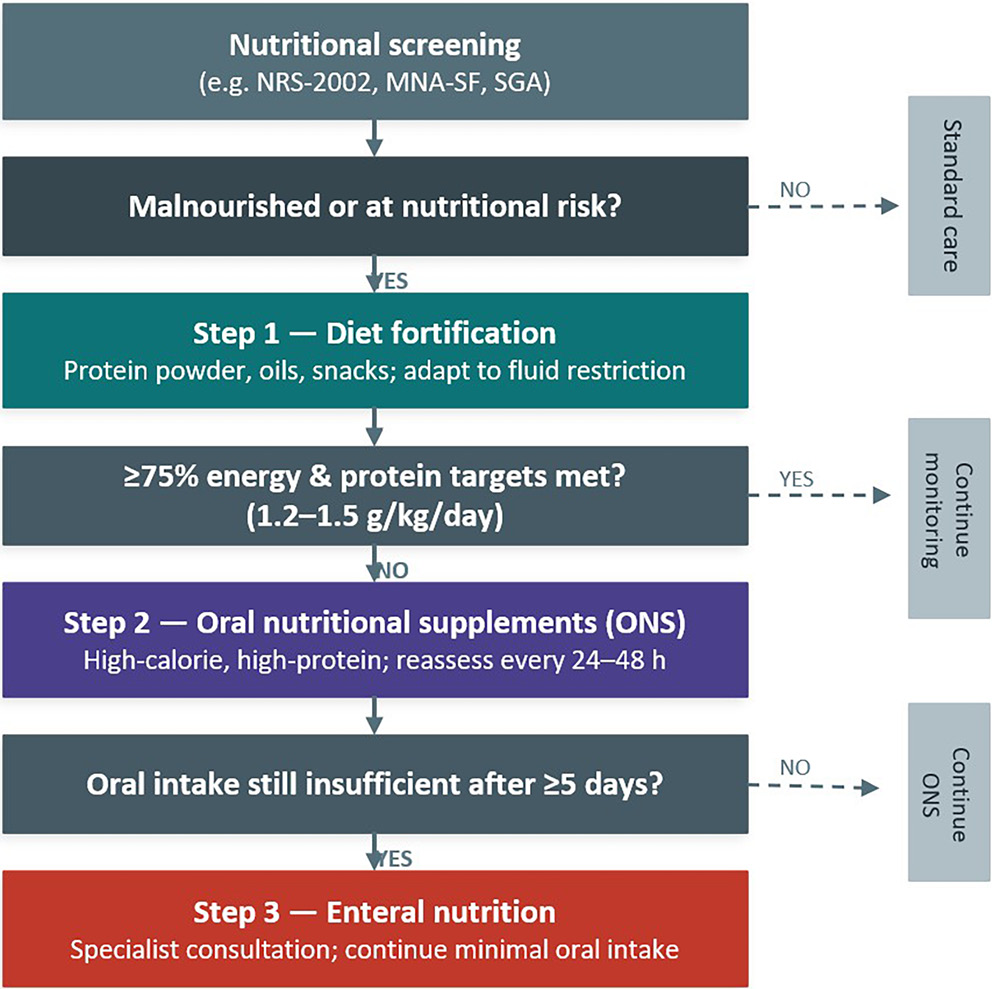
Malnutrition affects approx. 46% of patients with CHF and is independently associated with a more than twofold increase in all-cause mortality.3 In patients with HF who are malnourished or at nutritional risk, early individualized nutritional support is associated with improved clinical outcomes. It has been shown to reduce 30-day mortality from 14.8% to 8.4% compared with a standard hospital diet.59 The first step in nutritional intervention is diet fortification, increasing the energy and protein density of regular meals through the addition of protein powders, oils, or between-meal snacks, adapted to the patient’s preferences, fluid restrictions, and comorbidities (e.g., renal failure and diabetes). When diet fortification alone is insufficient to meet at least 75% of estimated energy and protein requirements (1.2–1.5 g protein/kg body weight/day), oral nutritional supplements (ONS) should be introduced. High-calorie, high-protein ONS have been shown to increase body weight by a mean of 3.83 kg (95% CI: 0.17–7.50, p = 0.04)in malnourished patients with HF and, when combined with individualized dietary counseling, to significantly reduce all-cause mortality and HF-related rehospitalization.18 In patients whose oral intake remains insufficient despite diet fortification and ONS, escalation to enteral nutrition should be considered. Nutritional status should be reassessed regularly throughout the hospital stay and at discharge. Figure 1 presents the nutritional management algorithm for patients with CHF.
Micronutrients and supplementation
Iron deficiency and iron therapy
STATEMENT 12: Adequate dietary iron intake represents an important component of nutritional management in patients with CHF. In the presence of confirmed iron deficiency, current evidence supports intravenous iron supplementation as the preferred therapeutic approach.
Iron deficiency affects approx. 50% of patients with CHF and is an independent predictor of all-cause mortality, regardless of hemoglobin concentration. Its development is related to both reduced dietary iron intake and impaired intestinal absorption resulting from inflammation-induced elevation of hepcidin levels.60 Adequate dietary iron intake remains an important component of the nutritional management of patients with CHF; however, oral iron supplementation does not effectively correct iron deficiency in this population. In the IRONOUT HF trial (n = 225), high-dose oral iron supplementation with a polymeric iron complex (150 mg twice daily for 16 weeks) resulted in only a modest 3% increase in transferrin saturation and did not improve exercise capacity or quality of life compared with placebo.61 A meta-analysis of 5 RCTs (n = 590) confirmed that oral iron did not significantly improve transferrin saturation, 6MWD, or all-cause mortality.62 A key mechanistic barrier limiting the bioavailability of oral iron in CHF is elevated hepcidin.61 By contrast, intravenous iron supplementation reduces recurrent HF hospitalizations and cardiovascular mortality. In a meta-analysis of 10 RCTs (n = 3,373), a 25% reduction in the composite endpoint was observed (rate ratio = 0.75; 95% CI: 0.61–0.93; p < 0.01),63 which was confirmed by an updated Bayesian meta-analysis of 6 studies including 7,175 patients (RR = 0.72; 95% CI: 0.55–0.89 at the 12-month follow-up).64
Vitamin D
STATEMENT 13: Current evidence does not support routine vitamin D supplementation as HF-specific therapy in patients with CHF. Correction of confirmed vitamin D deficiency may nevertheless be appropriate according to general clinical indications. Further well-designed randomized trials are needed, particularly those accounting for HF phenotype, baseline 25(OH)D concentration, and clinically relevant outcomes.
Vitamin D is an important nutrient involved in multiple pathophysiological pathways relevant to HF. In patients with HF, low 25(OH)D concentrations are frequently associated with a worse prognosis. A meta-analysis showed that low circulating 25(OH)D concentrations may be an independent risk factor for all-cause mortality in patients with HF.65 However, it should be emphasized that this observational association does not consistently translate into benefit from supplementation, and randomized evidence remains inconsistent. In a meta-analysis of 7 RCTs, vitamin D supplementation had no significant effect on LVEF, exercise capacity, or natriuretic peptide concentrations.66 By contrast, a more recent meta-analysis including 18 RCTs (n = 2,182) reported improvements in selected surrogate markers, such as left ventricular ejection fraction (LVEF), N-terminal pro-B-type natriuretic peptide (NT-proBNP), and indices of left ventricular remodeling.67 These findings should, however, be interpreted with caution because of substantial heterogeneity across studies, differences in dosing regimens, treatment duration, and population characteristics. Overall, the current evidence does not provide a sufficiently strong basis for the routine use of vitamin D as an HF-specific therapy, although correction of confirmed deficiency remains appropriate according to general clinical indications.
Thiamine and B-group vitamins
STATEMENT 14: Current evidence does not support routine supplementation with thiamine or other B-group vitamins as HF-specific therapy in patients with CHF. Correction of confirmed deficiency may nevertheless be appropriate according to general clinical indications.
Among the B vitamins, thiamine has received the greatest attention in HF because of its role in energy metabolism and the potential impact of deficiency on cardiac function. In patients with HF, thiamine deficiency appears to be more common than in the general population, which may reflect poorer nutritional status, more advanced disease, and polypharmacy.68 However, interventional data remain inconsistent. Meta-analyses of randomized trials have not demonstrated a significant effect of thiamine supplementation on LVEF, NT-proBNP, exercise capacity, or New York Heart Association (NYHA) functional class, while indicating that its principal effect is the correction of thiamine deficiency.69, 70 Evidence regarding other B vitamins is even more limited, and the small sample sizes, heterogeneity of the available studies, and lack of hard clinical endpoints do not currently support routine supplementation as an HF-specific therapy.
Potassium and magnesium
STATEMENT 15: Dietary potassium and magnesium intake in patients with CHF requires individual assessment in the context of serum electrolyte concentrations, renal function, and contemporary pharmacotherapy. Potassium-containing salt substitutes may be a clinically relevant source of excess potassium intake in patients with hyperkalemia or those receiving Renin-Angiotensin-Aldosterone System inhibitors (RAASi) therapy. Current evidence does not support routine magnesium supplementation in the absence of symptomatic or documented deficiency.
Electrolyte disturbances are common in CHF and are closely linked to pharmacological treatment. Loop diuretics and thiazides promote urinary losses of potassium and magnesium, increasing the risk of hypokalemia and hypomagnesemia, whereas angiotensin-converting enzyme (ACE) inhibitors, angiotensin receptor blockers (ARBs), and mineralocorticoid receptor antagonists may cause potassium retention and hyperkalemia.2, 71 Both hypokalemia and hyperkalemia are independently associated with increased mortality in patients with CVD, including CHF, with a U-shaped relationship and the lowest risk observed at a serum potassium concentration of approx. 4.2 mmol/L. A meta-analysis of 31 cohort studies (n = 227,645) demonstrated that hyperkalemia was associated with a nearly 3-fold increased risk of in-hospital mortality (RR = 2.78; 95% CI: 1.92–4.03) and a 1.3-fold increased risk of long-term mortality (RR = 1.33; 95% CI: 1.19–1.48), with similar associations observed for hypokalemia.72 In patients receiving renin–angiotensin–aldosterone system inhibitor (RAASi) therapy, hyperkalemia represents a clinically significant risk, and potassium-containing salt substitutes have been identified as an underrecognized dietary source of excess potassium intake in this population.71
Excessive dietary potassium restriction may further complicate the optimization of guideline-directed HF pharmacotherapy, highlighting the need for individualized dietary assessment and biochemical monitoring.2, 71 A detailed dietary history, including the use of supplements and salt substitutes, is therefore essential. Robust interventional evidence for dietary potassium management specifically in CHF remains limited, and no adequately powered RCTs have been completed to date. Regarding magnesium, diuretic-induced urinary losses are a common cause of hypomagnesemia in CHF. However, a prespecified analysis of the GALACTIC-HF trial (n = 6,147 outpatients with HFrEF) demonstrated that hypomagnesemia was not associated with a higher risk of the primary composite outcome or sudden death compared with normal magnesium concentrations, whereas hypermagnesemia was associated with significantly worse outcomes.73 These findings do not support routine correction of hypomagnesemia in ambulatory patients with HFrEF.
Omega-3 fatty acids
STATEMENT 16: Current evidence does not support routine omega-3 supplementation as HF-specific therapy in patients with CHF. Nevertheless, adequate dietary intake of omega-3 fatty acids represents a relevant component of overall dietary quality, while supplementation may be appropriate in selected individuals following individualized clinical assessment.
Omega-3 fatty acids have been evaluated as a potential adjunctive therapy in HF, but the available data remain inconclusive. In a meta-analysis assessing the effects of omega-3 supplementation on inflammatory markers, supplementation reduced TNF-α and IL-6 concentrations but had no significant effect on C-reactive protein (CRP).74 At the same time, a meta-analysis of 12 trials including 81,364 participants found no reduction in the risk of first HF hospitalization or cardiovascular mortality, suggesting only a possible reduction in recurrent HF hospitalizations.75 A more recent network meta-analysis of randomized trials suggested that long-term supplementation with higher doses of n-3 polyunsaturated fatty acids (2,000–4,000 mg/day) may improve selected surrogate outcomes, such as LVEF and peak oxygen uptake (VO2peak), without a demonstrated effect on all-cause mortality; similar effects were not observed with lower doses or shorter treatment durations.76 These findings should be interpreted with caution because of heterogeneity among the study populations, differences in dose, formulation, and treatment duration, and the limited number of long-term studies. Notably, omega-3 fatty acid supplementation has been associated with a modest, dose-dependent increase in the risk of atrial fibrillation in cardiovascular populations, which may be relevant when considering its use in patients with HF.77, 78
Coenzyme Q10
STATEMENT 17: Coenzyme Q10 supplementation appears to represent a potentially beneficial adjunctive strategy in selected patients with symptomatic HF, although the current evidence base remains limited and heterogeneous. Available data do not currently support routine supplementation in all patients with CHF. Decisions regarding CoQ10 use require individualized clinical assessment.
Coenzyme Q10 (CoQ10) plays an important role in mitochondrial energy metabolism and has antioxidant properties; it has therefore been investigated as a potential adjunctive therapy in HF. The most compelling data come from the Q-SYMBIO trial, in which 2 years of CoQ10 supplementation at a dose of 100 mg 3 times daily was associated with reductions in major adverse cardiovascular events, all-cause mortality, and HF hospitalization, despite no significant benefit in short-term endpoints.79 A Cochrane systematic review concluded that CoQ10 probably reduces all-cause mortality and HF-related hospitalization, although the certainty of the evidence for functional outcomes remains very low.80 A more recent meta-analysis of RCTs confirmed beneficial effects on mortality, hospitalization, B-type natriuretic peptide (BNP) concentrations, 6MWD, and left ventricular ejection fraction (LVEF). However, these findings should be interpreted with caution because of the small sample sizes and heterogeneity among the included studies, as well as important methodological limitations.81
Zinc and selenium
STATEMENT 18: Current evidence does not support routine zinc or selenium supplementation in patients with CHF without documented deficiency. Assessment of trace element status may nevertheless provide additional clinical information in patients with severe malnutrition, significant gastrointestinal dysfunction, or prolonged high-dose diuretic therapy.
Zinc deficiency is prevalent in patients with CHF and may result from reduced dietary intake, impaired gastrointestinal absorption due to bowel edema, increased intestinal losses, and diuretic-induced urinary excretion.82 A multicenter retrospective cohort study of 8,290 patients with HF demonstrated that zinc deficiency was associated with significantly higher risks of all-cause mortality (HR = 1.46; 95% CI: 1.26–1.69), major adverse cardiovascular events, and major adverse kidney events during 1 year of follow-up compared with patients with normal zinc levels.83 Evidence supporting routine zinc supplementation in CHF remains limited, and no adequately powered RCTs have been completed to date. Selenium concentrations are generally lower in patients with CHF than in healthy individuals, and low selenium levels have been associated with impaired cardiac function and systemic inflammation.84 However, current evidence does not support routine selenium supplementation in CHF. Selenium deficiency (serum selenium <70 μg/L) was present in 20% of patients with HF and was independently associated with a 52% higher risk of all-cause mortality (HR = 1.52; 95% CI: 1.26–1.86).85 However, interventional evidence from adequately powered RCTs in patients with CHF remains lacking. Overall, despite promising findings for selected nutritional supplements, HF-specific randomized evidence remains limited for many supplementation strategies, and their routine use cannot currently be broadly recommended.
Practical nutritional management
STATEMENT 19: Integration of a registered dietitian within the multidisciplinary CHF care team represents an important component of comprehensive nutritional management. Dietary counseling benefits from incorporating evidence-based behavior change strategies while taking into account the patient’s clinical status, health literacy, and socioeconomic context. Socioeconomic barriers that affect access to healthy dietary patterns are increasingly recognized as clinically relevant determinants of nutritional care for patients with CHF.
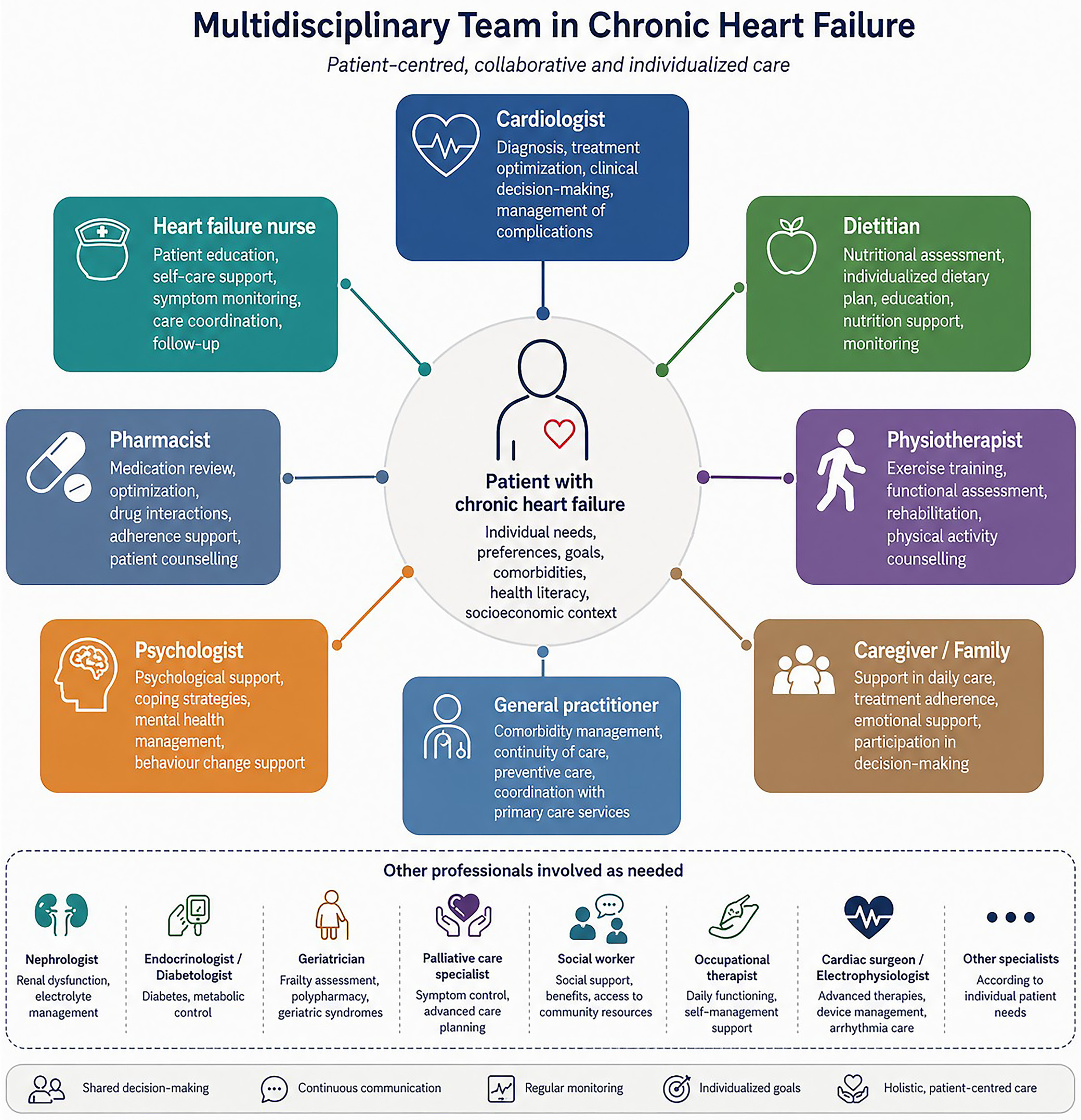
Effective nutritional management in CHF extends beyond prescribing dietary recommendations and requires a structured, patient-centered approach embedded within multidisciplinary care (Figure 2). The inclusion of a registered dietitian in multidisciplinary HF care may facilitate nutritional assessment, individualized counseling, and longitudinal monitoring. Evidence from a meta-analysis of 30 RCTs (n = 7,950) demonstrates that nurse-coordinated multidisciplinary care significantly reduces all-cause mortality (RR = 0.80; 95% CI: 0.72–0.88; p < 0.001), HF-related hospitalization (RR = 0.56; 95% CI: 0.45–0.71), and all-cause hospitalization (RR = 0.78; 95% CI: 0.70–0.87) compared with usual care.86 Dietary support delivered within such a framework is therefore not an add-on but an integral component of evidence-based CHF management. Regular follow-up and reassessment of nutritional status have been associated with improved dietary adherence and clinical outcomes in patients with CVD, although robust evidence, particularly in patients with CHF, remains limited.87
Patient education and adherence to dietary recommendations remain critical challenges in CHF. Adherence to lifestyle and dietary recommendations is consistently reported as suboptimal; however, evidence linking poor adherence directly to symptom burden and HF-related hospitalizations remains limited and is largely observational. The Heart Failure Association (HFA) of the European Society of Cardiology (ESC) recommends that self-care education, including nutritional counseling, incorporate structured behavioral support, address individual barriers to adherence, and actively involve family members or caregivers.87 Effective strategies include motivational interviewing, shared decision-making, and self-monitoring tools tailored to the patient’s health literacy, cognitive status, and social context.
Socioeconomic factors represent a frequently overlooked yet clinically relevant barrier to optimal nutritional care in CHF. The financial burden of HF, including medication costs and frequent healthcare encounters, may significantly limit patients’ ability to follow recommended dietary patterns. Food insecurity is associated with higher cardiovascular and all-cause mortality, independent of other socioeconomic and lifestyle factors.88 These disparities represent important barriers to the delivery of effective nutritional care.
Future research directions
Despite growing interest in nutritional interventions in CHF, the evidence base remains limited and methodologically heterogeneous. Several priority areas for future research have been identified. Current evidence does not allow for clear differentiation of dietary recommendations between HFrEF and HFpEF, although these phenotypes differ substantially in their metabolic profiles and nutritional risk burden. Adequately powered RCTs comparing phenotype-specific nutritional strategies are therefore needed. The role of the gut microbiome in nutritional status, systemic inflammation, and disease progression in CHF also represents an emerging and underexplored area, with interventional data in patients with CHF currently lacking. Sarcopenic obesity, the coexistence of excess adiposity and reduced lean mass, is increasingly recognized in CHF, particularly in HFpEF; however, no dedicated nutritional intervention trials have addressed this phenotype. Validated diagnostic criteria and targeted dietary strategies for this population are urgently needed. Perhaps most importantly, there are no adequately powered randomized trials evaluating the impact of dietitian-led nutritional care versus standard care on hard clinical endpoints, including mortality, HF hospitalization, and quality of life, in ambulatory patients with CHF. Such trials should reflect real-world outpatient settings and include standardized nutritional assessments and intervention protocols. Finally, nutritional research in CHF has historically underrepresented older adults, women, and patients from lower socioeconomic backgrounds. Future studies should prioritize these populations to ensure the generalizability and equity of nutritional recommendations.
Conclusions
Nutrition is a fundamental but still underutilized component of CHF care. Patients with CHF require routine nutritional screening, assessment of body composition and muscle function, and early identification of malnutrition, cachexia, sarcopenia, and sarcopenic obesity. Nutritional management should be individualized according to HF phenotype, clinical status, comorbidities, renal function, socioeconomic context, and patient preferences. The Mediterranean diet currently represents the dietary pattern supported by the strongest evidence base, whereas the DASH diet and plant-based dietary patterns may be appropriate alternatives for selected patients. Current evidence does not support excessive sodium or fluid restriction in patients with stable CHF, and nutritional supplementation should be targeted rather than routine, with intravenous iron remaining the treatment of choice for confirmed iron deficiency. Integration of a registered dietitian into multidisciplinary CHF care may support nutritional assessment, counseling, implementation, and follow-up. Future studies should evaluate phenotype-specific, dietitian-led nutritional interventions with respect to hard clinical outcomes, functional capacity, quality of life, and body composition.
Use of AI and AI-assisted technologies
OpenAI’s ChatGPT was used for language editing and proofreading to ensure the final manuscript’s clarity, coherence, and linguistic accuracy.
Data Availability Statement
No new datasets were generated or analyzed in the preparation of this scientific statement. All evidence discussed is derived from the sources listed in the References section