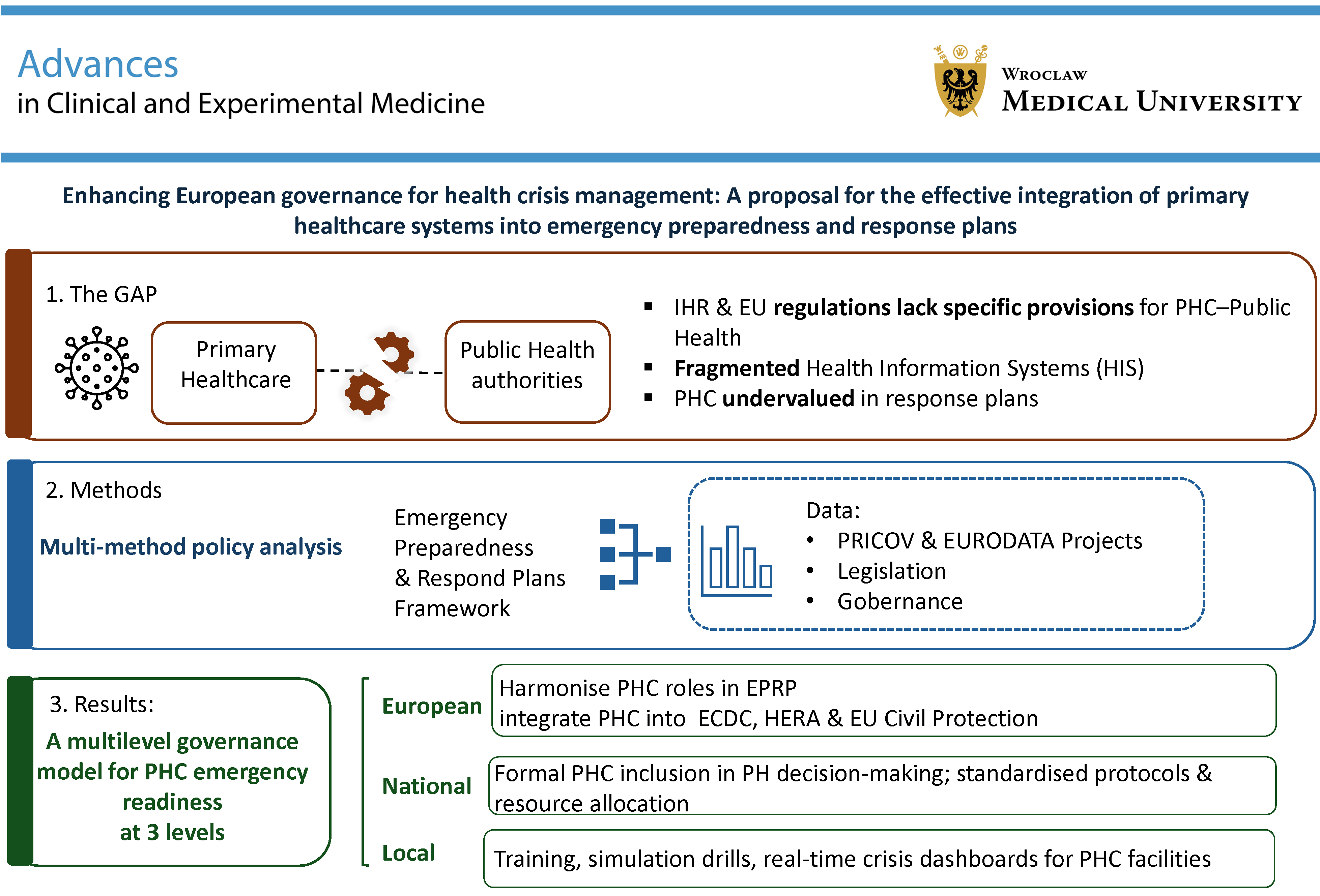
Abstract
Background. Primary healthcare (PHC) facilities are fundamental components of health systems across Europe, serving as the first point of contact and ensuring continuity of care. However, the COVID-19 pandemic exposed significant gaps in their preparedness for large-scale health crises. Although emergency preparedness frameworks developed by the World Health Organization (WHO) and the European Union existed, they often lacked adequate integration of PHC into comprehensive public health (PH) emergency preparedness and response plans (EPRPs).
Objectives. To identify regulatory and operational gaps in the integration of PHC into existing European health EPRPs; to evaluate challenges related to governance and health information system (HIS) interoperability between PHC and PH authorities; and to develop a multilevel governance model to harmonize the role of PHC across the continuum of health crisis management in future PH emergencies.
Materials and methods. The EURODATA research group conducted a comprehensive analysis of the role of primary care during the COVID-19 pandemic. The study included a review of international and European health policies and emergency preparedness frameworks. The analysis followed the health EPRP framework and focused on regulations, governance structures, HIS interoperability, and the role of PHC. Based on these findings, recommendations were developed to strengthen EPRPs for European PHC systems.
Results. The analysis identified limited regulatory guidance on coordination between PHC and PH authorities, insufficient interoperability of HIS, and gaps in local coordination. The proposed EPRP framework addresses these shortcomings by promoting improved governance, integration of information systems, and harmonization of the role of PHC within coordinated health crisis management.
Conclusions. Strengthening the role of PHC in health emergency preparedness is essential for building resilient health systems. The proposed EPRP provides actionable strategies to address the identified gaps and improve the integration of PHC into health crisis management. Implementation of these recommendations may enhance the capacity of European PHC systems to respond effectively to both acute and chronic health needs during future crises.
Key words: Europe, primary healthcare, public health, disaster management, health systems
Background
The central role of primary healthcare (PHC) in emergency preparedness is not merely a matter of capacity but a structural necessity. Primary healthcare functions as the “sensor” of the health system, as it is the only level of care capable of early detection and surveillance before hospital capacity becomes overwhelmed. As demonstrated by the findings of the EURODATA and PRICOV-19 research projects, health systems that bypassed PHC experienced more rapid saturation of secondary care. Therefore, investing in PHC preparedness is a cost-effective strategy for strengthening the resilience of the entire health system.1 The proposed emergency preparedness and response plan (EPRP) shifts the paradigm from a hospital-centered response to a community-based approach, leveraging the continuity of care and community trust that are inherent to PHC.
European countries face escalating health threats, ranging from localized outbreaks to cross-border crises such as COVID-19, and the need to be prepared has been widely described by the World Health Organization (WHO).2 These challenges highlight the critical need for health systems to be able to transition rapidly from preparedness to emergency response, particularly by strengthening PHC as the frontline point of contact.3 The WHO emphasizes that effective health emergency preparedness requires the integration of core capacities across health security, PHC, and health promotion.2
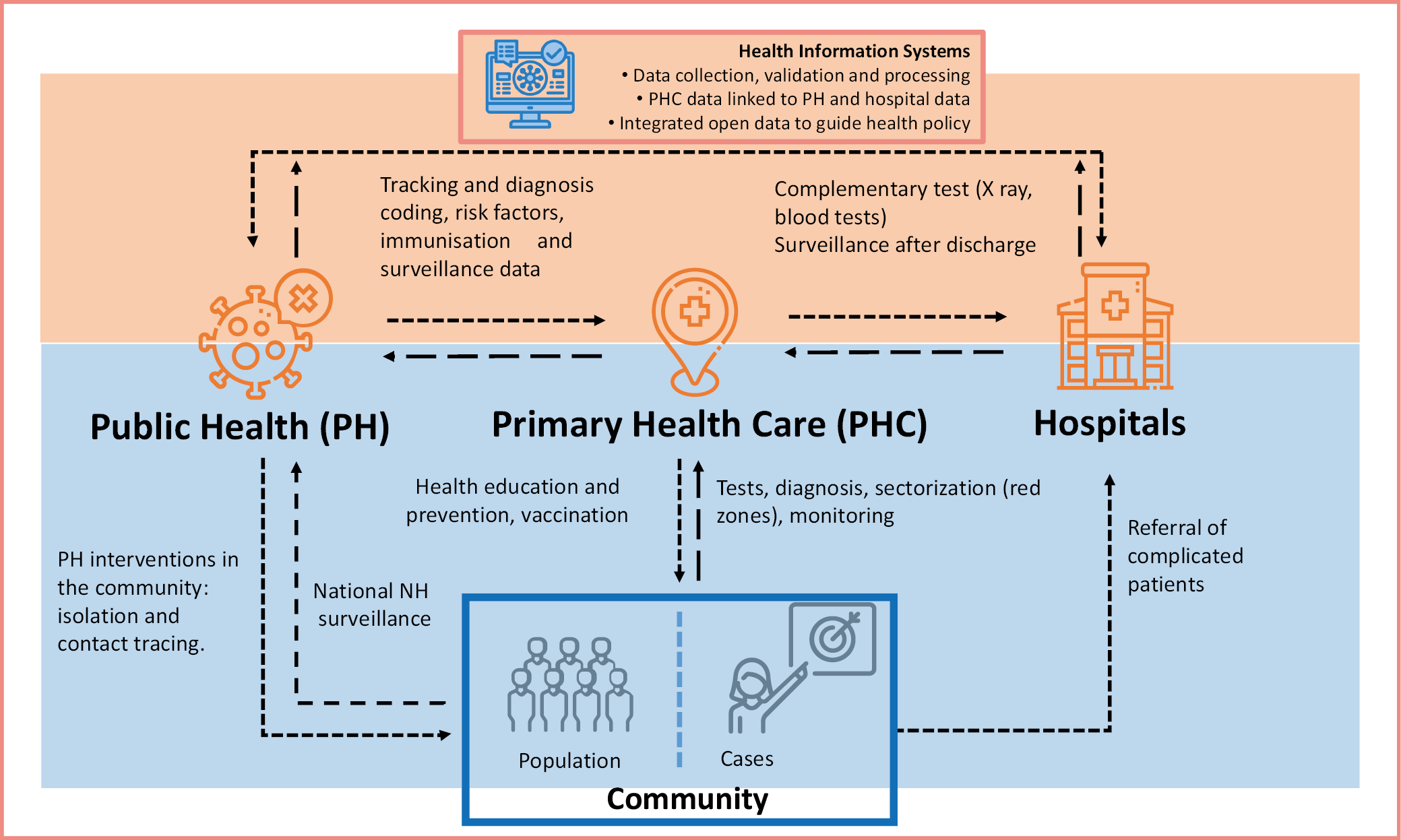
This preparedness depends on 2 key dimensions: 1) the role of PHC in early detection and community-level response,4 and 2) coordination between PHC and public health (PH) systems for population-level interventions.5 While PHC focuses on continuity of individual patient care and PH focuses on surveillance and outbreak control, their synergy proved essential during the COVID-19 pandemic for testing, vaccination, and data sharing.6, 7 Figure 1 illustrates the interrelationships among the activities of PHC, PH, and hospitals during a health crisis. However, most European PHC systems lacked standardized preparedness protocols, while fragmented governance and health information systems (HIS)8 hindered effective crisis response.9 The pandemic exposed these gaps, particularly in countries with decentralized health systems, where coordination between PHC and PH was insufficient.10 There remains a need to operationalize an EPRP for PHC systems across Europe and to define a common framework and coordinated actions for the European Commission, national governments, and PHC systems, particularly in relation to health threats that cross national borders within and beyond the European Union (EU).
Although the EURODATA and PRICOV-19 research projects provided a descriptive account of the impact of the COVID-19 pandemic on European PHC systems, this paper advances the field by translating these retrospective observations into a prospective, actionable governance framework. It bridges the gap between high-level WHO and EU strategies and the operational realities of PHC centers across European PHC systems.
Objectives
The objective of this study was to propose a prospective, actionable governance framework to enhance the preparedness and response capacity of European PHC systems for future health crises. Specifically, the study aimed to analyze existing international and European health policies to identify regulatory and operational gaps in the integration of PHC into EPRPs; to evaluate coordination challenges between PHC and PH authorities, with a particular focus on governance structures and the interoperability of HIS; and to develop a multilevel governance model encompassing the European, national, and local levels to harmonize the role of PHC across the continuum of health crisis management.
Materials and methods
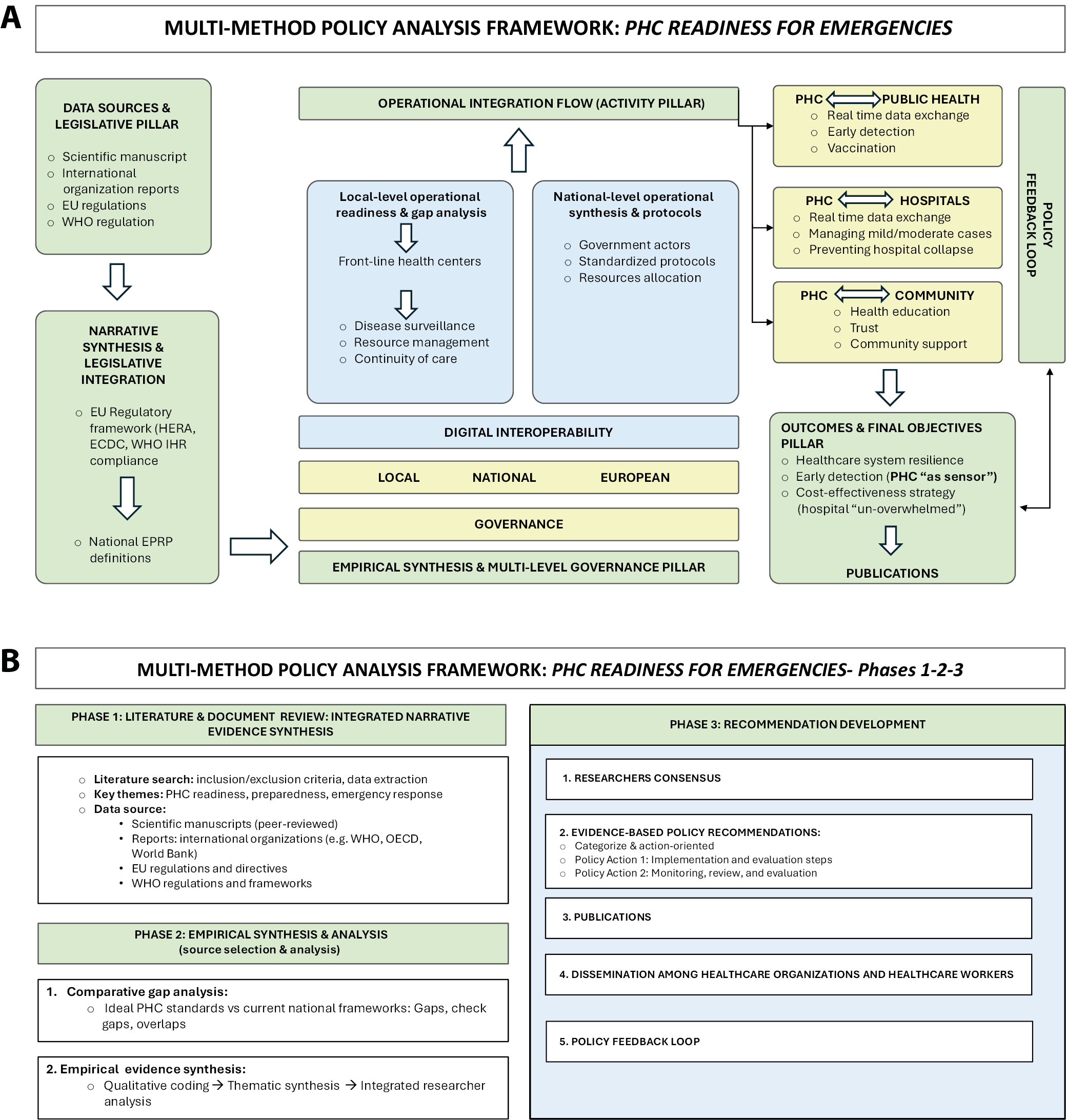
This study employed a multimethod policy analysis approach, triangulating empirical evidence with normative frameworks to develop a specific EPRP model for PHC. Figure 2A provides an overview of the study methodology.
Framework operationalization.2, 11 We used the WHO Health Emergency and Disaster Risk Management (Health EDRM) Framework as the structural foundation. Unlike previous, more general applications, we operationalized the Health EDRM capabilities specifically for the PHC setting, focusing on 3 core dimensions: 1) legislative and policy adequacy; 2) organizational governance and coordination mechanisms; and 3) operational response protocols.
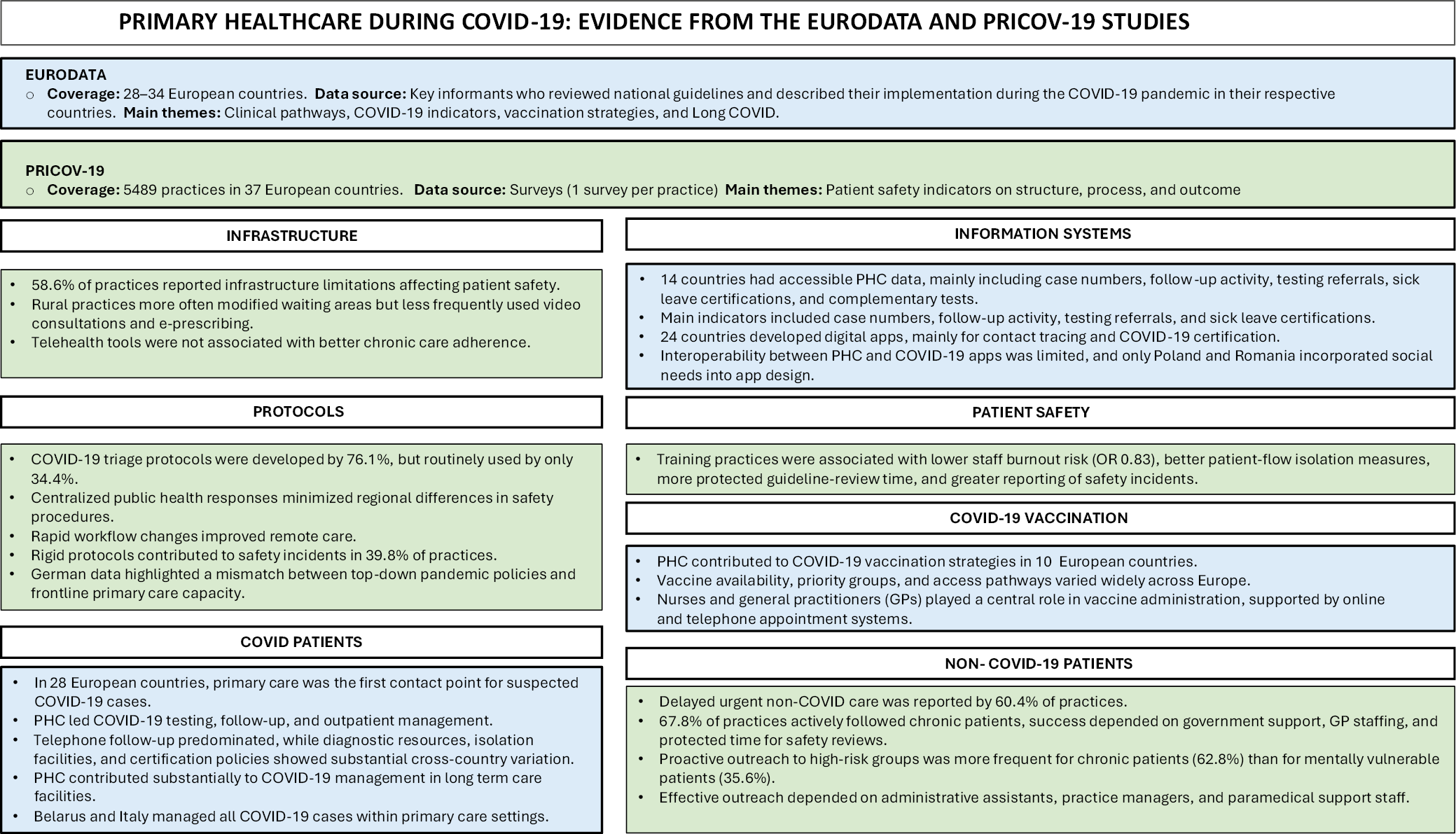
Empirical evidence synthesis.12, 13 The analysis integrates qualitative and quantitative findings from the EURODATA and PRICOV-19 research projects, which documented variation in PHC responses across Europe during the COVID-19 pandemic. This empirical component enabled the identification of real-world deviations from theoretical preparedness models.
Comparative gap analysis. We conducted a structured comparative gap analysis by comparing existing EU and national regulations (e.g., the International Health Regulations (IHR) and Regulation (EU) 2022/2371) with the operational challenges reported by the EURODATA and PRICOV-19 research teams. This process identified specific gaps in governance, HIS, and resource allocation.
Recommendation development. Finally, recommendations were synthesized not simply as a list of actions but as a structured, multilevel governance framework and were subsequently evaluated against the WHO’s 2023 “5 Cs” strategy for health emergency resilience. Figure 2B illustrates the different phases of the study.
Framework development
The Health Emergency and Disaster Risk Management (Health EDRM) Framework11 provides a common language and a comprehensive approach that can be adapted and applied by all actors within the health sector to reduce the health risks and consequences of emergencies. Based on the Health EDRM Framework, a theoretical framework was developed to guide this study, comprising 3 key dimensions: 1) the legislative and policy dimension; 2) the organizational structure, including the arrangement of roles, responsibilities, and relationships to achieve the objectives of the health system; and 3) the response mechanism, structured around a PH emergency response plan as proposed by the WHO.
With respect to the 1st dimension, our analysis identified 3 principal regulatory levels: 1) global international regulations issued by the WHO; 2) European health authorities; and 3) national PH administrations and authorities. Regarding the 2nd dimension, we analyzed coordination mechanisms and the role of PHC. We use the term PHC because it encompasses a broader concept of health policy and service delivery, including both individual healthcare services and population-level PH functions.14 The 3rd dimension refers to the mechanisms underlying PH emergency response plans and the role of PHC within emergency preparedness and response plans (EPRPs).
Data gathering
Public health research groups affiliated with World Organization of Family Doctors (WONCA) Europe, EURODATA, and PRICOV-19 have conducted several studies highlighting the critical role of PHC in managing the COVID-19 pandemic and ensuring the quality and safety of PHC service delivery. The authors performed an in-depth analysis by integrating findings from both research projects, a narrative literature review using the terms PHC, PH, and EPRPs, and a review of PH regulations issued by the WHO and European PH authorities. The findings were analyzed to identify key areas for improvement across the 3 dimensions (Figure 3, Supplementary File 1). Based on these findings, the authors developed a set of structured recommendations for discussion regarding the role of PHC in future health crises, with the aim of strengthening EPRPs for European PHC systems.
Results
First dimension: Public health regulations for health crisis response in Europe
Public health regulations in Europe play a pivotal role in ensuring a coordinated and effective response to health crises. These regulations establish frameworks for preparedness, surveillance, and crisis management, integrating actions across EU member states to mitigate the impact of infectious diseases, natural disasters, and other PH emergencies. Guided by institutions such as the European Centre for Disease Prevention and Control (ECDC) and aligned with the International Health Regulations (IHR), these frameworks emphasize early detection, cross-border collaboration, and resource mobilization. By harmonizing efforts at the national and regional levels, European PH regulations aim to protect populations, strengthen health systems, and enhance resilience to emerging threats.
WHO International Health Regulations and pandemic preparedness
The IHR provide the legal framework for managing PH emergencies while minimizing unnecessary disruption to international travel and trade. Legally binding on 196 countries, including all WHO Member States, the IHR establish criteria for determining public health emergencies of international concern (PHEICs) and require countries to designate National IHR Focal Points to coordinate with the WHO. The IHR also require countries to develop core capacities for surveillance and response, particularly at points of entry, while safeguarding travelers’ rights and personal data. Recent applications include the convening of Emergency Committees for COVID-19 and mpox,15 although the IHR currently lack provisions for integrating health systems and primary care into emergency preparedness and response.
In December 2021, WHO Member States initiated the development of the world’s first pandemic accord through the Intergovernmental Negotiating Body.16 This new international instrument, expected to be adopted by 2025, aims to strengthen pandemic prevention, preparedness, and response by promoting the integration of health systems, primary care, PH coordination, interoperable HIS, and data-driven dashboards.
While the accord remains under development, the WHO has launched an EPRP that emphasizes equitable stakeholder participation, including that of communities, in crisis management.2 In addition, WHO Europe implemented a regional action plan (2018–2023) to strengthen capacities for preventing, detecting, and responding to PH threats, building on global strategic priorities while addressing the specific needs of the European Region. The WHO Hub for Pandemic and Epidemic Intelligence serves as a key resource supporting these efforts by bridging data intelligence and PH practice.17
European Union regulations
The management of cross-border health crises in Europe is coordinated at the level of the European Commission, whereas responsibility for implementing specific PH measures remains with national governments. National responses are influenced by factors such as the epidemiological situation, social context, and the capacity of national health systems. However, in the event of a serious cross-border health threat, the EU may declare a PH emergency based on the scientific opinion of the ECDC or other relevant Union bodies, as provided for in Regulation (EU) 2022/2371.18
Examples of coordinated responses, including the Ebola outbreak in West Africa and the COVID-19 pandemic, illustrate the EU’s role in facilitating collective action during PH emergencies. Once a PH emergency has been declared at the EU level, several measures may be activated, including: 1) implementation of regulations governing medical products and medical devices through the European Medicines Agency (Regulation (EU) 2022/123) to address vulnerabilities in the supply of critical medicines; 2) mechanisms for monitoring and managing shortages and for the development, procurement, and deployment of medical countermeasures; 3) mobilization of support from the ECDC Health Task Force; and 4) activation of the EU Integrated Political Crisis Response (IPCR) Arrangements. In such situations, the European Commission collaborates with the WHO to align European and global responses and to inform Member States about planned measures. In 2021, the Health Emergency Preparedness and Response Authority (HERA)19 was established to strengthen the EU’s capacity to manage health emergencies by coordinating strategic stockpiling, policy harmonization, and cross-border risk assessment.
The 2015 European Commission report “Cross-Border Cooperation” examines how greater cooperation between EU Member States could improve the delivery of healthcare across national borders.20
In this respect, the EU Health Security Committee (HSC)19 plays a pivotal role in ensuring a coherent and well-coordinated response to health crises across Member States. It serves as a forum for exchanging information on PH measures, preparedness, crisis planning, and risk communication, bringing together representatives from EU and European Economic Area (EEA) countries, as well as candidate countries.
The HSC coordinates several key activities related to health crises: 1) coordination of national responses to cross-border health threats, including prevention, preparedness, and crisis planning; 2) risk and crisis communication tailored to the needs of healthcare professionals and the public; and 3) support for activating EU-level instruments that provide direct assistance to Member States, such as joint procurement mechanisms. When a serious health threat exceeds a Member State’s response capacity, assistance may be requested from other EU countries, and the EU may mobilize resources to provide direct support.
The ECDC is the EU agency responsible for identifying, assessing, and communicating current and emerging threats to human health posed by communicable diseases. In 2017, the ECDC developed core competencies for PH emergency preparedness.21 However, the EU’s ability to intervene directly in and coordinate responses to future pandemics will continue to depend on the willingness of Member States to support common action. In 2021, the ECDC launched EpiPulse, an online platform designed for European PH authorities and global partners to collect, analyze, share, and discuss infectious disease data. The platform supports alert detection, surveillance, risk assessment, and outbreak response by integrating previously separate surveillance systems into a single platform.
The legal framework underpinning European epidemiological surveillance PH response has evolved through a series of key legislative acts. Decision No. 2119/98/EC established the European epidemiological surveillance network, which was subsequently strengthened by Decision No. 1082/2013/EU18 to address serious cross-border health threats. Building on the lessons learned from the COVID-19 pandemic, Regulation (EU) 2022/237118 introduced updated requirements for information sharing and health system indicators to strengthen preparedness and response across the EU. In addition, the Rapid Alert System for Serious Cross-Border Threats to Health enables secure, real-time communication between EU Member States and the European Commission, facilitating coordinated responses to health threats such as SARS, Zika virus disease, Ebola virus disease, and COVID-19. The system is managed by the ECDC on behalf of the European Commission.
National regulations
Implementing coordinated PH action at the EU level remains challenging, as highlighted by recent research reviewing national regulations addressing PH threats across several European countries.22 The EU primarily plays a supportive role in pandemic preparedness and response because responsibility for crisis management largely remains with the Member States. In most European countries, PH governance is organized into 4 levels: national, regional, federal, and local. However, PHC systems may adopt alternative governance models, many of which operate outside the public administration framework, potentially creating coordination challenges.
The key responsibilities of EU Member States include: 1) reporting infectious diseases and other PH events to the ECDC; 2) sharing scientific and technical information; 3) notifying the ECDC of cross-border health threats and response measures; and 4) designating competent organizations and PH experts to participate in EU-wide cooperation.
The ECDC compiles data submitted by Member States to produce annual epidemiological reports, providing a comparative overview of infectious diseases across the EU, facilitating trend analysis, and informing policy decisions. The relationships among the different levels of PH governance during a health crisis are summarized in Figure 4.
Second dimension: organizational structure of PH and PHC
It refers to the coordination mechanism that involves governance models among PH and PHC, and Interoperable HIS.
Governance models of PHC systems and PH in European countries
The organization of PHC in Europe is highly diverse, reflecting a wide range of governance models and approaches to service delivery. In many EU countries, PHC services are primarily delivered by private providers without a unified national PHC system. This fragmented landscape often results in variations in access to care, quality of care, and care coordination. In contrast, other countries maintain well-defined, nationally integrated PHC systems that facilitate more coordinated strategies for addressing PH challenges. Recognizing and addressing these differences is essential to ensuring equitable and effective PHC across Europe, particularly during shared health emergencies and cross-border health threats.23 Table 1 summarizes the different PHC and PH governance models implemented during the COVID-19 response.10, 23, 24, 25
We identified strong models of collaboration between PHC and PH, such as those in Denmark and the Netherlands, supported by integrated health governance and robust HIS. These systems enabled effective coordination of testing, vaccination, and resource allocation. The UK demonstrated an effective centralized response through the National Health Service (NHS), which integrated PHC and PH under unified governance. This structure facilitated clear communication channels, timely deployment of resources, and consistent PH messaging. By contrast, Germany, Spain, and France faced substantial challenges related to decentralized governance structures, which contributed to regional variation in coordinating and implementing responses to health crises. Limited interoperability between PHC and PH information systems further exacerbated these challenges.
The relevance of PHC HIS regarding health crisis
Health information systems encompass the tools and processes used to collect, store, manage, and exchange health data. They play a critical role during health crises by enabling real-time data collection, supporting decision-making, optimizing resource allocation, and improving care coordination. Primary healthcare HIS are particularly important at the community level because they support continuity of care and rapid communication among healthcare providers, especially through electronic health records (EHRs), which are essential during pandemics.
In the EU, PHC HIS are often person-based but fragmented at the practice level, resulting in limited interoperability with PH authorities. Only in some countries, such as Spain and Portugal, do PHC HIS provide population-based data. Other countries, such as Denmark, have established regulations that facilitate data sharing between PHC HIS and PH authorities. By contrast, fragmentation of PHC HIS in Germany and Italy limited integration between PHC and PH, reducing the effectiveness of testing, contact tracing, and vaccination campaigns.22
Interoperable HIS would facilitate comprehensive patient tracking across primary and secondary care settings, improving health outcomes, particularly among vulnerable populations that rely on primary care. This capability would also be essential for managing cross-border health threats within the EU, as demonstrated during the COVID-19 pandemic. The European Health Union and the European Health Data Space aim to establish a unified framework for digital health services by promoting interoperable EHRs, thereby bridging the gap between international health risk assessment and diverse national health systems.26 This initiative also provides an opportunity to standardize epidemiological data collection through PHC HIS by integrating mandatory disease reporting and vaccination records into interoperable PHC EHRs, thereby strengthening health crisis preparedness and response.
Such an approach could help avoid situations similar to those observed during the COVID-19 pandemic, when mobile applications developed in many EU countries were not integrated with PHC HIS and therefore could not effectively support healthcare delivery.27, 28 Finally, pandemic preparedness plans must address the privacy risks associated with sharing sensitive health data by ensuring appropriate anonymization and encryption to protect patient information.28
Third dimension: The role of PHC services in the EPRP
Various stakeholders contribute recommendations for the development of EPRPs. The WHO sets the global strategic direction and provides guidance and resources. European governments and the EU align their policies with WHO strategies and promote policy coherence across Member States. Individual countries operationalize these plans at the national level while coordinating with both EU policies and WHO recommendations. Primary healthcare systems implement frontline strategies to ensure community-centered resilience and continuity of healthcare delivery during health crises. However, greater emphasis is needed on the practical integration of PHC into health crisis management at both the facility and policy levels. As demonstrated in the analysis of the first dimension (regulations), there is currently no standardized, validated approach to assessing the preparedness of European PHC systems for health crises or to evaluating their role within EPRPs.
The 5 principal activities that define the contribution of PHC during health crises in European health systems are:
Disease surveillance: PHC systems serve as the initial point of contact for most European citizens during health crises.29 Primary healthcare plays a critical role in disease surveillance, early detection, and timely reporting of potential PH threats to the relevant authorities.
Resource management: Centralized inventories of critical supplies are managed by HERA30 and distributed through national and regional mechanisms. Clear guidelines should ensure equitable allocation based on disease severity and population needs. Primary healthcare manages mild-to-moderate cases, thereby reducing pressure on hospitals.
Continuity of care: PHC ensures continuity of essential healthcare services (e.g., chronic disease management and vaccination) and supports vulnerable populations during health crises.31
Vaccination programs: PHC works closely with national PH authorities to support testing and vaccination programs.32
Community health education: PHC contributes to health education campaigns, with a strong emphasis on community engagement and risk communication.27
Considering the WHO’s 2 principal emergency preparedness and pandemic response frameworks (2019 and 2023), together with the core functions of PHC, we identified the roles of the various stakeholders involved, including PHC services. Table 2 presents our adaptation of the Health Emergency Preparedness and Response Plan (EPRP).11
Table 3 applies the WHO’s 2023 “5 Cs” strategy for health emergency prevention, preparedness, response, and resiliense to PHC settings, emphasizing the role of PHC facilities in community-level preparedness and response.2
To implement EPRPs effectively within PHC facilities, European PH regulations should explicitly recognize the critical role of PHC in emergency preparedness and response and prioritize PHC preparedness to facilitate coordination with national PH authorities. Such a framework should ensure that decisions made at the European, national, or global level are effectively translated into actions at PHC facilities, which constitute the frontline of health systems and community care. Table 4 provides a structured overview of PHC responsibilities, including the role of sentinel physicians and the reporting of notifiable diseases in Europe, as key components of an effective EPRP for PHC. Accordingly, the key actions required to strengthen coordination between PH and PHC include the following:
1. Sentinel physicians in PHC: These physicians play a crucial role in monitoring disease trends and providing data for PH surveillance.33
2. Reporting of notifiable diseases: Primary care physicians (PCPs) are responsible for reporting cases of communicable diseases to PH authorities, thereby ensuring timely PH interventions and control measures.34
3. Integration with PH systems: Effective communication and collaboration between PCPs and PH systems are essential for coordinated responses during pandemics, both for activating emergency response mechanisms and for providing ongoing support to PCPs.22
4. Support for communities and long-term care facilities: PHC supports communities and provides care for long-term care facilities (LTCFs) during health crises across European countries.31
To enhance the effectiveness of primary care during health crises, family physicians and other primary care professionals should be represented on key stakeholder committees responsible for coordinating health system responses. Table 5 outlines a proposed panel of experts for future pandemics, including medical, healthcare, and social stakeholders at both the national and European levels.35
To strengthen the involvement of PCPs in EPRPs for health threats, family physicians should be represented on the various stakeholder committees responsible for coordinating the roles of health system actors during health crises. A proposal for family medicine (FM) representation is also presented in Table 5.35
To bridge the gap between high-level policy frameworks and frontline implementation, Table 6 synthesizes our empirical findings and recommendations into a structured matrix. Moving beyond general principles of health crisis management, this framework prioritizes actions, assigns responsibilities across multiple levels of governance, and operationalizes specific PHC interventions, as detailed in Table 7. Importantly, these strategies are aligned with the empirical dimensions identified in the multinational EURODATA and PRICOV-19 studies, ensuring that the proposed structural reforms directly address documented vulnerabilities in workforce well-being, digital infrastructure interoperability, and continuity of care during system-wide health crises.
Discussion
This manuscript analyzes PH regulations addressing health threats at the European level and the organizational structures that support them. Our study underscores the need for an integrated governance framework to address the persistent fragmentation in collaboration between PH authorities and PHC systems across Europe. The diversity of healthcare structures, together with the uneven distribution of resources and the limited interoperability of HIS, remains a major barrier to effective and timely responses to cross-border health emergencies. These challenges, as demonstrated during the COVID-19 pandemic, highlight the need for harmonized strategies to better integrate PHC into health emergency preparedness and response planning.36
The governance of health crisis management in Europe is characterized by fragmentation across different administrative levels. Although the EU provides overarching policies and strategic guidance, implementation of PH measures largely remains the responsibility of the Member States. This decentralized approach has resulted in inconsistent integration of PHC into emergency preparedness frameworks in most countries, although exceptions exist, such as Belgium.37 As the primary interface between health systems and communities, PHC is uniquely positioned to contribute to crisis mitigation; however, its role remains frequently underrecognized and underutilized within governance structures.
The fragmentation of HIS further limits the ability of PHC systems to achieve their full potential during health emergencies. The lack of interoperability between PHC and PH systems restricts real-time data exchange, which is essential for effective disease surveillance, early outbreak detection, and informed decision-making. Although initiatives such as the European Health Data Space (EHDS) aim to address these gaps, substantial efforts are still needed to standardize EHRs and ensure their integration across all levels of healthcare. At a minimum, greater investment in HIS is needed to improve coordination between PH and PHC providers.38
Despite these challenges, PHC has considerable untapped potential in health crisis management. Primary healthcare systems are well positioned to serve as sentinel sites for the early detection and reporting of PH threats. They also play a key role in managing mild-to-moderate cases, thereby reducing the burden on secondary and tertiary care services. However, realizing this potential requires integrating PHC into governance structures and providing it with the necessary resources, training, and representation in decision-making bodies. Therefore, PHC should be fully integrated into PH governance models.39
Our analysis indicates that the identified gaps in preparedness are not merely operational shortcomings but reflect a deeper “governance mismatch” within European health systems.
Decentralization without integration.12, 32 In countries with decentralized governance, such as Germany and Spain, regional autonomy without robust national coordination mechanisms contributed to fragmented responses. This contrasts with centralized models (e.g., the UK) and strongly integrated decentralized models (e.g., Denmark), where clear chains of command facilitated the rapid implementation of testing and vaccination programs. A major governance challenge is the absence of binding pre-crisis agreements defining national authority over PHC resources during PH emergencies.
The “digital divide” in coordination.36 Coordination failures are also driven by technological and organizational factors. Although PHC systems often use advanced EHRs, the lack of interoperability with PH authorities creates a structural blind spot. As observed in Italy and Germany, the inability to link PHC data with PH surveillance systems hindered contact tracing. This reflects not a technical limitation but an organizational silo in which PH and PHC have historically evolved as parallel, poorly integrated systems.
Systemic vs PHC-specific failures.10 While shortages in critical supplies (e.g., personal protective equipment (PPE)) represented a systemic failure addressed at the EU level through the HERA, the failure to fully utilize PHC for early containment was specific to the primary care sector. This reflected the historical underrecognition of PHC in emergency preparedness planning, which traditionally prioritized hospital-centered responses over community-based containment.
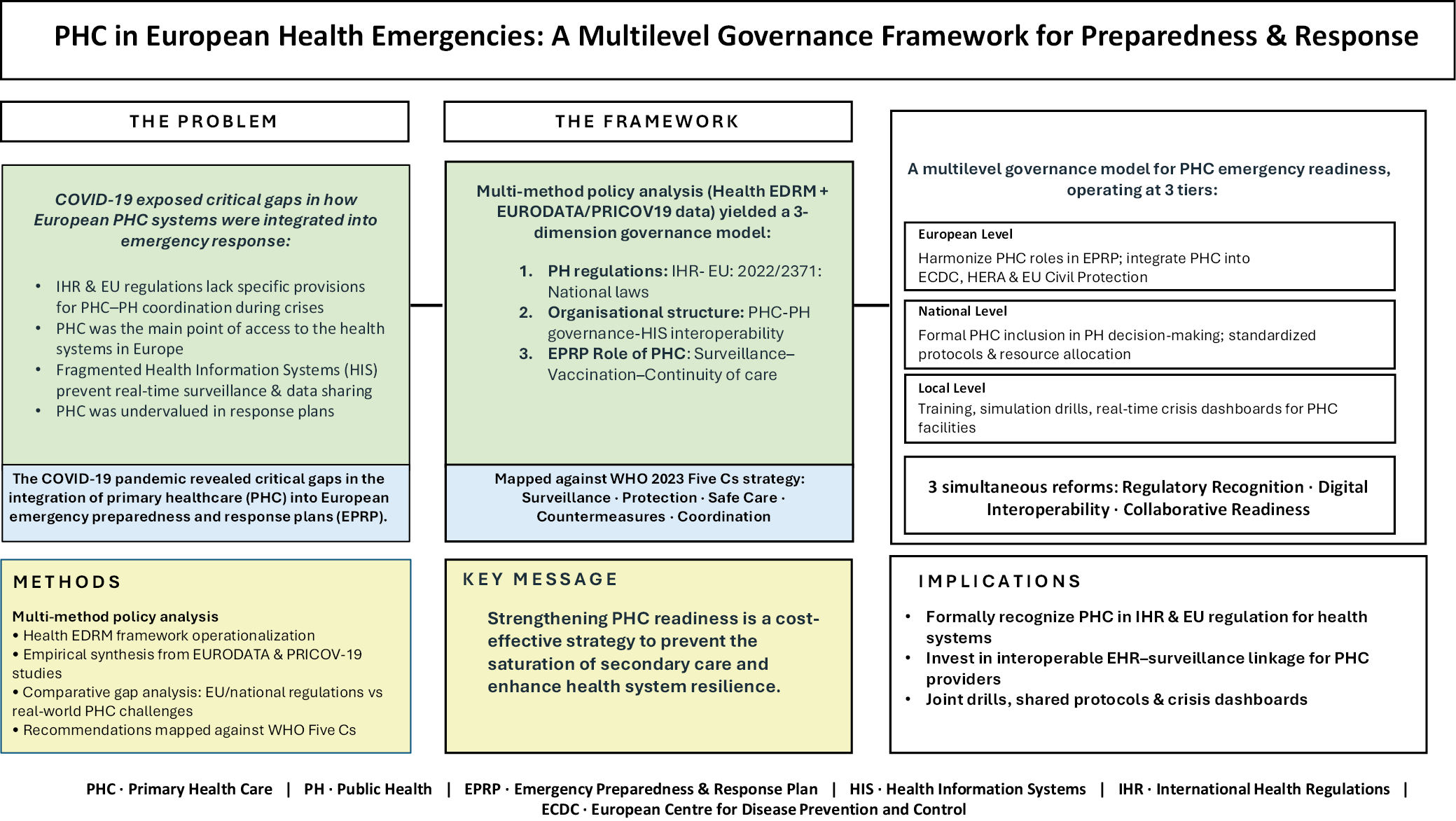
To address these challenges, this study proposes a multilevel governance model that more fully integrates PHC into health crisis management. At the European level, harmonized frameworks should clearly define the roles and responsibilities of PHC in emergency preparedness and should be supported by interoperable HIS that enable real-time data sharing. Existing European institutions, including HERA, ECDC, and the EU Civil Protection Mechanism, together provide the institutional framework for coordinating cross-border responses and ensuring alignment among Member States during health emergencies. To further strengthen this framework, these institutions should incorporate representation from PHC systems across the EU, ensuring that frontline perspectives inform decision-making and strengthening the connection between community-based care and high-level governance.
National and regional governments play a pivotal role in operationalizing these frameworks by formally incorporating PHC into PH decision-making processes. This includes establishing standardized protocols for resource allocation, capacity building, and regulatory alignment to facilitate effective crisis response. At the local level, PHC facilities should be supported through targeted training programs, scenario-based exercises, and access to real-time crisis dashboards to strengthen their preparedness and response capabilities. During the COVID-19 pandemic, standardized protocols were primarily oriented toward secondary care, and general practitioners (GPs) experienced difficulties implementing them.40
Community engagement is a cornerstone of effective health crisis management. Primary healthcare professionals, as trusted members of their communities, are ideally positioned to lead public awareness campaigns and strengthen community resilience. Their involvement in participatory planning and culturally sensitive communication strategies can foster trust and improve adherence to PH measures, ultimately enhancing the effectiveness of crisis response efforts.41
Ultimately, the formal integration of PHC into a multilevel governance framework is not only a PH priority but also an economic imperative for the long-term sustainability of health systems. Guided by the Lancet Global Health Commission call for strategic, people-centered PHC financing,1 European health systems must address current governance mismatches and digital silos to transition toward a proactive, community-based approach to health emergency preparedness and response. Such structural strengthening is essential to safeguarding continuity of care during future crises, a need further emphasized by recent calls to reform the EU’s broader health security architecture.42
However, a persistent gap remains between strategic planning and sustainable financing. Although the WHO recently published Emergency Ready Primary Health Care (ERPHC) framework43 provides a robust, all-hazards roadmap for integrating the “connect, detect, protect, and treat” capacities into routine PHC practice, implementation of this framework is currently constrained by the absence of dedicated funding mechanisms.
Limitations of the study
While this study proposes a prospective governance framework for integrating PH into European emergency preparedness systems, several methodological and conceptual limitations should be acknowledged. The empirical foundation is based on retrospective data from the EURODATA and PRICOV-19 projects, which reflected variation in the ways individual EU Member States documented their responses to the COVID-19 pandemic. Given the substantial structural differences between highly centralized and decentralized health systems across Europe, implementation of the proposed framework may face local barriers that were not fully captured in this macro-level analysis. A key limitation is the nonsystematic, narrative approach used for the literature and policy review. Because data collection focused primarily on regulations issued by the WHO and European health authorities, the study is susceptible to source selection bias. Consequently, relevant gray literature, regional policy initiatives, or country-specific regulations may have been inadvertently omitted.
Several of the proposed recommendations, including the establishment of expert stakeholder panels and standardized cross-border operational protocols, remain conceptual. Translating these proposals into practice will require addressing well-established legal frameworks and the differing political priorities of individual Member States.
The proposed multilevel governance model was developed from retrospective observations of the COVID-19 pandemic. Although it provides a theoretically robust framework for preparedness, it has not yet undergone empirical validation or real-world testing before a future health emergency. Its effectiveness in responding to evolving, nonviral, or multihazard PH emergencies therefore remains to be established.
Conclusions
Enhancing the integration of PHC into governance frameworks for health emergency preparedness and response is essential for building resilient healthcare systems in Europe. Our findings underscore the need for a paradigm shift that embeds PHC within national- and EU-level emergency preparedness and response plans, transforming it from a reactive service provider into a proactive contributor to PH security. To address the identified gaps, we propose a multilevel governance model based on 3 complementary reforms:
Regulatory recognition: National and EU policies should formally recognize PHC as an integral component of the PH response during health crises, ensuring its representation in decision-making bodies and its integration within Europe-wide governance frameworks.
Digital interoperability: Financial and technical investments should prioritize an “interoperability layer” that connects PHC EHRs with national surveillance systems, enabling real-time data sharing and early threat detection.
Collaborative preparedness: Healthcare systems should institutionalize collaborative preparedness through joint simulation exercises, shared governance structures, and standardized protocols that strengthen collaboration between PHC systems and local PH authorities.
A unified approach that prioritizes equitable resource allocation and community engagement will not only strengthen health crisis management but also contribute to a more resilient and effective healthcare system capable of responding to future challenges.
Supplementary data
The supplementary materials are available at https://doi.org/10.5281/zenodo.20845488. The package contains the following files:
Supplementary File 1. EURODATA and PRICOV19 references.
Data Availability Statement
All data generated or analyzed during this study are included in this published article and its supplementary file.
Consent for publication of personal information
Not applicable.
Use of AI and AI-assisted technology
The authors used Gemini (Google) for English language editing and stylistic refinement to ensure the manuscript meets US English standards. The AI was not used to analyze data or generate the scientific content of the proposal.