Abstract
Background. Research in exercise oncology has consistently provided evidence supporting the integration of exercise into all phases of cancer care. However, less is known about how this can be implemented across different patient populations and healthcare settings. This study aims to generate knowledge about the equitable implementation of digitally supported physical rehabilitation during and after systemic cancer treatment through feasibility testing in 5 South Baltic countries.
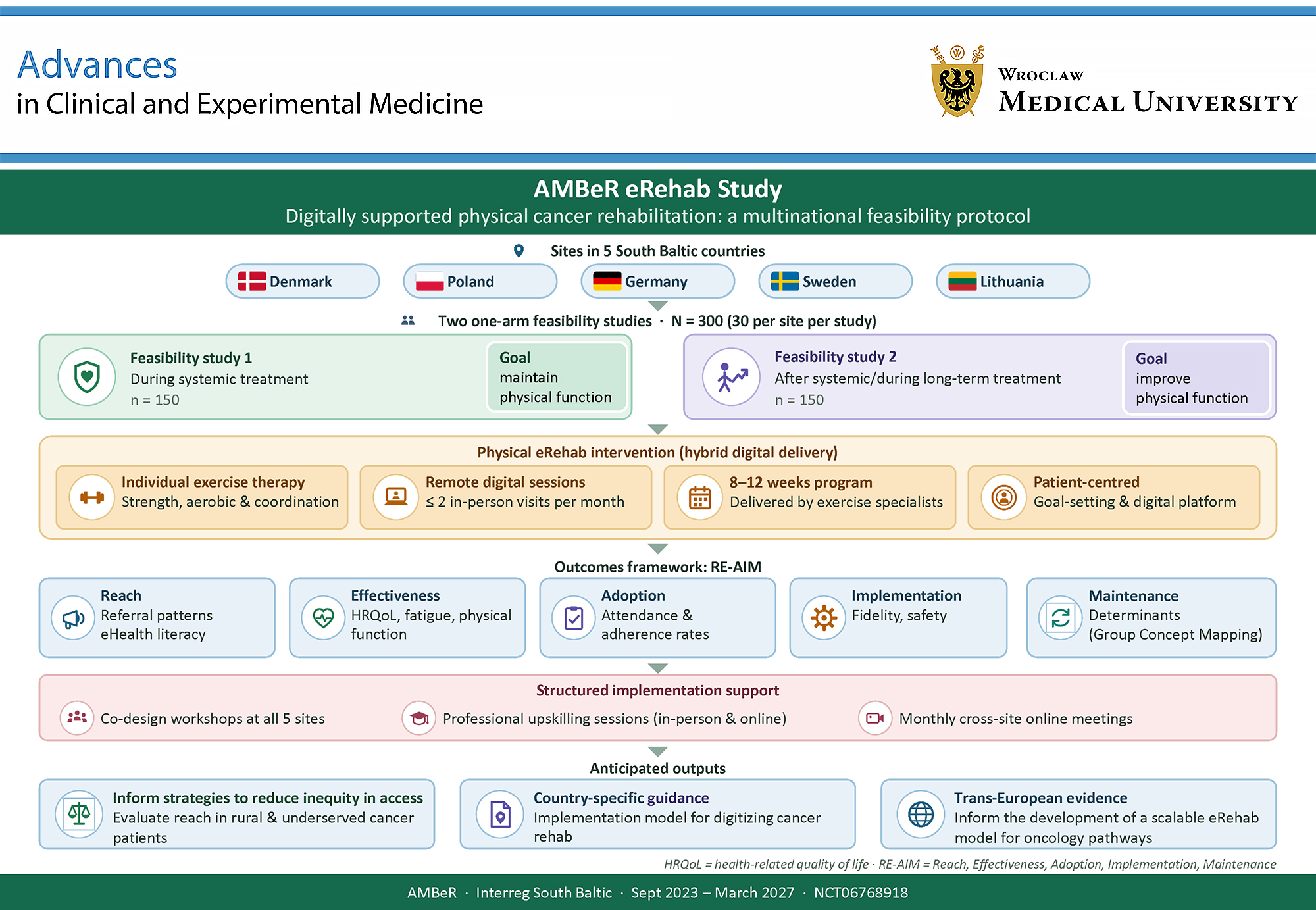
Methodology. This study is part of the “AMBeR” project (Advanced Modeling of Baltic E-cancer caRe) and is an international, multicenter, prospective study with a hybrid implementation-effectiveness design. It includes 2 single-arm feasibility trials, each aiming to enroll 30 patients undergoing systemic treatment and 30 patients who have completed systemic treatment or are receiving long-term or life-prolonging treatment at each participating site, for a total of 300 adult cancer patients. All tumor groups are eligible, and participants must be ≥18 years of age. We will use the Reach, Effectiveness, Adoption, Implementation, and Maintenance (RE-AIM) framework to structure data collection and reporting. Additionally, Group Concept Mapping will be used to evaluate determinants of participation among patients and determinants of intervention delivery among healthcare professionals (HCPs). Enrollment began in September 2024 and is expected to be completed by December 2026.
Discussion. While digital solutions have the potential to overcome barriers to integrating exercise into oncology care, inequitable implementation may inadvertently exacerbate disparities in cancer rehabilitation if these innovations remain inaccessible to patients with fewer resources. By evaluating reach, effectiveness, adoption, implementation, and maintenance, as well as the determinants of participation among patients and HCPs, this study will contribute to the evidence base on the implementation of digitally supported physical rehabilitation in cancer care.
Conclusions. Findings from the AMBeR eRehab study will inform future efforts to digitize cancer rehabilitation while ensuring that inequities are not reproduced.
Key words: quality of life, implementation, rehabilitation, neoplasms, telehealth
Background
The incidence of cancer is increasing worldwide, mainly due to demographic change, improved early detection programs, and advances in diagnostics.1 At the same time, cancer prognosis is improving, with an overall 5-year survival rate of 67% in Europe during the period 2015–2022.2 As life expectancy continues to increase and cancer incidence rises with age, more patients will live with or beyond cancer and thus be at risk of cancer- and treatment-related symptoms and late effects. Among the most common symptoms and late effects are fatigue, chemotherapy-induced peripheral neuropathy, pain, and reduced physical and psychological functioning, all of which impair health-related quality of life (HRQoL).3, 4, 5, 6, 7, 8, 9, 10
These symptoms and late effects increase the demand for healthcare services and highlight the need for structured and sustainable supportive care. Participation in targeted exercise programs, especially when supervised by qualified professionals, can alleviate cancer- and treatment-related symptoms and late effects.11, 12, 13 Furthermore, exercise has the potential to improve survival, as recently demonstrated by Courneya et al.,14 in which a 3-year exercise program after colon cancer resection significantly improved disease-free survival (hazard ratio (HR) = 0.72, 95% confidence interval (95% CI): 0.55–0.94, p = 0.02). Accordingly, international guidelines recommend integrating physical activity and exercise into rehabilitation and across all phases of oncological care.15, 16, 17 Implementation of exercise recommendations in clinical practice has been insufficient to date and varies greatly both internationally and regionally.18, 19 Current literature suggests that low socioeconomic status is strongly associated with reduced participation in oncological rehabilitation programs, despite a higher prevalence of symptoms and greater rehabilitation needs.10, 20, 21, 22, 23 Furthermore, both structural barriers, such as long travel distances and inadequate infrastructure, and patient-related factors, such as age, general health, and social support, hinder access to and uptake of physical cancer rehabilitation and pose major barriers to the equitable provision of adequate care.24, 25, 26, 27, 28, 29 Digital interventions may enhance access to precision cancer rehabilitation while empowering patients to take an active role in their own treatment.30 Precision rehabilitation relies on individualized exercise prescriptions based on the FITT principles (frequency, intensity, time, and type).31 The use of digital interventions may allow remote supervision and support adherence to prescribed exercise. Emerging studies show that various forms of cancer telerehabilitation can improve cardiorespiratory fitness and physical functioning, while their effects on HRQoL and muscle strength remain unclear.32, 33 This discrepancy may result from implementation issues, as evidence highlights specific challenges, including IT infrastructure, digital health literacy, data protection, financing, integration into clinical routines, and insufficient resource allocation for implementing new practices.34, 35, 36
Objectives
The overall aim of this study is to gain insight into the feasibility and implementation of digitally supported physical cancer rehabilitation during and after systemic cancer treatment. The findings will be used to develop country-specific and trans-European guidance for the digitization of physical cancer rehabilitation. Specifically, the objectives are to assess the reach, effectiveness, acceptability, implementation, and maintenance of digitally supported physical cancer rehabilitation (eRehab) in clinical practice and to explore the determinants of participation in eRehab.
Methodology
Design
This study is a multinational, multisite feasibility study of the implementation of eRehab in rural regions of 5 South Baltic countries – Denmark (DK), Poland (PL), Germany (GER), Sweden (SWE), and Lithuania (LTU) – during systemic treatment (Feasibility Study 1) and after systemic treatment or during long-term life-prolonging treatment (Feasibility Study 2). Both feasibility studies are designed as single-arm intervention studies (NCT06768918; protocol version 1, registered before recruitment began, November 27, 2024).
The overarching aim of the AMBeR project is to develop a model for implementing digital cancer care across countries and healthcare settings. Two designated work packages are allocated to implementation support and model development, while 2 other work packages focus on feasibility testing of digital solutions in cancer care: one evaluating home blood sampling (NCT06809101) and the other evaluating eRehab. The results of the AMBeR eRehab study will therefore provide data for the development of the implementation model, which can serve as guidance and a framework for others embarking on the digitization of physical rehabilitation in their local context.
A hybrid implementation-effectiveness design is employed to evaluate the implementation of eRehab while simultaneously assessing its effectiveness at the individual patient level. This study design was chosen for several reasons. First, there is substantial evidence and several international guidelines supporting participation in physical rehabilitation during and after cancer treatment, although knowledge of the effectiveness of eRehab interventions remains limited. Second, usual care and the organization of healthcare vary considerably across countries (Table 1), which calls for a feasibility-oriented study design with flexible starting points and iterative refinement to adequately capture these differences and enhance the value of the feasibility study. In this study, the definition of rehabilitation is limited to the physical component of rehabilitation, aimed at maintaining (Feasibility Study 1) or improving (Feasibility Study 2) physical performance and HRQoL through targeted exercise prescription.
The study began in September 2023 and will run for 3.5 years, until March 2027. Recruitment was initiated at different times across participating sites due to differences in the timing of approvals from local ethics committees and in the availability of digital solutions (Supplementary Table 1). The first patient was enrolled on September 13, 2024.
Setting
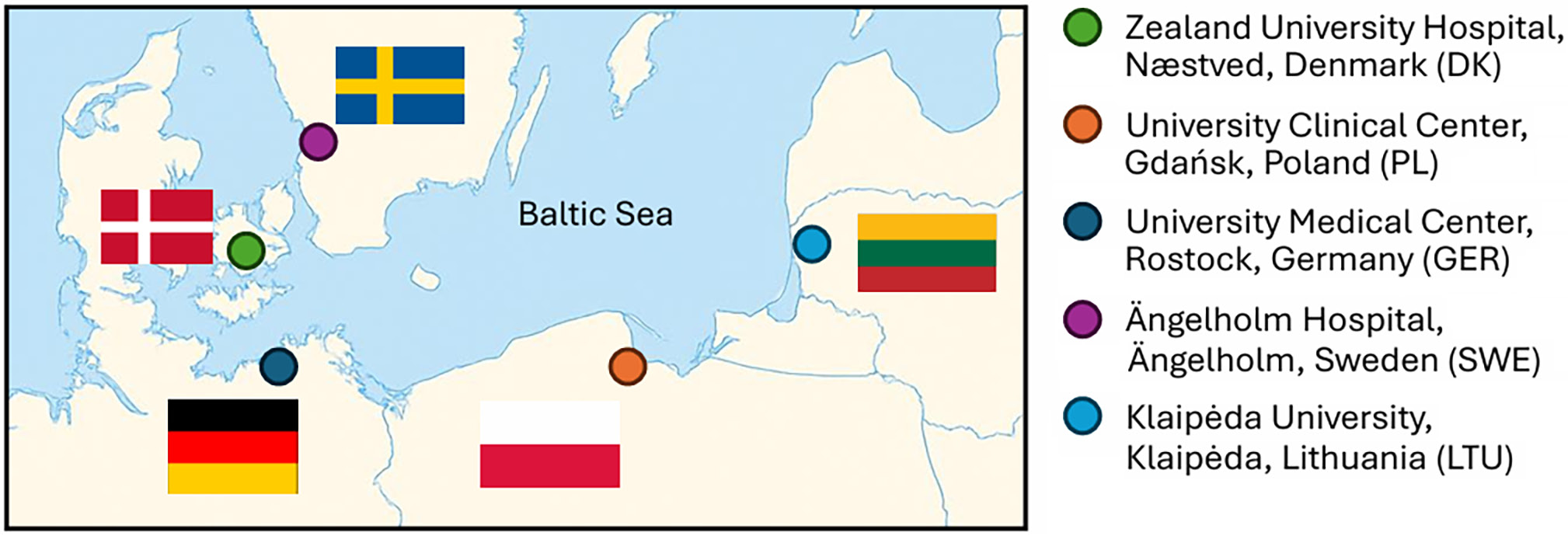
The study is part of the Interreg South Baltic Programme-funded AMBeR project (Advanced Modeling of Baltic e-cancer caRe), a collaboration among 7 partners from 5 countries in the southern Baltic Sea region (Figure 1). The 5 partners involved in the AMBeR eRehab study are Zealand University Hospital, Næstved, Denmark (lead partner); University Clinical Center Gdańsk, Poland; Rostock University Medical Center, Germany; Ängelholm Hospital, Sweden; and Klaipėda University, Lithuania (Figure 1).
Ethical approval and informed consent
Ethical approvals were obtained from the respective national ethical committees before any study activities took place (PL: Independent Bioethics Committee for Scientific Research, Medical University of Gdañsk, no: KB/545/2024-2025, dated 28.02.2025; GER: Ethics Committee of the University of Rostock A 2024-0150, dated 21.08.2024; SWE: Swedish Ethical Review Authority, Dnr 2024-04222-01, dated 21.08.2024; LTU: Regional Research Ethics Committee, BE-2-64, dated 11.06.2025). In Denmark, no ethical approval was required, but a Dataprotection Board registration was approved, p-2024-17503, dated 27.11.2024. Written informed consent was obtained by all particpants. Patients who declined participation were asked to fill in a questionnaire on anthropometrics, socio-demographics, and clinical characteristics, consenting by answering the questionnaire. No information was recorded for patients who also declined answering the decliner questionnaire.
Participants
Each study site will conduct 2 single-arm intervention studies with 30 participants in each study, for a total of 300 participants across both feasibility studies. The basic eligibility criteria are age ≥18 years, any cancer diagnosis, including myeloproliferative neoplasms (ICD-10: C00*–C97*, D45, D47*), and the cognitive ability to provide informed consent. Additional study-specific inclusion criteria are: Feasibility Study 1: patients undergoing systemic cancer treatment. Participants should preferably, but not necessarily, have a treatment duration of at least 8 weeks at the time of study enrollment. Feasibility Study 2: patients who (a) completed systemic treatment within the previous 6 months or (b) had received long-term (>6 months) maintenance and/or life-prolonging systemic treatment. Patient group (b) was added through a protocol amendment during the enrollment period because it was not explicitly included in the original study protocol; however, early experience indicated that it represented a relevant target population for eRehab. The specific patient categories and clinical settings were allowed to vary across study sites and are described in more detail in Table 2.
Introducing new practices in existing care pathways
In both feasibility studies, the intervention is intended to follow usual practice and, whenever possible, use existing referral pathways. However, usual care with respect to needs assessment, referrals, and the content of physical rehabilitation varies substantially across participating sites, with the integration of exercise into oncology care ranging from being considered contraindicated to being fully embedded, as has also been described in the international literature.18, 37, 38, 39 At some participating sites, this study introduces physical rehabilitation in oncology as a novel component of care, whereas at others it introduces a new method of delivering physical cancer rehabilitation (digitally supported) within an already established rehabilitation framework. Accordingly, where no existing referral pathways for physical rehabilitation are available, new pathways must be established, whereas other sites already have well-established referral pathways that can readily incorporate the new intervention. Usual care and the intervention settings across participating sites are described in more detail in Table 2.
The intervention contents
The eRehab interventions will be delivered as a hybrid service but should primarily rely on digital solutions during follow-up consultations. To account for heterogeneity across sites while allowing for cross-national assessment of outcomes, a core framework for rehabilitation delivery, with room for site-specific variations, was established. The core framework was defined as follows: The intervention may be delivered remotely through digital solutions or as a hybrid intervention combining in-person and remote digital delivery. To encourage the transition to digital and remote delivery, an average of 2 in-person visits per month after the initial assessment is permitted per patient. The intervention should include an exercise prescription individually tailored to patients’ needs, personal preferences, and goals, and should comply with national and/or international clinical guidelines based on the FITT principles.12 The program should preferably last 8–12 weeks, but it was agreed between the study sites that length of program should be customized to the target population, relevance for the rehabilitation intervention, and the oncological treatment regime in general. The exercise prescription should target muscle strength, endurance, coordination, range of motion, and/or sensorimotor function, and may be supplemented with group sessions as needed.
The intervention is delivered by trained or certified healthcare professionals (HCPs) with experience in oncology rehabilitation (e.g., physical therapists and exercise scientists), who are referred to as exercise specialists throughout this paper. We will use the Patient-Specific Functional Scale (PSFS)40 to identify each patient’s individual rehabilitation goals and tailor the intervention accordingly. Further details of the intervention are provided in Table 2.
Choosing a digital solution
Exercise specialists and the local study team at each site were involved in selecting the digital solution for eRehab delivery to ensure that it met the required criteria and the expected needs of the local context. The selection was based on market availability, language availability, suitability for the target population, objectivity of movement feedback, opportunities for interaction, and features supporting progression and regression of the exercise program. In addition, the requirements for integration with existing IT systems, as well as the advantages, disadvantages, and costs of each solution, were considered before the final selection was made.
Implementation components
Preplanned implementation support activities were provided by the designated implementation support team in the AMBeR study.
Preparation activities
First, efforts were made to map existing care processes and contexts and identify key stakeholders. Second, the new care process was described, and pathways within the new model of care were identified. To support this work, the lead partner and the implementation support team conducted site visits to all participating sites. A local workshop was held with participation from the implementation support team, the local study team (including local stakeholders), and, whenever possible, a patient representative who contributed the patient perspective on barriers and facilitators. The workshop resulted in a defined implementation strategy and action plan.
Training and onboarding
Before recruitment began, 2 training sessions were organized for project members. The 1st was an in-person, full-day seminar focusing on the rationale for exercise in oncology, familiarization with international guidelines and position statements, and an in-depth discussion and mapping of practice differences across participating sites. The 2nd was a 3-h online meeting focused on enhancing exercise specialists’ ability to deliver remotely supervised rehabilitation supported by digital solutions, integrating digital technologies into their professional practice, and developing new competencies related to digital rehabilitation. The content of both training sessions was either recorded or summarized in educational materials for distribution to those who were unable to attend.
Ongoing implementation support
Midway through the study, a 2nd workshop will be held with the theme “Facilitating and Supporting the Ongoing Process,” focusing on addressing challenges, refining the implementation strategy, and supporting continued implementation. At the end of the study period, a 3rd workshop will focus on “Harvesting the Fruits of Best Practice,” including lessons learned from the feasibility studies and an evaluation of planned, ongoing, and completed implementation activities. To provide a forum for regular project updates, troubleshooting implementation challenges, and harmonizing clinical practice and data collection, monthly online meetings are scheduled with open participation from all project members, with at least one representative from each site required to attend. Details of the local implementation efforts are provided in Table 3.
Data collection and outcomes
We used the RE-AIM framework to structure data collection on effectiveness and implementation outcomes,41 as detailed in Table 4. For all quantitative data, we maintain a REDCap database to harmonize data collection across sites.
Reach
To assess reach, we examine referral patterns and recruitment rates by comparing participants and decliners with respect to anthropometric, sociodemographic, and clinical characteristics, as well as digital readiness/eHealth literacy assessed using the READHY,42 HEIQ,43 and HLQ44 questionnaires. Furthermore, we explore the reasons for refusal to participate and the structural barriers affecting participation.
Effectiveness
In this study, “effectiveness” should not be interpreted as the effect of an intervention in a randomized controlled trial but rather as effectiveness at the individual level relative to what could reasonably be expected from the intervention.41 Effectiveness is assessed using pre- and post-intervention measurements with prespecified targets of maintaining or improving physical function. These assessments include patient-reported outcome measures (PROMs), objective functional tests, and the PSFS.40 PROMs are used to assess HRQoL (EORTC QLQ-C30,45 EQ-5D-5L46), fatigue (EORTC FA12),47 and, optionally, physical activity level using either the Godin-Shephard Leisure-Time Physical Activity Questionnaire (GSLTPAQ)48 or the International Physical Activity Questionnaire (IPAQ).49 Objective physical tests assess physical function in 4 domains: 1) daily physical activity, 2) gait speed, 3) physical performance, and 4) aerobic capacity. A range of validated assessment methods within each domain was defined to accommodate differences in local resources and available equipment. Table 4 summarizes all assessment methods.
Acceptability, implementation, and maintenance
To assess acceptability, we use the Theoretical Framework of Acceptability (TFA).50 The project team at each site maintains a logbook documenting the implementation process, actions taken, and the rationale for implementation decisions. In addition, minutes from the monthly online status meetings serve as documentation of the implementation process. Data from both sources will be analyzed using a narrative thematic approach and used to document implementation throughout the planning and intervention phases. The quantitative implementation evaluation, as defined by the RE-AIM framework, assesses intervention fidelity (whether remote delivery was implemented as intended and whether in-person consultations remained at ≤2 per month) and intervention safety (adverse events and time required per patient). We will also evaluate intervention adoption through attendance and adherence rates (Table 4). To assess the long-term maintenance of eRehab in clinical practice, it should be noted that the current study design is constrained by available resources and equipment, limiting the possibility of a full-scale implementation under routine clinical conditions. Therefore, a traditional maintenance evaluation will not be feasible during the project period. However, long-term determinants of sustainability will be explored from the perspectives of patients and exercise specialists using Group Concept Mapping.
Determinants
To explore patient and HCP perspectives on key determinants of engagement in eRehab, we will use Group Concept Mapping51 during the final phase of the feasibility studies. All activities will be conducted online using Groupwisdom™ and will follow the standard steps: 1) brainstorming, 2) sorting, labeling, and rating, 3) generation of a cluster-rating map, and 4) validation. A representative sample of patients and all HCPs involved in delivering the intervention across participating sites will be invited by email. The brainstorming prompt, developed during a cross-site workshop, is: “What should be considered to ensure that digitally supported physical rehabilitation is meaningful in cancer rehabilitation, both in the short and long term?” Separate platforms will be created for each language, and all statements will undergo iterative translation to enable a shared cross-language analysis.
Statistical analyses and sample size
Quantitative data will be summarized using frequencies for categorical variables and means (standard deviations (SDs)) or medians (ranges or interquartile ranges (IQRs)) for continuous variables, as appropriate. Effectiveness will be evaluated through pre–post changes in outcome measures, stratified by Feasibility Study 1 and Feasibility Study 2. Paired t-tests will be used for normally distributed continuous outcomes, Wilcoxon signed-rank tests for non-normally distributed or ordinal outcomes, and McNemar’s test for paired binary outcomes. Where possible, age, sex, and education will be compared between participants and nonparticipants using χ2 tests (or Fisher’s exact tests, where appropriate) for categorical variables and independent-samples t-tests or Mann–Whitney U tests for continuous or ordinal variables. Standardized mean differences and standardized proportion differences with 95% confidence intervals (95% CIs) will be reported to quantify group imbalances.
Sample size decisions were guided by recommendations for feasibility studies and the need for each site to gain sufficient experience while developing the implementation model. The consortium determined that 30 participants per site per feasibility study (total n = 300) was appropriate. The numbers of decliners and enrolled participants at each site will be recorded.
Discussion
The AMBeR eRehab study addresses a critical and timely gap in contemporary cancer care by investigating the feasibility and implementation of digitally supported physical rehabilitation during and after systemic cancer treatment across multiple South Baltic countries. The increasing demand for healthcare resources in cancer survivorship calls for high-quality, innovative solutions. While exercise-based rehabilitation is strongly recommended in international oncology guidelines,12, 15, 16, 17 its implementation in routine clinical practice remains inconsistent and inequitable, particularly in regions with limited access to specialized services.18, 19, 20 It is therefore important that digital telehealth solutions be available and adapted to patients’ needs, regardless of socioeconomic status or structural, geographic, and patient-related barriers.
Digital rehabilitation as a strategy to reduce inequities in cancer care
A central contribution of the AMBeR eRehab study is its focus on eRehab as a potential strategy to mitigate patient-related and structural barriers to cancer rehabilitation. Previous research has consistently demonstrated rural–urban disparities in access to supportive cancer care, with rural populations facing longer travel distances, fewer specialized services, and lower participation rates in rehabilitation programs.24, 25, 28, 29 By enabling remote or hybrid delivery of exercise therapy, eRehab has the potential to improve reach and accessibility while maintaining adherence to evidence-based exercise principles.
Systematic reviews suggest that telehealth-based cancer rehabilitation can improve physical functioning and cardiorespiratory fitness, although its effects on quality of life and disability outcomes remain heterogeneous.33 The present study is therefore well positioned to extend the existing evidence by examining not only effectiveness-related outcomes but also reach, adoption, acceptability, and implementation across diverse healthcare systems. This comprehensive approach responds directly to calls in the literature to move beyond efficacy and address real-world implementation challenges in exercise oncology.18, 35
Implementation-focused design and cross-national relevance
A major strength of the AMBeR eRehab study is its hybrid effectiveness–implementation design, which acknowledges the substantial heterogeneity in oncology rehabilitation practices across countries and clinical settings.35, 36, 37, 38 Rather than imposing a rigid intervention model, the study employs a shared core framework for the delivery of physical rehabilitation, with flexibility for site-specific adaptations, thereby enhancing its validity and transferability to routine clinical practice.
The structured implementation support – including co-design workshops, professional training, and continuous cross-site collaboration – reflects best practices in implementation science and addresses known barriers such as limited professional confidence, workflow disruption, and lack of institutional integration.18, 34, 36 This study examines healthcare professionals’ perspectives alongside patient experiences to generate new knowledge about clinical, organizational, and user-level determinants of eRehab implementation.
Patient-centered rehabilitation and individualized outcomes
Another important contribution of the study is its explicit emphasis on patient-centered rehabilitation. By incorporating individualized goal setting using the PSFS and aligning exercise prescriptions with the FITT principles, the intervention reflects contemporary rehabilitation models that prioritize functional participation over symptom reduction alone. This approach is consistent with international recommendations advocating personalized exercise interventions tailored to patients’ preferences, capabilities, and treatment trajectories.12, 17
Methodological considerations and anticipated limitations
As a feasibility study, the AMBeR eRehab project is not designed to establish causal effectiveness or compare digital rehabilitation with usual care. The single-arm design, modest sample size per site, and variation in assessment methods across countries limit conclusions regarding intervention effectiveness. These design choices are appropriate, however, given the study’s primary focus on feasibility, implementation, and context-specific learning as the foundation for future large-scale implementation.
Heterogeneity in digital solutions, referral pathways, and assessment methods complicates cross-national comparisons but also reflects real-world conditions and provides insight into how digital physical cancer rehabilitation can be adapted across different regulatory, cultural, and organizational contexts. Resource and time constraints prevent a comprehensive evaluation of long-term maintenance and sustainability, although these issues are addressed in part through the determinants analysis.
Implications for future research and practice
The findings of the AMBeR eRehab study are expected to inform the development of country-specific and trans-European guidance for digital physical cancer rehabilitation. By systematically examining feasibility and implementation across multiple settings, the study contributes to the growing body of evidence supporting the integration of exercise delivered in person, digitally, or through hybrid models as a core component of comprehensive cancer care.17, 34 Furthermore, this study is expected to demonstrate the importance of investing in digital health literacy, professional training, and organizational readiness to ensure that digital rehabilitation solutions are both effective and equitable.31, 32, 33 Future research should build on these findings by conducting large-scale implementation studies to evaluate cost-effectiveness and explore the long-term sustainability of digitally supported rehabilitation within routine oncology care.
Conclusions
The AMBeR eRehab study represents an important step toward addressing persistent gaps in access to cancer rehabilitation through digitally supported, patient-centered exercise interventions. By bridging evidence and clinical practice, this study is well positioned to generate actionable knowledge that supports the sustainable integration of digital rehabilitation into oncology care across diverse healthcare systems.
Supplementary data
The supplementary materials are available at https://doi.org/10.5281/zenodo.20442307. The package contains the following files:
Supplementary Table 1. Date of approvals by local ethic committees and initiation of recruitment for all study sites (including amendments).
Consent for publication of personal information
Not applicable.
Use of AI and AI-assisted technology
We used ChatGPT and Microsoft Copilot to improve the language and readability of the paper, with close oversight and control by the authors, and the authors have carefully reviewed and edited the text used.