Abstract
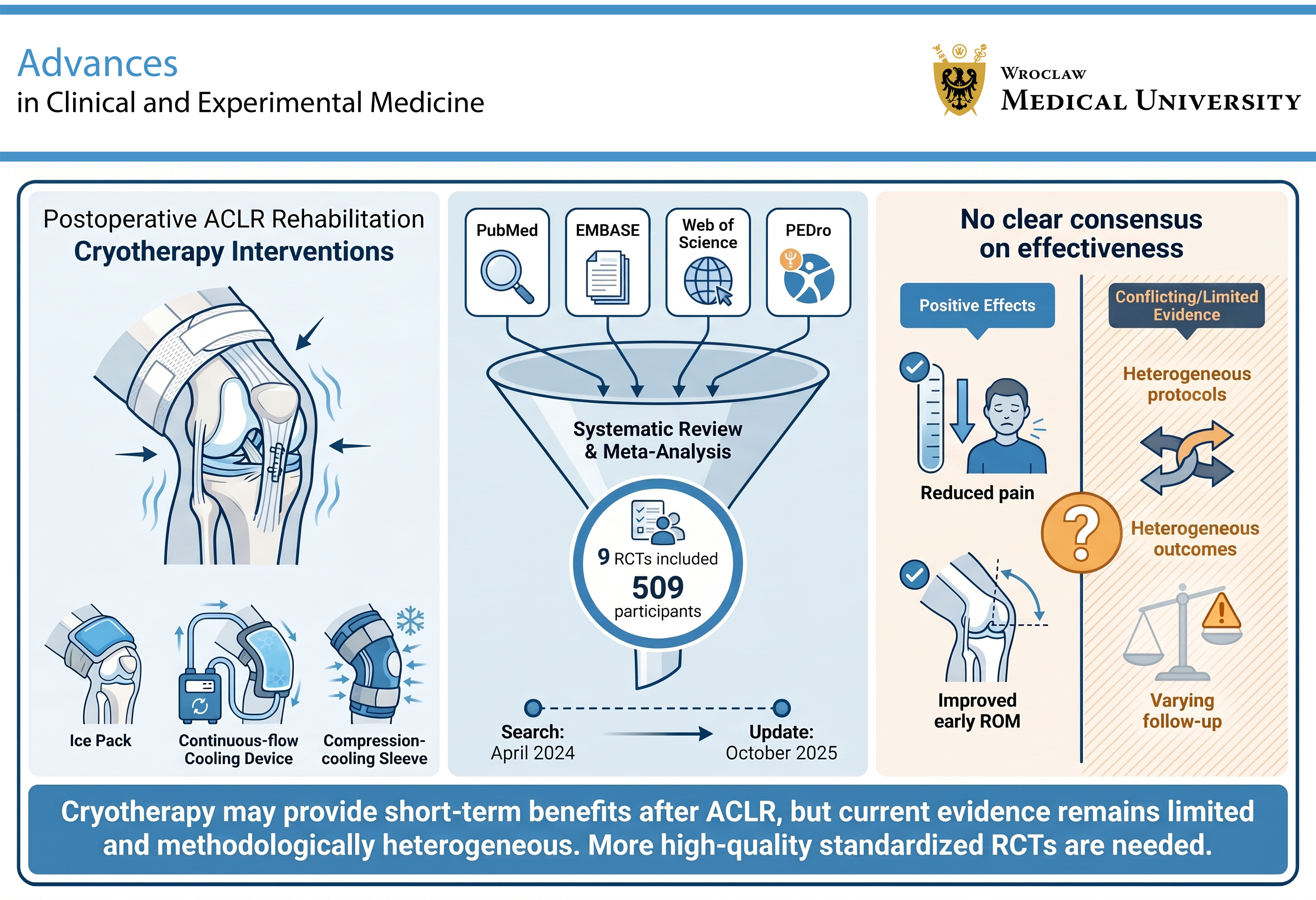
Cryotherapy is a commonly used physiotherapeutic modality in rehabilitation following anterior cruciate ligament reconstruction (ACLR). Previous systematic reviews (published in 2005 and 2014) concluded that the available evidence was insufficient to determine its effectiveness in postoperative recovery. This systematic review aimed to update and synthesize current evidence on cryotherapy after ACLR, including all randomized controlled trials (RCTs) investigating any form of postoperative cryotherapy (e.g., ice packs, continuous-flow devices, and compression-cooling devices). A comprehensive search of MEDLINE (PubMed), Embase, Web of Science, PEDro (Physiotherapy Evidence Database), and PROSPERO was conducted in April 2024 and updated in October 2025. Eligible studies included RCTs involving adults (≥18 years) undergoing ACLR. A total of 273 RCTs were identified, of which 9 studies (n = 509 participants) met the inclusion criteria. Outcomes included pain, range of motion (ROM), postoperative blood loss, and functional measures. Cryotherapy showed potential benefits in reducing pain and improving ROM in the early postoperative phase. However, results were inconsistent across studies, with substantial heterogeneity in intervention protocols, outcome measures, and follow-up time points. Overall, the current evidence remains limited and methodologically heterogeneous, with no clear consensus regarding the effectiveness of cryotherapy after ACLR. Further high-quality, standardized RCTs are needed to clarify its clinical value and determine which cryotherapy modalities may be most effective.
Key words: physiotherapy, rehabilitation, physical therapy, knee injuries, ACLR
Introduction
Anterior cruciate ligament (ACL) rupture is the most common severe musculoskeletal sports-related injury among young and physically active individuals. Treatment with ACL reconstruction (ACLR) is considered the gold standard for this injury.1 Rehabilitation and return to pre-injury performance are long processes for both recreational-level athletes (typically >12 months)2 and elite-level athletes (≈8 months, but generally ranging from 6 to 12 months).3, 4, 5 Recovery of strength and function after surgery remains challenging, as muscle weakness is often present for up to 12 months.6, 7 This weakness may be associated with an increased risk of re-injury.8 Rehabilitation following ACLR is divided into 5 stages: preoperative, early, mid, late, and return-to-sport (RTS). Pain and swelling are key clinical considerations during the early phase of rehabilitation,9 as they can impair joint proprioception10 and contribute to arthrogenic muscle inhibition.11, 12 These factors may also restrict restoration of full joint range of motion (ROM).13 Therefore, it is important to address these problems early. Although cryotherapy remains a standard intervention for reducing postoperative swelling,14, 15 it remains unclear whether its routine use in ACLR rehabilitation is supported by evidence. This uncertainty highlights the need to synthesize and critically appraise the current literature on this topic.
A preliminary search of PROSPERO, MEDLINE, the Cochrane Database of Systematic Reviews, and the JBI Evidence Synthesis journal was conducted, revealing that 2 systematic reviews have been published to date. The first, published in 2005, included randomized controlled trials (RCTs) comparing postoperative cold therapy after ACLR with either no treatment or room-temperature water. The assessed outcomes, including postoperative drainage, knee ROM, and pain, were measured using visual analogue scales (VAS).16 The 2nd systematic review, published in 2014, included randomized and quasi-randomized controlled trials investigating various types of cold application around the knee after ACLR.17 Compared with the earlier review, it evaluated a broader range of outcomes, including pain intensity (measured with VAS), edema, and adverse events as primary outcomes, as well as knee function scores, postoperative medication use, ROM, blood loss, length of hospital stay, quality of life, and patient satisfaction as secondary outcomes.17
Both previous systematic reviews highlighted the limited availability and methodological quality of evidence regarding the effects of cryotherapy following ACLR. However, since 2014, a substantial number of RCTs have been published, considerably expanding the body of available evidence. This rapid growth in new evidence, which has not yet been comprehensively synthesized, creates a clear and pressing need for an updated systematic review. Without such an update, current clinical decision-making risks being based on incomplete or outdated evidence. Although the present review adopts inclusion criteria and outcomes similar to those used in earlier reviews, it is, to the best of our knowledge, the first comprehensive synthesis since 2014 integrating more recent findings, thereby providing a more robust and contemporary assessment of the effectiveness of cryotherapy following ACLR.
Objectives
The primary aims of this study were to compile and synthesize all available scientific evidence published up to the date of this review in order to determine the effect of cryotherapy on outcomes after ACLR. A secondary aim was to assess whether sufficient evidence now exists to resolve the uncertainty identified in previous systematic reviews.
Materials and methods
This systematic review was conducted in accordance with the JBI methodology for systematic reviews of effectiveness evidence18 and the a priori protocol registered in PROSPERO (ID: CRD42024537628; International Prospective Register of Systematic Reviews). The search strategy aimed to locate both published and unpublished studies. A 3-step search strategy was utilized in this review. First, an initial limited search of MEDLINE (PubMed), Embase (Elsevier), Web of Science (Clarivate), and PEDro (Physiotherapy Evidence Database) was conducted, followed by analysis of the titles, abstracts, and index terms used to describe the articles. The search strategy, including all identified keywords and index terms, was adapted for each included information source, and a 2nd search was undertaken in October 2025. The full search strategies are provided in Appendix I. Finally, the reference lists of systematic reviews on the same or similar topics were screened for additional studies.
After the search, all identified citations were collated and uploaded into EndNote v. 20 (Clarivate Analytics, London, UK), followed by removal of duplicate records. Subsequently, titles and abstracts were screened by 2 independent reviewers for assessment against the review’s inclusion criteria. Potentially relevant studies were retrieved in full, with their citation details imported into the JBI System for the Unified Management, Assessment, and Review of Information (JBI SUMARI; JBI, Adelaide, Australia).19 Full-text studies that did not meet the inclusion criteria were excluded, with reasons for exclusion provided in Appendix II. Any disagreements that arose between the reviewers were resolved through discussion or with the assistance of a 3rd reviewer.
This systematic review included RCTs involving adult patients (≥18 years) who had undergone ACLR and were treated with cryotherapy during the postoperative rehabilitation period. Studies evaluating any form of cryotherapy were eligible for inclusion given the limited scientific evidence available. Participants who underwent concomitant meniscal surgery with ACLR were also included. Eligible studies compared cryotherapy with no intervention or placebo. Studies were required to report at least 1 of the following outcomes: pain, blood loss, length of hospital stay, swelling, or functional outcomes. Studies investigating combination therapies involving cryotherapy alongside other interventions were excluded. Different forms of cryotherapy were eligible for inclusion and are presented and described in Appendix III. Due to the limited number of available RCTs in this field, the review was not restricted to a specific form of cryotherapy in order to capture all existing evidence regarding its use following ACLR.
Eligible studies were critically appraised for methodological quality by 2 independent reviewers (M.D. and J.L.) using the standard JBI critical appraisal checklist for effectiveness research.18 Any disagreements between reviewers were resolved through discussion or, if necessary, with the involvement of a 3rd reviewer. Authors of the included studies were contacted to request missing or additional data for clarification when required. Responses to the JBI checklist items were classified as “positive” when the text explicitly provided a clear answer to the specific question, “unclear” when the text indicated that a procedure was undertaken but did not clearly describe how it was performed (e.g., randomization reported without specification of the method used), and “negative” when the item was either not reported or explicitly stated as not having been performed. This approach ensured that the quality appraisal was based on the clarity and completeness of reporting, thereby enhancing the reliability and transparency of the assessment.
The certainty of the evidence was subsequently assessed using the Grading of Recommendations Assessment, Development and Evaluation (GRADE) approach. A Summary of Findings (SoF) table was developed using GRADEpro GDT 2024 (McMaster University, Hamilton, Canada). The GRADE assessment was conducted independently by 2 reviewers (M.D. and J.L.) at the outcome level, with disagreements resolved through discussion or consultation with a 3rd reviewer. The SoF presents, where appropriate, a narrative summary of the intervention effects, descriptions of the study groups, and ratings of the certainty of evidence based on risk of bias, directness, heterogeneity, precision, and risk of publication bias. Outcomes reported in the SoF included pain, ROM, blood loss, and swelling (limb girth).
Data were extracted only from studies selected for inclusion in the review. Two independent reviewers participated in this process using the standardized JBI data extraction tool.18 The extracted data included specific details about the participants, context, culture, geographical location, description of the groups and outcomes measured, and description of the main results. Any disagreements that arose between the reviewers were resolved through discussion or with the assistance of a 3rd reviewer. Authors of papers were contacted to request missing or additional data if required. In the absence of responses regarding missing data, only the information provided in the article was used.
Data synthesis in the form of a meta-analysis was not feasible because of substantial clinical and methodological heterogeneity among the included studies. Specifically, the studies reported different outcome measures, often assessing distinct constructs, which precluded direct comparison. Moreover, even when similar outcomes were evaluated, they were measured at markedly different postoperative time points, preventing appropriate pooling of data. In addition, several studies presented incomplete datasets, and despite attempts to contact the corresponding authors for clarification or additional information, the missing data could not be retrieved. Taken together, these factors made quantitative synthesis inappropriate and potentially misleading. In the presence of substantial heterogeneity, a structured narrative synthesis approach was adopted. Studies were grouped according to key characteristics, including the type of intervention, outcome domains, and timing of outcome assessment.
Results
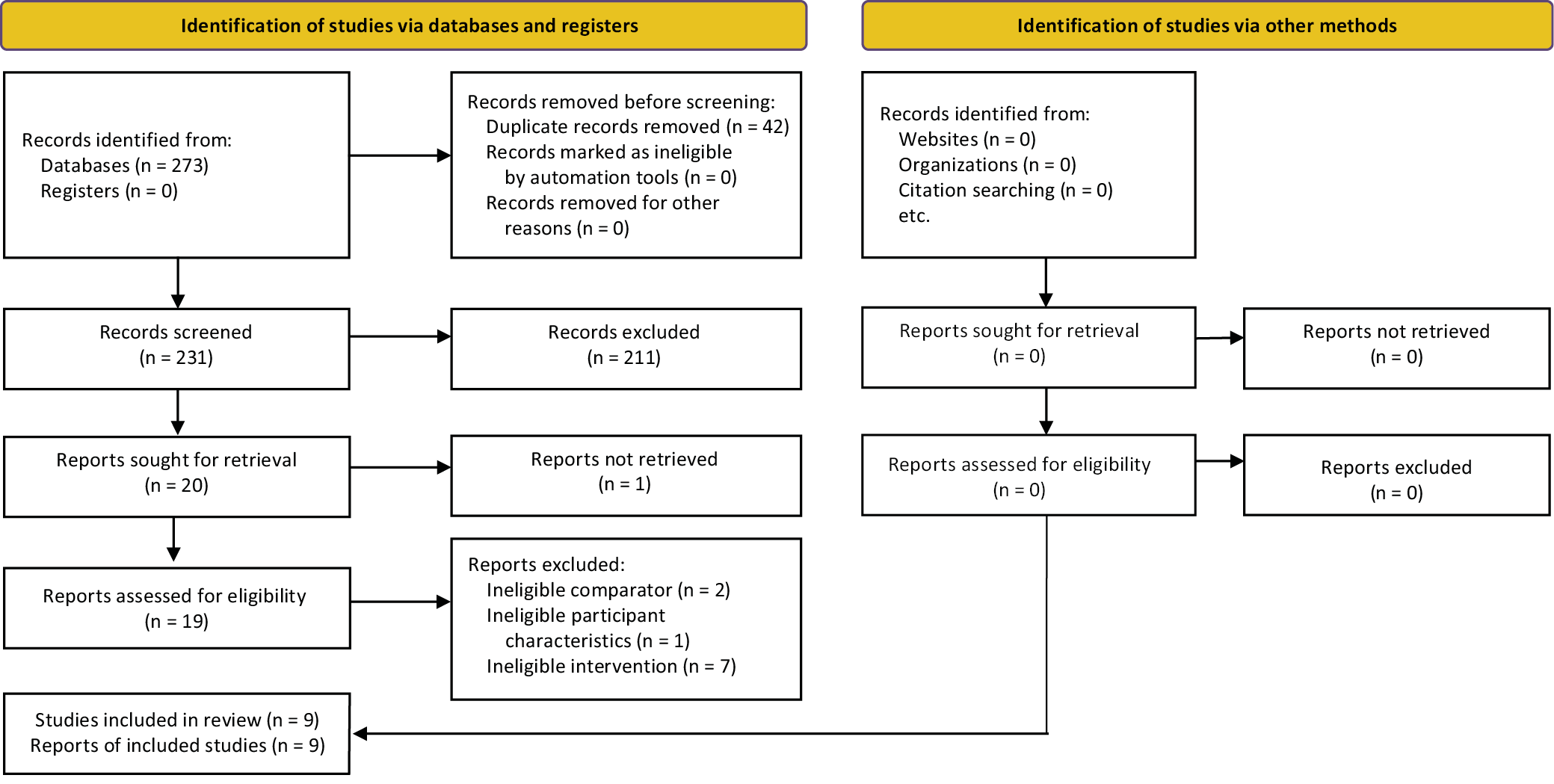
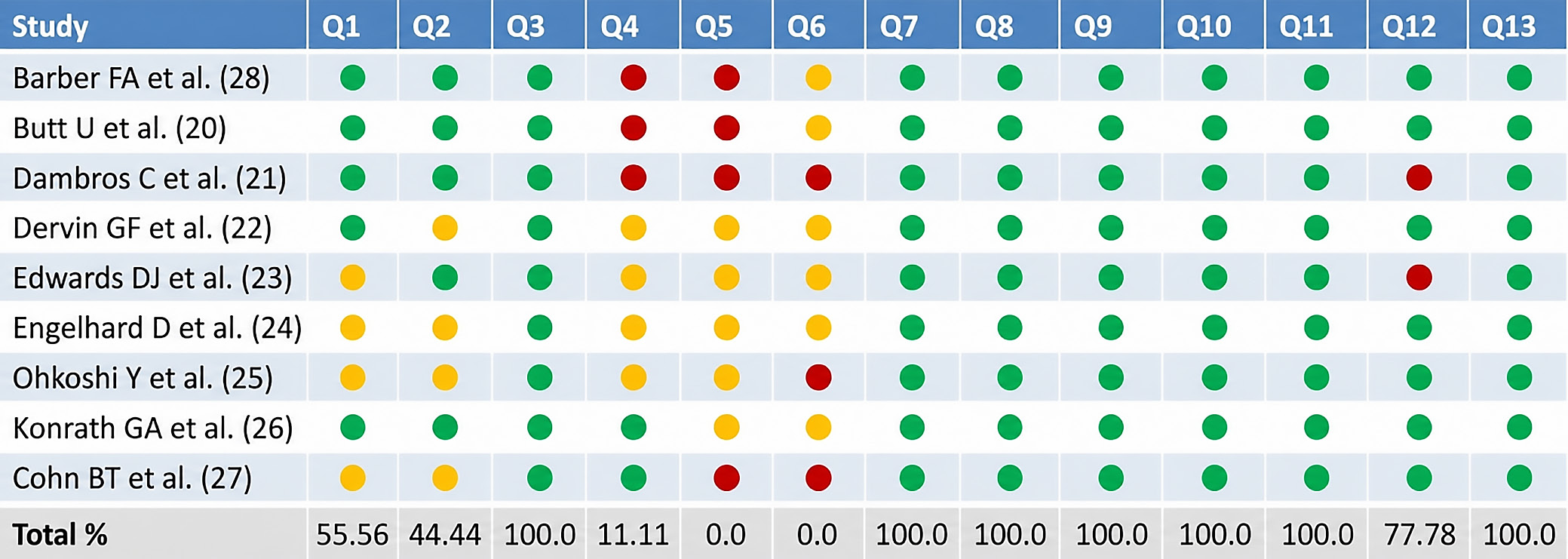
The initial search of the scientific databases yielded 273 articles. After removing 42 duplicates, 231 articles remained. The 1st screening of titles and abstracts based on the inclusion criteria reduced the number to 20 articles. These articles were then read in full to assess their eligibility. Access to 1 full-text article could not be obtained. After this 2nd review, 9 articles met the inclusion criteria. During the screening process, articles were excluded for the following reasons: ineligible comparator (n = 2), ineligible participant characteristics (n = 1), and ineligible intervention (n = 7). The entire process is illustrated in Figure 1. The excluded articles, following full-text review, are presented in Appendix II. Each paper was evaluated using the JBI critical appraisal checklist for RCTs by 2 independent reviewers (M.D. and J.L.). The results of the critical appraisal are presented in Figure 2. The critical appraisal of each individual study is presented in Appendix IV. The SoF is presented in Table 1.20, 21, 22, 23, 24, 25, 26, 27, 28 The majority of the included studies (6 out of 9) were published before the year 2000. Additionally, most studies involved patients who underwent meniscal procedures in addition to ACLR. The follow-up periods varied across the studies. The most commonly assessed outcomes were pain reduction, ROM, medication use, and blood loss.
Four studies reported a reduction in pain intensity with the intervention.20, 21, 22, 23 Better ROM outcomes were observed in the intervention groups across 2 studies.21, 23 Intervention groups often required less pain medication, although this was not consistently significant across all studies. No significant differences were found regarding blood loss and wound drainage between intervention and control groups. No adverse events were associated with cryotherapy or cooling interventions. Characteristics of all studies are presented in Appendix V. Data synthesis was not possible because of heterogeneous outcomes measured at different postoperative time points and missing data in several studies. Despite attempts to contact the study authors for additional information, the missing data were not obtained, resulting in incomplete datasets and preventing meaningful synthesis. All available effect measures related to pain, ROM, edema, knee joint function, quality of life, and blood loss were collected and presented in Table 2.20, 21, 22, 23, 24, 25, 26, 27, 28 In addition, a narrative synthesis of the findings was performed.
Discussion
Across the included studies, the effects of cryotherapy following ACLR were inconsistent, with both positive and nonsignificant findings reported. Several studies (e.g., Butt et al. and Dambros et al.) suggested potential benefits in reducing early postoperative swelling and pain, as well as improving ROM, particularly when cryotherapy was applied in the immediate postoperative phase.20, 21 In contrast, other studies (e.g., Dervin et al., Edwards et al., and Konrath et al.) did not demonstrate significant additional clinical benefits of cryotherapy in terms of postoperative recovery outcomes.24, 25, 26 However, some authors (e.g., Barber et al., Ohkoshi et al., and Cohn et al.) reported favorable effects on pain-related outcomes and physiological parameters such as intra-articular temperature and blood loss.23, 27, 28
The most important finding of this review is that cryotherapy appears to provide short-term benefits in reducing postoperative pain intensity and improving ROM following ACLR in the early stage of rehabilitation, whereas evidence regarding its effects on swelling, long-term function, and muscle recovery remains inconclusive. Cryotherapy is one of the most common adjunct treatment modalities in early postoperative care in orthopedic surgery.29, 30, 31 Across the included studies, cryotherapy consistently demonstrated a favorable safety profile, with no major adverse events reported. While several studies reported statistically significant reductions in pain and analgesic use in the intervention groups compared with controls, others found no significant differences. The effects on blood loss and wound drainage were minimal or nonsignificant; therefore, no definitive conclusions can be drawn regarding the impact of cryotherapy on these outcomes following ACLR. Cryotherapy is commonly used to reduce swelling in the early phase after ACLR.30, 31, 32 These findings are consistent with earlier systematic reviews and meta-analyses by Raynor et al. and Martimbianco et al., both of which reported modest analgesic benefits but insufficient evidence for consistent effects on swelling or function.16, 17 The available evidence suggests that cryotherapy may have clinically relevant benefits for reducing perceived pain and improving ROM following ACLR. These effects appear to be particularly valuable during the early postoperative rehabilitation phase, when pain and joint stiffness are among the most common barriers to functional recovery. Postoperative pain is one of the most frequently reported complications after ACLR and may hinder rehabilitation progress by limiting the patient’s ability to participate in more demanding therapeutic exercises.33 Cryotherapy may therefore serve as a useful adjunctive intervention to optimize early rehabilitation outcomes, especially in patients younger than 50 years, who appear to be more susceptible to postoperative pain after ACLR.34, 35 Current rehabilitation recommendations also support the use of cryotherapy as part of early postoperative management following ACLR.9
An additional practical consideration is the potential use of cryotherapy prior to exercise sessions. Previous studies have indicated that applying ice for 20–30 min before quadriceps strengthening exercises may result in greater strength gains.35 Cryotherapy has also been shown to facilitate quadriceps muscle activation, which is highly relevant, as restoration of quadriceps strength is a key goal of rehabilitation after ACLR.36, 37 Taken together, cryotherapy appears to have meaningful practical value in the early stages of rehabilitation by targeting outcomes that are particularly important at this stage, namely pain reduction, restoration of knee ROM, and potentially improved readiness for therapeutic exercise. It should be noted, however, that the current evidence is characterized by a moderate-to-high risk of bias.
The accumulated scientific evidence does not support a definitive conclusion regarding the use of cryotherapy to reduce edema after ACLR. Moreover, the current scientific evidence does not permit determination of the temperature most beneficial for cryotherapy. The lack of consistent follow-up periods for data collection and the excessive diversity of outcomes were the main drawbacks of the study designs in the included studies. This heterogeneity in both timing and measured variables precluded meta-analysis. In many studies, despite randomization being mentioned, there was a lack of detailed description of the associated algorithm or how it was implemented. Moreover, there was no clear indication whether therapists and data collectors were blinded. This lack of clarity resulted in a lower methodological quality rating during assessment of these studies. Questions 5 (“Were those delivering treatment blind to treatment assignment?”) and 6 (“Were outcome assessors blind to treatment assignment?”) from the revised JBI critical appraisal tool for the assessment of risk of bias for RCTs had 0% positive responses. This suggests that future studies in this area should place particular emphasis on clearly reporting blinding procedures in order to reduce the risk of bias.
Quantitative synthesis in the form of a meta-analysis was not feasible because of substantial heterogeneity in the outcome measures across the included studies. Consequently, a narrative synthesis was undertaken, with the findings systematically summarized in Table 2. An additional challenge concerned inconsistent reporting of results. In several studies, the authors did not provide complete numerical data required for quantitative comparison. Furthermore, the statistical presentation of outcomes varied considerably: some studies reported means with standard deviations (SDs) or ranges, whereas others reported only mean values. One study also reported selected outcomes using medians. Such variability in reporting formats further limited comparability across studies and hindered data pooling. To improve the consistency and interpretability of future research, we suggest that authors consider reporting outcomes in accordance with established reporting guidelines and, where appropriate, using commonly applied and validated outcome measures.38, 39, 40, 41 A more standardized approach may enhance comparability between studies and facilitate future evidence synthesis, including meta-analyses.
In future studies, we suggest using uniform outcomes commonly applied in studies evaluating the rehabilitation process after ACLR. A recently published study identified the most commonly used methods for assessing the effectiveness of physiotherapeutic interventions following ACLR. The adoption of these standardized measures at clearly defined time points would enhance comparability of findings across studies.38 The use of standardized follow-up protocols allowing definition of short-, medium-, and long-term effects should be strongly considered during study design. Moreover, a detailed description should be provided regarding who was blinded (patient, therapist, or outcome assessor) and how blinding was performed. Study design should adhere to guidelines for conducting RCTs in orthopedics and sports medicine.39
Limitations of the study
This review has several limitations that should be acknowledged. First, due to considerable heterogeneity in study design, outcome measures, and follow-up periods, data synthesis and meta-analysis were not feasible. This variability limited the ability to draw firm conclusions regarding the overall effectiveness of cryotherapy following ACLR. Second, many of the included studies lacked detailed reporting of randomization procedures, blinding, and allocation concealment, which may have introduced a risk of bias. The methodological quality of several trials was therefore moderate to low. Third, most studies had relatively small sample sizes and short-term follow-up periods, limiting the generalizability of their findings and making it difficult to determine the long-term effects of cryotherapy on functional recovery and re-injury risk. Moreover, although all studies investigated the use of cryotherapy, the specific forms of intervention varied considerably. Different devices and delivery methods were used across studies, and the frequency, duration, and overall application protocols of the intervention were inconsistent. In addition, the temperatures applied during treatment differed substantially between studies, further limiting direct comparability of the findings. Finally, potential publication bias cannot be excluded, as only studies published in English were included and grey literature was not systematically searched.
Conclusions
Cryotherapy is a commonly used method in rehabilitation following ACLR, and the available evidence suggests that it may reduce pain intensity and improve ROM. Cryotherapy may be particularly effective during the early stage of rehabilitation, when pain control and restoration of joint mobility are especially important. However, there is a limited number of methodologically robust studies supporting its effectiveness. The current evidence base is further constrained by substantial heterogeneity in follow-up periods and outcome measures across studies, and all included studies were assessed as having a moderate-to-high risk of bias. In addition, several studies did not report sufficient numerical data to allow meaningful quantitative synthesis. Therefore, although cryotherapy appears to be a promising adjunct in postoperative rehabilitation, the available conclusions should be interpreted with caution, and further high-quality research is required to establish its effectiveness more conclusively.
Supplementary data
The supplementary materials are available at https://doi.org/10.5281/zenodo.20393744. The package contains the following files:
Appendix I. Search strategy.
Appendix II. Studies ineligible following full-text review.
Appendix III. Description of cryotherapy interventions across included studies.
Appendixx IV. Critical appraisal of each individual study.
Appendix V. Characteristics of included studies.
Use of AI and AI-assisted technologies
Not applicable.