


Abstract
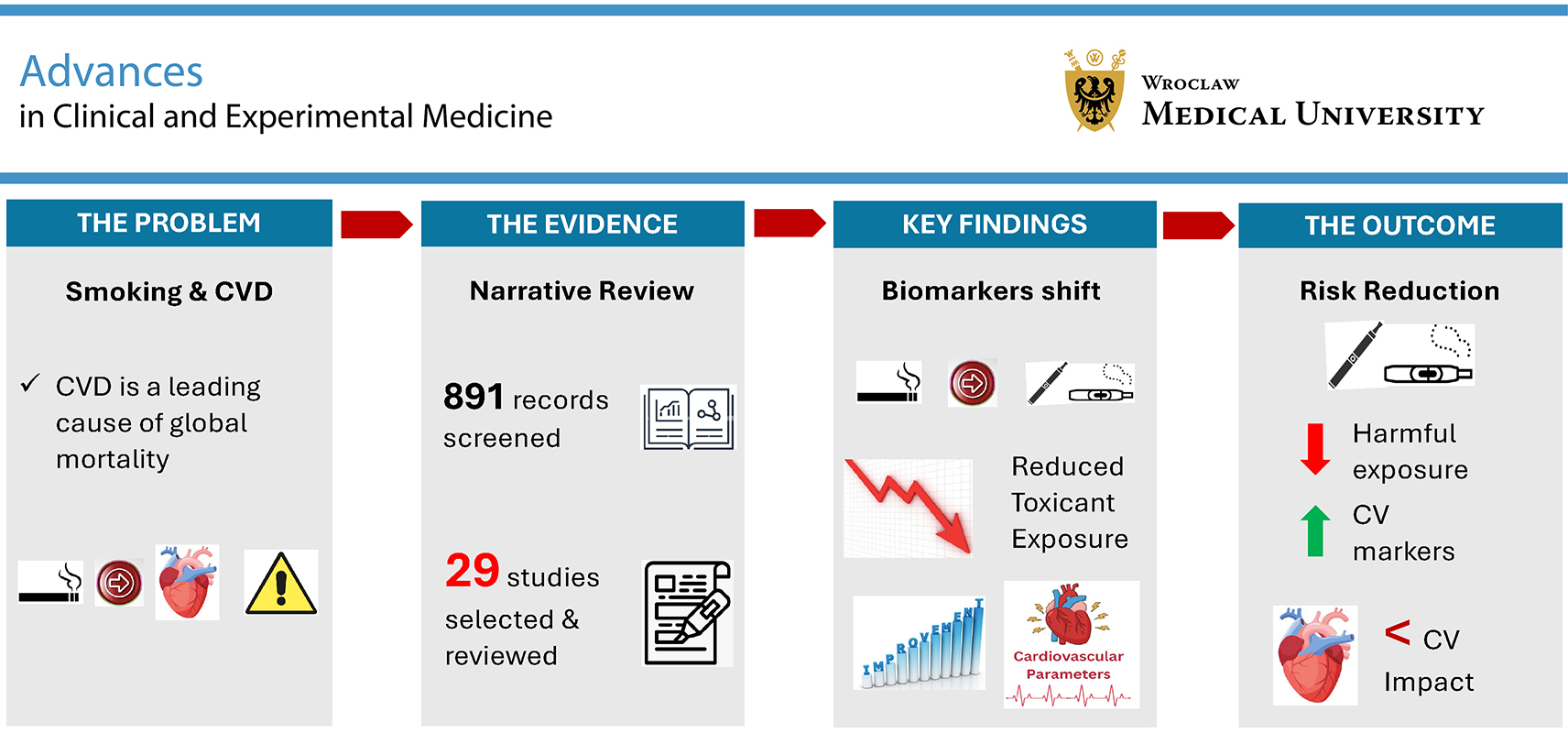
This review critically examines the cardiovascular (CV) implications of switching from combustible cigarettes (CCs) to combustion-free nicotine products, namely heated tobacco products (HTPs) and electronic cigarettes (e-cigarettes). Noncommunicable diseases, particularly cardiovascular disease (CVD), remain the leading global cause of mortality, with smoking as a major modifiable risk factor. While complete smoking cessation provides the greatest health benefit, many smokers transition to alternative nicotine delivery systems. Evidence from randomized trials, observational studies, and cohort analyses indicates that switching to HTPs or e-cigarettes significantly reduces exposure to harmful and potentially harmful constituents (HPHCs), including carbon monoxide (CO) and carcinogens, with biomarker improvements comparable to those observed after smoking cessation. Short-term studies suggest favorable changes in endothelial function, arterial stiffness, and oxidative stress, although nicotine-containing products may still exert acute CV effects. Long-term data, although limited, indicate a reduced incidence of major adverse cardiovascular events (MACEs) among exclusive users compared with continued smokers. However, heterogeneity in product design, usage patterns, and study methodologies limits the ability to draw definitive conclusions. Overall, current evidence suggests that non-combustible nicotine products may represent a harm reduction strategy for smokers who are unable or unwilling to quit, although they are not risk-free. Further large-scale, long-term studies with clinically relevant endpoints are required to clarify their CV safety profile and to inform evidence-based public health policies.
Key words: electronic nicotine delivery systems, heated tobacco products, cardiovascular diseases, smoking cessation, harm reduction
Introduction
Noncommunicable diseases (NCDs), primarily cardiovascular disease (CVD), cancer, chronic respiratory disease, and diabetes, are the leading causes of death worldwide. More than 36 million people die each year from NCDs, accounting for approx. 63% of all global deaths, including 14 million individuals who die prematurely before the age of 70. More than 90% of these premature deaths occur in low- and middle-income countries and could largely be prevented through effective prevention and control measures. Cardiovascular disease is the leading cause of mortality and morbidity worldwide. An estimated 17.9 million people died from CVD in 2016, accounting for 31% of all global deaths. Of these deaths, 85% were due to heart attacks and strokes.1, 2, 3, 4
Cigarette smoking is the single most preventable cause of CVD, and smoking cessation is one of the most effective interventions for reducing this risk.5, 6 Cigarette smoke (CS) contains more than 7,000 harmful and potentially harmful constituents (HPHCs).7, 8 Several lists of HPHCs have been developed by major international public health agencies, including the World Health Organization (WHO), the International Agency for Research on Cancer (IARC), and the U.S. Food and Drug Administration (FDA). These lists identify substances considered most toxic to human health, with the number of listed compounds ranging from 9 to 93.8, 9, 10, 11, 12
The association between smoking and the risk of developing CVD is well established. However, the pathophysiological mechanisms underlying this relationship are complex, and the various substances present in CS contribute through different biological pathways to the development of smoking-related diseases. The harmful cardiovascular (CV) effects of smoking are mainly caused by toxic substances released during tobacco combustion. Nicotine, the compound responsible for addiction, has sympathomimetic activity which induces vasoconstriction, transiently reduces oxygen supply, and increases tissue oxygen demand. Nevertheless, its role in CV toxicity appears relatively limited compared with that of carbon monoxide (CO), oxidizing gaseous components, and other toxic chemical substances present in CS.13
Preventing smoking initiation and promoting smoking cessation remain the main strategies for reducing smoking-related risks. Nevertheless, millions of smokers continue to smoke, highlighting the need for additional efforts from the medical and public health communities. Current prevention and cessation strategies should therefore be strengthened. When complete elimination of cigarette smoking is not achievable, efforts should focus on reducing harm resulting from exposure to toxic substances present in significant quantities in combustible tobacco products, such as combustible cigarettes (CCs), cigars, and roll-your-own tobacco. In this context, it is important to evaluate the potential relative benefits (if any) of switching to non-combustion nicotine delivery products, such as electronic cigarettes (e-cigarettes) or heated tobacco products (HTPs). These products are associated with substantially lower exposure to toxic and potentially toxic substances compared with CS.14, 15 Understanding the potential role of these alternatives may help inform harm-reduction strategies in tobacco control.
A distinct toxicant exposure profile associated with the use of non-combustion products compared with CCs, along with potentially different clinical consequences, may contribute to the ongoing public debate on their regulation. In recent years, increasing attention has been paid to the need to develop evidence-based and data-driven public policies. Such an approach should take into account the substantial differences between CC and non-combustion products in terms of toxicological exposure and, as suggested by emerging evidence, potentially also in terms of clinical impact.14, 15
Current assessments by major health authorities generally agree that aerosols generated by e-cigarettes or HTPs, although still containing toxicants, expose users to chemicals with toxic or potentially toxic properties at significantly lower levels than those generated by cigarette smoking. Despite this reduced exposure, these products may still pose CV health risks, and some authors have expressed concerns regarding the potential presence of novel toxic substances in emerging tobacco products.16 In the case of certain HTPs, assessments conducted by health authorities have identified a small number of compounds present in the generated aerosol at higher concentrations than in CS or not detected in CS. However, these compounds occur at very low levels and have been toxicologically evaluated to confirm that their presence does not alter the overall favorable toxicological profile of HTP aerosol compared with CS.17 Overall, the current body of evidence regarding the toxicological profile of HTPs compared with CC supports a clear differentiation between these products.
The FDA has authorized the marketing of an HTP system in the USA under the Modified Risk Tobacco Product (MRTP) regulatory pathway. The FDA concluded that “the system significantly reduces the production of harmful and potentially harmful chemicals compared with CS. In addition, studies have shown that switching completely from CC to this system significantly reduces the body’s exposure to 15 specific harmful and potentially harmful chemicals. Toxicological evaluation also found that, compared with CS, the aerosol contains significantly lower levels of potential carcinogens and toxic chemicals that may damage the respiratory or reproductive systems.”18, 19, 20, 21
In Europe, Greece was the first EU Member State to permit scientifically substantiated claims related to the reduced health risks of novel tobacco products, including nicotine-containing and non-nicotine e-cigarettes and other nicotine-containing products, in July 2020.22 In March 2023, the Greek Ministry of Health approved the communication of a claim related to reduced exposure to toxic substances for 2 types of HTPs (GLO and IQOS HEETS) following a rigorous scientific evaluation by the competent scientific committee. This approval was reaffirmed in January 2025 for an updated version of one of these HTPs (IQOS TEREA). Greece therefore became the 2nd country worldwide, after the USA, to authorize such claims for HTPs based on scientifically substantiated evidence.23
In the UK, the Committee on Toxicity, Carcinogenicity and Mutagenicity of Chemicals in Food, Consumer Products and the Environment (COT, COC and COM) issued a statement on the toxicological assessment of HTPs. The committee confirmed the substantial reduction in exposure to toxic or potentially toxic substances compared with CC and noted that “since exposure to the substances present in the aerosol is reduced compared with CS, it is likely that there is a corresponding reduction in risk, although not complete, to the health of smokers who switch entirely to HTPs.”24 Furthermore, in the context of periodic reviews of the scientific literature on smoke-free products, Public Health England (PHE) reported that, although the available evidence in 2018 remained subject to further scientific developments, “compared with CS, HTPs are likely to expose users and bystanders to lower levels of particulate matter and toxic or potentially toxic substances, although the magnitude of reduction varies across studies.” The PHE also concluded that “the available evidence suggests that HTPs may be considerably less harmful than CC.” Regarding e-cigarettes, PHE concluded that they are significantly less harmful than smoking, estimating them to be at least 95% less harmful than combustible tobacco products. The agency also reported that e-cigarettes help tens of thousands of smokers in England quit each year, with no evidence of harm from passive vaping. However, it emphasized that e-cigarettes are not risk-free and should only be used by smokers as a tool to support smoking cessation.14
In Germany, the Federal Institute for Risk Assessment (Bundesinstitut für Risikobewertung (BfR)) – the agency responsible for advising the federal government on product safety issues – published a review of HTPs. The report stated that “the significant reduction (80–99%) in the main carcinogens, as well as the overall reduction in toxic substances, is likely to have implications for health risks. Nicotine levels are comparable to those of cigarettes, which may limit the likelihood of reverting to conventional smoking.”25, 26
In the Netherlands, the National Institute for Public Health and the Environment (Rijksinstituut voor Volksgezondheid en Milieu (RIVM)) and the WHO Tobacco Laboratory Network reviewed the available evidence on HTPs and concluded that “the use of tobacco sticks with HTPs may be harmful to health, but is probably less harmful than cigarette smoking.” In a peer-reviewed study, RIVM researchers further reported that “the change in cumulative exposure was estimated to be 10–25 times lower when using HTPs instead of cigarettes.” The authors also suggested that “the use of HTPs instead of cigarettes may be associated with a substantial increase in life expectancy for the subgroup of smokers who would otherwise die from cancer.”27, 28
Evidence regarding the reduction of CV harm in animal models is available, as the short lifespan of these species and the possibility of post-mortem tissue analysis allows direct assessment of pathological outcomes. Several studies, including some industry-funded investigations, have examined the toxicological and physiological effects of HTPs and e-cigarette aerosols compared with conventional CS using ApoE−/− and A/J mouse models. These models are particularly relevant for studying CV and respiratory diseases, including atherosclerosis and carcinogenesis. Results from these studies indicate that mice exposed to aerosols from non-combustion products develop significantly less aortic plaque formation and less severe atherosclerosis than mice exposed to CS. Consequently, these findings suggest that, at least in rodent models, exposure to aerosols from both e-cigarettes and HTPs is associated with lower CV risk compared with cigarette smoking.29, 30, 31 Obtaining the same level of evidence in humans is considerably more challenging. One major limitation is the unavoidable bias introduced by previous smoking history, which may significantly influence the development of subsequent CVD and changes in key CV functional indicators. Whether long-term exposure to e-cigarettes or HTPs results in CVD in a manner comparable to cigarette smoking can only be determined through large-scale, long-term studies involving daily users who have never smoked CCs. However, such studies are difficult to conduct at present, as most users of e-cigarettes and HTPs have had previous or current exposure to CS.
Objectives
In this review, we critically assess published studies that have investigated the potential toxic effects of e-cigarettes and HTPs compared with cigarette smoking, focusing on evidence derived from clinical studies (excluding case reports). The primary objective of this review is to provide an overview of the available clinical evidence evaluating the effects of combustion-free products (e-cigarettes and HTPs) on CV outcomes and their potential for harm reduction compared with CC smoking.
Materials and methods
A literature search was conducted between May 2025 and June 2025. As this study represents a narrative review, a formal review protocol was not developed. The search was performed using the databases PubMed, Embase, Scopus, and Google Scholar, applying Medical Subject Headings (MeSH) where appropriate. The search strategy included 2 domains: one related to the use of e-cigarettes or HTPs and another related to health outcomes, specifically CVD.
Search terms included: (“electronic cigarette” OR “electronic nicotine delivery system” OR “e-cigarette” OR “vaping” OR “vapor” OR “reduced-risk tobacco product” OR “non-cigarette tobacco” OR “nicotine aerosol” OR “e-cigarette aerosol” OR “e-cig” OR “heated tobacco products” OR “heat-not-burn” OR “HTP*” OR “H-n-B” OR “tobacco heating system” OR “THS” OR “modified risk tobacco products” OR “IQOS” OR “Glo”) AND (“cardiovascular disease” OR “CVD” OR “acute myocardial infarction” OR “stroke” OR “cardiovascular” OR “cerebrovascular” OR “coronary heart disease” OR “CHD” OR “angina” OR “heart failure”).
Search results were filtered to include English-language clinical studies, including comparative, multicenter, and observational studies, published between January 1, 2018 and May 1, 2025. The reference lists of relevant reviews were manually screened to identify additional eligible studies. Titles, abstracts, and full texts were independently screened by 2 reviewers (D.R. and S.F.) according to the predefined eligibility criteria. Any disagreements were resolved through blinded evaluation by a 3rd reviewer (G.G.).
Studies that did not include a comparison between combusted and non-combusted nicotine delivery systems were excluded. In total, 891 records were screened, and 29 studies were included in the final analysis. Data charting was not performed, consistent with the narrative review design.
Results
Of the 891 records screened, 849 were excluded because they did not meet the predefined search and filter criteria or were outside the scope of the present review (e.g., studies not including biomarkers of exposure (BoEs) directly linked to potential CV risk). An additional 14 records were excluded due to the lack of comparison with cigarette smoking or because the comparison group consisted of abstinents rather than cigarette smokers. A further 4 records were excluded because they were review articles rather than original studies (either narrative or systematic reviews). Consequently, 24 studies were included in the final review (Table 1).
The included studies comprised randomized trials, observational studies, crossover studies, and cohort studies. Most of these studies reported measurable CV effects associated with both e-cigarettes and HTPs, including changes in BoEs, key CV functional indices, CVD outcomes, and major adverse cardiovascular events (MACEs).
Biomarkers of exposure and potential harm
Lüdicke et al. conducted a trial in which participants were randomized either to continue smoking their preferred cigarette brand (n = 496) or to switch to a THS (n = 488) for 6 months. The primary outcome was the change in BoEs 6 months after baseline. Statistically significant improvements were observed in 5 of the 8 BoEs, including high-density lipoprotein cholesterol (HDL-C), white blood cell count (WBC), forced expiratory volume in 1 s % predicted (FEV1%pred), carboxyhemoglobin (COHb), and total 4-(methylnitrosamino)-1-(3-pyridyl)-1-butanol (NNAL) among smokers who switched to the HTP compared with those who continued smoking CC. The remaining 3 biomarkers – soluble intercellular adhesion molecule-1 (sICAM-1), 11-dehydro-thromboxane B2 (11-DTX-B2), and 8-epi-prostaglandin F2α (8-epi-PGF2α) – showed a trend toward improvement. All endpoints changed in a direction consistent with the effects typically observed after smoking cessation. Improved biological responses were observed among participants who predominantly used the HTP compared with those who continued cigarette smoking, while nicotine levels remained similar in both groups. These results support the study hypothesis and suggest a potential reduction in disease risk among smokers who switch to HTPs instead of continuing to smoke CCs.32
Ansari et al. published the results of a 6-month extension of the previous trial,33 including 672 participants who continued into the extension study. Endpoints were evaluated at baseline and at 3, 6, and 12 months. Biomarkers of exposure were longitudinally assessed as indicators of biological pathways involved in the pathogenesis of CV or respiratory diseases and carcinogenesis. At 12 months, participants in the predominant HTP group showed changes in BoEs (increases or decreases) consistent with those reported in the literature after 1 year of smoking cessation, in contrast to the findings among participants who continued to smoke CC. The results in the HTP group indicated favorable changes in CV biomarkers, particularly considering that HDL-C levels, WBC count, 8-epi-PGF2α, and sICAM-1 levels have been reported to be associated with a reduced risk of future adverse CV outcomes.33
Haziza et al. conducted a 3-month randomized trial involving 160 healthy adult smokers in the USA, who were randomized into 3 groups: continued smoking of CC, switching to a HTP, or smoking abstinence. Biomarkers of exposure to 16 harmful and potentially harmful constituents (HPHCs) were measured in blood and 24-h urine samples. By day 5, BoE levels of HPHCs were reduced by 51–96% in the HTP group compared with the CC group, and these reductions were sustained for most biomarkers throughout the study period. Switching to HTPs led to significant reductions in exposure to multiple toxicants, including total NNAL total N’-nitrosonornicotine (NNN), COHb, (R,S)-N-acetyl-S-[1-(hydroxymethyl)-2-propenyl]-L-cysteine-d6 and (R,S)-N-acetyl-S-[2-(hydroxymethyl)-3-propenyl]-L-cysteine-d6 (MHBMA), 3-hydroxypropylmercapturic acid (3-HPMA), S-phenylmercapturic acid (S-PMA), total 1-hydroxypyrene (1-OHP), 4-aminobiphenyl (4-ABP), 1-naphthylamine (1-NA), 2-naphthylamine (2-NA), o-toluidine (o-tol), cyanoethyl mercapturic acid (CEMA), 2-hydroxyethyl methacrylate (HEMA), 3-hydroxy-1-methylpropylmercapturic acid (HMPMA), and benzo[a]pyrene (B[a]P). These reductions were observed after 5 days of confinement and were maintained during the subsequent 85-day follow-up period. The magnitude of reduction approached that observed with smoking cessation.34, 35
Regarding HTPs, Ansari et al. conducted a cross-sectional study involving 974 healthy participants who were categorized into 3 groups: 1) current cigarette smokers, 2) individuals who had voluntarily switched from smoking to HTP use, and 3) former smokers. The study focused on selected risk markers associated with CV, respiratory, and oncological diseases. Blood and urine samples were analyzed for 9 BoEs. The co-primary endpoints included COHb, NNAL, WBC, and 8-epi-PGF2α. The key secondary endpoints were HDL-C, sICAM-1, 11-DTX-B2, central augmentation index (AIx), a marker of arterial stiffness, and forced expiratory volume in 1 s (FEV1). After a follow-up period of ≥2 years, HTP users demonstrated significant favorable differences in all 9 BoEs compared with current smokers.36
Another type of HTPs was investigated by Gale et al. in a randomized controlled 6-month study involving 295 adult smokers, who were assigned to one of 3 groups: 1) continued cigarette smoking (n = 59), 2) switching to HTP use (n = 127), or 3) participation in a smoking cessation program (n = 109). Biomarkers of exposure were measured at baseline and at several time points up to 180 days. The study demonstrated significant reductions in BoEs among participants who switched to HTPs, with levels approaching those observed in the smoking cessation group, including biomarkers associated with CV risk.37
In a cross-sectional observational study, Shiffman et al. compared 2 groups: adult smokers who continued smoking (n = 124) and those who had switched exclusively to e-cigarettes (n = 140) for at least 6 months. The primary endpoints included several BoEs, including those associated with CV risk. The results showed significantly lower levels of BoEs among e-cigarette users compared with continuing smokers, indicating reduced exposure to HPHCs. Favorable differences in several BoEs were observed among e-cigarette users, including lower levels of inflammatory and oxidative stress markers and improved lipid profiles, supporting the concept of reduced harm compared with continued cigarette smoking.38
In another post-marketing, observational cross-sectional study conducted in Japan, Sakaguchi et al. enrolled 100 CC smokers, 259 exclusive HTP users, and 100 never-smokers. The study assessed multiple BoEs, including cotinine, total NNAL, lipid profiles, inflammatory markers, platelet activation markers, oxidative stress markers, and pulmonary function markers. Regarding biomarkers associated with potential CV risk, HTP users showed favorable differences in several BoEs compared with CC smokers, including HDL-C, triglycerides, sICAM-1, WBC count, 11-DHTXB2, 2,3-d-TXB2, and 8-epi-PGF2α. These findings suggest a potential reduction in risk for smoking-related diseases among HTP users compared with CC smokers. However, causality cannot be established, and further longitudinal studies are required to confirm these observations. A key strength of the study lies in its real-world setting and comprehensive biomarker assessment.39
Effects on cardiovascular indexes
Ikonomidis et al. found that while both e-cigarettes and CCs acutely increased arterial stiffness and oxidative stress, these effects were significantly less pronounced with e-cigarette use. Their findings suggest that e-cigarettes may induce less vascular stress than CCs, although further research is needed to evaluate the long-term health implications.40 In a subsequent study, Ikonomidis et al. investigated the effects of e-cigarette use on platelet and vascular function over a 4-month period in smokers without CVD. Participants were randomized either to continue smoking CCs or to switch to e-cigarettes. Compared with continued smoking, switching to e-cigarettes resulted in less impairment of platelet function, greater reductions in exhaled CO, improved arterial stiffness (measured using pulse wave velocity (PWV)), and lower oxidative stress, as indicated by plasma malondialdehyde levels. These findings suggest that switching to e-cigarettes may have a more favorable impact on vascular function and oxidative stress than continued tobacco smoking.41
Ikonomidis et al. conducted a preliminary study involving 37 adult smokers and 20 healthy controls, investigating the effects of a HTP on CV and myocardial function over a 1-month period. Measurements included vascular function – assessed with PWV and central aortic systolic blood pressure (BP) – as well as coronary flow reserve (CFR), myocardial deformation (including global longitudinal strain (GLS), twisting, and untwisting velocity), and the global myocardial work index (GWI). At baseline, smokers exhibited higher levels of exhaled CO, greater arterial stiffness, and higher GWI, together with lower CFR, compared with healthy controls. After 1 month of HTP use, significant improvements were observed in endothelial function – measured with flow-mediated dilation (FMD) – as well as in CFR, myocardial strain, and untwisting velocity. These changes were accompanied by reductions in exhaled CO levels and central aortic systolic BP. Overall, these findings suggest that switching from CC to HTPs may lead to short-term improvements in CV and myocardial function.42
A subsequent larger study by the same researchers was a randomized, partially crossover trial involving 75 adult smokers. The study included both an acute phase and a chronic phase. In the acute phase, 50 smokers participated in a randomized crossover experiment in which they smoked 1 HTP and 1 CC with a 60-min washout period between exposures. In the chronic phase, 50 smokers switched to exclusive HTP use for 1 month, and their outcomes were compared with those of 25 smokers who continued CC use. During the acute phase, PWV increased after both HTP and CC use, but the increase was significantly smaller with the HTP (0.54 m/s vs 1.11 m/s). Smoking CC led to increased levels of CO, malondialdehyde (MDA), and thromboxane B2 (TxB2), indicating elevated oxidative stress and platelet activation. In contrast, HTP use did not significantly alter CO, MDA, or TxB2 levels acutely. In the chronic phase, participants who switched to HTPs showed significant improvements compared with CC smokers, including improvements in the PWV/GLS (p = 0.03), FMD (+4.3%, p = 0.009), GWI (−152 mm Hg%, p = 0.001), global wasted myocardial work (GWW) (−19.72 mm Hg%, p = 0.014), GLS (+2.35%, p = 0.03), CFR (+0.98, p = 0.02), and total arterial compliance (TAC) (+1.8 mL/mm Hg, p = 0.04). No significant changes were observed in the control group that continued smoking CCs. Although the follow-up period was short and long-term CV outcomes remain unknown, this study provides strong evidence that switching from CCs to HTPs can lead to measurable improvements in CV function within 1 month.43
Ioakeimidis et al. examined the acute effects of an HTP compared with CCs on arterial stiffness and wave reflections in young smokers. Heart rate (HR), BP (both brachial and central aortic BP), PWV, and AIx were measured immediately before smoking, as well as 5, 10, 20, and 30 min after product use. Both products resulted in increases in vascular parameters, with no statistically significant differences between HTPs and CCs. The authors suggested that the acute effect of HTPs on arterial stiffness was likely mediated, at least in part, by nicotine and its hemodynamic effects on BP.44
An observational cross-sectional study conducted by Loffredo et al. included 20 adult HTP users, 20 adult cigarette smokers, and 20 nonsmoking controls. Several parameters related to vascular damage risk were evaluated, including endothelial function – assessed using FMD and nitric oxide (NO) bioavailability – as well as markers of oxidative stress (soluble NOX2-derived peptide and hydrogen peroxide) and platelet activation (various indices of platelet aggregation). Overall, both cigarette smokers and HTP users exhibited reduced endothelial function, increased oxidative stress, and greater platelet activation compared with nonsmoking controls. No significant differences in these parameters were observed between smokers and HTP users. The authors noted several limitations, including the lack of randomization, the potential for residual confounding, and the risk of type I error due to multiple statistical tests performed in a study with a small sample size. In addition, the absence of dual use was based on self-report, and cigarette smokers were younger and had a lower pack-year history than HTP users.45
A study conducted by Choi et al. investigated CVD risk associated with changes in smoking habits, with particular focus on the use of e-cigarettes and HTPs compared with continued use of CCs. Using a nationwide cohort of more than 5 million South Korean men, participants were categorized according to their smoking behavior. Subsequent CVD risk was evaluated using multivariable Cox proportional hazards regression models, with participants followed until the occurrence of a CVD event, death, or the end of the study period. The key findings were as follows:
Switching from CCs to e-cigarettes or HTPs was associated with a significantly lower risk of CVD events compared with continued CC smoking. Among individuals who quit CC smoking, those who used e-cigarettes or HTPs had a higher CVD risk than those who quit without using non-combusted products. These results suggest that while e-cigarettes and HTPs may reduce harm compared with continued cigarette smoking, complete smoking cessation without the use of alternative nicotine products may provide the greatest CV benefit.46
Farsalinos et al. analyzed the National Health Interview Surveys (NHIS) of 2016 (n = 33,028) and 2017 (n = 26,742) to examine whether e-cigarette use is consistently associated with myocardial infarction (MI) and coronary heart disease (CHD). For MI, an association was observed with some days e-cigarette use (but not daily use) in the 2017 survey (odds ratio (OR) = 2.11, 95% confidence interval (95% CI): 1.14–3.88, p = 0.017). No statistically significant association was observed in the pooled analysis (daily e-cigarette use: OR = 1.35, 95% CI: 0.80–2.27, p = 0.267). For CHD, an association was observed with daily e-cigarette use in the 2016 survey (OR = 1.89, 95% CI: 1.01–3.53, p = 0.047). In the pooled analysis, no association was found between any pattern of e-cigarette use and CHD. In both single-year and pooled analysis, MI and CHD were strongly associated with all patterns of smoking, hypertension, hypercholesterolemia, diabetes, and age. The authors concluded that the pooled analysis of the 2016 and 2017 NHIS showed no association between e-cigarette use and MI or CHD. The associations between established risk factors, including smoking, and both conditions were remarkably consistent. According to the authors, the inconsistent associations observed in single-year surveys and the cross-sectional design of the NHIS cannot substantiate any link between e-cigarette use and an elevated risk for MI or CHD.47
As part of the Cardiovascular Injury due to Tobacco Use (CITU) study, an observational sub-study by Fetterman et al. evaluated vascular function and endothelial cell phenotype in young, healthy adults aged 21–45 years. A total of 467 individuals were divided into 4 groups: nonsmokers (n = 94), CC smokers (n = 285), e-cigarette users (n = 36), and dual users (n = 52). Noninvasive vascular function testing – including FMD, PWV, and AIx – as well as arterial tonometry and endothelial cell NO production were assessed. Pulse wave velocity FMD, shear stress (SS), hyperemic mean flow velocity (HMFV), and brachial artery diameter (BAD) did not differ significantly across groups. However, AIx was significantly higher in CC smokers compared with nonsmokers, while AIx values in e-cigarette users and dual users were similar to those observed in CC smokers. Thus, in this relatively young and healthy population, chronic e-cigarette use – either alone or combined with CC smoking – was associated with a similar impairment of selected arterial stiffness measures.48
An observational, parallel crossover study involving 145 healthy adults (37 CC smokers, 43 e-cigarette users, and 65 nonusers) was conducted to evaluate the effects of CC smoking and e-cigarette use on electrocardiographic (ECG) parameters and indices of ventricular repolarization (VR) associated with the risk of sudden cardiac death (SCD; Ip et al.).49 The key findings were as follows: Acute CC smoking significantly prolonged the T-peak to T-end interval (Tp–e), Tp–e/QT ratio, and Tp–e/QTc ratio, markers associated with increased arrhythmia risk. Acute e-cigarette use with nicotine increased the Tp–e/QT ratio, although the effect was less pronounced than that observed with CC smoking. E-cigarette use without nicotine and nicotine inhaler use did not produce significant changes in ECG indices. Heart rate increased similarly after CC smoking and nicotine-containing e-cigarette use, likely reflecting plasma nicotine levels. No significant ECG changes were observed in nonusers after exposure to e-cigarettes or nicotine inhalers. It should be noted that the study evaluated indirect ECG indices of VR, which may be less sensitive than direct measurements of spatial VR or action potential duration.49
George et al. conducted a randomized controlled trial (RCT) involving 114 participants who smoked ≥15 cigarettes per day for at least 2 years and were free from CVD. Participants were randomized into 3 groups: CC smokers (n = 40), e-cigarette users (n = 37), and nicotine-free e-cigarette users (n = 37). Vascular health was assessed over a 1-month period using FMD and PWV, together with biomarkers of inflammation and platelet activation. Flow-mediated dilation showed significant improvement in both e-cigarette groups compared with CC smokers, while no differences were observed between nicotine-containing and nicotine-free e-cigarette users. Pulse wave velocity improved among smokers with ≤20 pack-years who switched to e-cigarettes. Greater improvements in vascular function were observed among participants with lower CO levels, indicating better adherence to e-cigarette use. Notably, greater benefits were observed among female participants and those with better compliance, highlighting the potential importance of personalized approaches and complete transition away from combustible tobacco products. Overall, this study suggests that switching from CCs to e-cigarettes may lead to rapid improvements in vascular health, particularly in endothelial function and arterial stiffness, with measurable effects observed within one month. The lack of differences between nicotine-containing and nicotine-free e-cigarettes suggests that the vascular benefits are likely related to reduced exposure to combustion-related toxicants rather than nicotine abstinence. However, the short duration of follow-up, the relatively small sample size, and the use of a single device type, limit the generalizability of these findings.50
Another randomized trial with a crossover design, conducted by Biondi-Zoccai et al., compared the acute effects of HTPs, e-cigarettes, and CCs on oxidative stress, endothelial function, platelet activation, BP, and user satisfaction in 20 healthy adult smokers. All products increased oxidative stress markers, although HTPs had a significantly lower impact than both CCs and e-cigarettes. Flow-mediated dilation decreased significantly after the use of all products, with CC smoking producing the most pronounced effect. These findings reinforce the well-established harmful effects of CC smoking, while also providing insights into the relative CV effects of alternative nicotine delivery systems. Notably, HTPs demonstrated a consistently lower impact on oxidative stress, antioxidant depletion, and endothelial dysfunction compared with both e-cigarettes and CCs. These results suggest that, although HTPs are not harmless, they may represent a less harmful alternative for smokers who are unable or unwilling to completely discontinue nicotine use.51
To assess the acute effects of CC smoking and e-cigarette use (with and without nicotine) on peripheral and central BP, HR, and arterial stiffness, Franzen et al. conducted a randomized, double-blind, crossover pilot study involving 15 healthy young habitual smokers (mean age: 23 years). Peripheral and central systolic and diastolic BP, HR, PWV, and AIx were recorded using a Mobil-O-Graph device over a 2-h follow-up period. Augmentation idex and PWV increased significantly after smoking and vaping with nicotine, while no significant changes were observed after vaping without nicotine. The authors concluded that acute use of nicotine-containing e-cigarettes produces CV effects similar to those observed after CC smoking, at least with respect to these indices. A limitation of the study is that the 2-h observation window may be insufficient to fully evaluate arterial stiffness changes in chronic smokers, as exposure times are short and may not capture the longer-term effects of toxic substances generated during tobacco combustion.52
Kang et al. conducted a retrospective cohort study involving 17,973 participants using the Korean National Health Insurance Service (NHIS) database. The study assessed the long-term CV outcomes of smokers with coronary artery disease (CAD) who had undergone percutaneous coronary intervention (PCI) and subsequently either continued smoking (n = 8,951), quit smoking (n = 7,328), or switched to e-cigarettes (n = 909 exclusive users and n = 785 dual users). Although not explicitly clarified in the original publication, it should be noted that the term “e-cigarettes” in the Korean NHIS database includes both e-cigarettes and HTPs, that is, non-combustible nicotine delivery systems. Therefore, the results may also be applicable to HTPs, although the relative use of each product type was not reported. The primary outcome of the study was MACEs, defined as a composite of all-cause mortality, spontaneous MI, and repeat revascularization, with a median follow-up of 2.4 years. The incidence of MACE was 17.0% among continued smokers, 10.8% among participants who switched to e-cigarettes, and 13.4% among those who quit smoking. Although the MACE rate among e-cigarette users was numerically lower than that observed among quitters, the difference was not statistically significant. In subgroup analyses, risk reduction was consistently observed in both participants who switched to e-cigarettes and those who successfully quit smoking, compared with the continued CC smoker group.
The adjusted hazard ratios for MACE were: hazard ratio = 0.82 (95% CI: 0.69–0.98) for switchers vs continued smokers; hazard ratio = 0.87 (95% CI: 0.79–0.96) for quitters vs continued smokers; hazard ratio = 0.71 (95% CI: 0.51–0.99) for exclusive e-cigarette users vs dual users. In addition, all-cause mortality and CV mortality were numerically lower among switchers and quitters compared with continued smokers.53
This large-scale, real-world study provides compelling evidence that switching to e-cigarettes after PCI may reduce the risk of MACE compared with continued smoking. Notably, the risk reduction was most pronounced among patients who completely transitioned to e-cigarettes, rather than those who used both e-cigarettes and CCs (dual users). The study addresses an important gap in the literature by focusing on a high-risk population – patients with established CAD – rather than the general population. It also highlights the difficulty of achieving complete smoking cessation after PCI, with fewer than half of patients successfully quitting smoking.
To compare the acute effects of e-cigarettes and CCs on arrhythmogenic risk factors, including heart rate variability (HRV), VR, and hemodynamic parameters, Ruedisueli et al. conducted a randomized crossover study in people living with HIV (PLWH), a population characterized by high CV risk and a high prevalence of smoking.
The study included 37 PLWH (36 male; mean age: 40.5 years), all receiving antiretroviral therapy with well-controlled HIV infection. Participants completed 3 experimental sessions: e-cigarette use (a device containing 5% menthol nicotine), CC smoking (participant’s usual brand), and a control session (puffing on a straw). Measures of HRV, including the root mean square of successive RR interval differences (RMSSD) and the standard deviation of RR intervals (SDRR), showed trends toward vagal withdrawal, particularly after CC smoking. Regarding VR, no significant changes were observed in Tp–e, QT, or QTc intervals after either exposure. However, e-cigarette use produced a smaller shift toward sympathetic dominance, reflected by a lower increase in the low-frequency/high-frequency (LF/HF) ratio, compared with CC smoking. This observation is clinically relevant because increased sympathetic tone and reduced vagal activity are associated with a higher risk of arrhythmia and SCD.
Overall, although e-cigarettes are not harmless, the findings suggest that they may pose a lower acute arrhythmogenic risk than CCs, particularly in individuals not concurrently using recreational drugs.54
Belkin et al. conducted 2 semi-blinded, randomized crossover pilot studies involving 40 healthy young smokers (mean age: 22 years), with 20 participants in each study arm. Each participant used 4 different products across separate sessions: CCs, e-cigarettes with nicotine, e-cigarettes without nicotine, and a type of HTP (Tobacco Heating System (THS)). Markers of inflammation and endothelial dysfunction were assessed using blood samples (including full blood count, enzyme-linked immunosorbent assay (ELISA), and multiplex immunoassay) 120 min after product use, and arterial stiffness was also measured. All products resulted in significant increases in CO levels and arterial stiffness, as reflected by PWV and AIx. These changes were associated with elevated inflammatory markers, suggesting a potential mechanistic link between inflammation and vascular dysfunction.55
Tattersall et al. conducted an observational before-and-after product challenge study involving 395 participants, including 164 exclusive e-cigarette users, 117 exclusive CC smokers, and 114 control participants (nonusers). Participants completed a 15-min ad libitum product-use session (e-cigarette or CC), followed by comprehensive CV and pulmonary testing.56
Although the authors primarily focused their analysis on comparisons between e-cigarette users and control participants, reporting less favorable CV outcomes among e-cigarette users, the dataset also included comparisons between e-cigarette users and CC smokers. For several key CV indices, including BAD, AIx, FMD, and exercise capacity – measured as metabolic equivalents (METs) and HR recovery – the results were generally more favorable for e-cigarette users than for CC smokers. These findings suggest a potentially lower relative CV risk associated with e-cigarette use compared with CC smoking. However, complete smoking abstinence remains the most effective strategy for reducing CV risk and improving overall health outcomes.
Yaman et al. used speckle-tracking echocardiography (STE) in a prospective crossover study involving 27 healthy HTP users (mean age: 39 years) to evaluate the acute effects of HTP use on myocardial systolic and diastolic function and to compare these effects with CC smoking. Speckle-tracking echocardiography measurements were performed following a baseline abstinence period of at least 8 h, and repeated after THS use and CC smoking. Although global circumferential strain (GCS) reduction was more pronounced after CC smoking than after HTP use, and CC smoking also resulted in a greater reduction in free wall strain (FWS), the authors concluded that the overall impact of HTP use on myocardial strain and diastolic function was broadly comparable to that of CC smoking. However, when compared with CC smoking, acute HTP aerosol exposure (10 min) produced significantly smaller increases in systolic and diastolic BP, and had less pronounced effects on right ventricular systolic myocardial velocity, left ventricular GLS, and right ventricular FWS. For the remaining echocardiographic parameters of myocardial deformation and diastolic function, no statistically significant differences were observed between HTP use and CC smoking. Nevertheless, the study has important limitations, including a very small sample size and the absence of a never-smoker control group.57
Haptonstall et al. compared the acute and chronic effects of CC smoking and e-cigarette use on endothelial function, assessed using FMD, in 136 healthy adults aged 21–45 years. The study population included 47 nonsmokers, 49 chronic e-cigarette users (≥12 months of exclusive use, without dual use), and 40 chronic CC smokers.
In this randomized crossover study, e-cigarette users and nonsmokers participated in up to four 30-min acute exposure sessions, performed in random order and separated by 4-week intervals: 1) sham vaping, consisting of puffing on an empty e-cigarette device (control condition) 2) e-cigarette with nicotine (ECN), 3) e-cigarette without nicotine (EC0), and 4) Nicotine inhaler (NI), a “clean” nicotine source containing inactive menthol flavoring and no solvents. Chronic CC smokers participated in 2 acute exposure sessions, also separated by 4 weeks: 1) sham smoking, consisting of puffing on an empty straw (control condition) and 2) smoking 1 CC of their usual brand.
Combustible cigarette smoking significantly impaired endothelial function, with a −1.87% absolute reduction in FMD (p = 0.02). In contrast, ECN, EC0, and NI did not significantly affect FMD in either e-cigarette users or nonsmokers. Plasma nicotine concentrations were similar after ECN and CC exposure, indicating that nicotine alone was unlikely to account for the observed endothelial dysfunction. Overall, the study demonstrates that acute CC smoking impairs endothelial function, whereas using e-cigarettes – even when they contain nicotine – does not acutely impair FMD in healthy young individuals. These findings suggest that the vascular harm associated with smoking is likely driven primarily by non-nicotine toxicants generated during tobacco combustion, such as aldehydes and free radicals, rather than by nicotine itself. These results are particularly relevant in light of the increasing prevalence of e-cigarette use among young adults as an alternative to CCs.58
Discussion
The increasing use of alternative nicotine delivery systems, particularly HTPs and e-cigarettes, has prompted extensive research into their potential health implications. This review synthesizes evidence from RCTs, observational studies, and cohort analyses to evaluate the impact of these products on BoEs, CV risk markers, and functional CV outcomes. Multiple studies consistently demonstrate that switching from CC to HTPs leads to significant reductions in BoEs to HPHCs. Reported changes include reductions in COHb, NNAL, NNN, WBC, and oxidative stress markers such as 8-epi-PGF2α, as well as improvements in lipid profiles, particularly increased HDL-C levels. Importantly, nicotine exposure levels among HTP users are generally comparable to those observed in CC smokers, suggesting the possibility of reducing toxic exposure without nicotine deprivation. These biological changes resemble those observed following smoking cessation, suggesting that HTPs may contribute to harm reduction strategies among smokers unable or unwilling to quit nicotine use entirely. Similarly, e-cigarettes have been associated with favorable changes in several BoEs, including lower levels of inflammatory and oxidative stress markers, improved lipid profiles, and reduced exposure to combustion-related toxicants. However, some studies have reported adverse changes in certain CV functional indices, including alterations in endothelial function, arterial stiffness, and ECG parameters. These findings highlight the need for cautious interpretation of available evidence and further investigation using robust longitudinal data. Regarding acute and short-term CV effects, experimental studies generally indicate that HTPs induce smaller increases in arterial stiffness and oxidative stress compared with CC smoking. Nicotine-containing e-cigarettes may increase HR and certain arrhythmogenic markers, although these effects appear less pronounced than those observed with CCs. In contrast, nicotine-free e-cigarettes have shown minimal acute effects on endothelial function and arterial stiffness. Collectively, these findings support the hypothesis that combustion-related toxicants, rather than nicotine alone, are the primary drivers of acute CV harm associated with smoking. It is important to recognize that many commonly encountered substances and stimuli, including caffeine, alcohol, certain medications, psychological stress, physical exertion, and acute cold exposure, may also produce transient changes in CV parameters such as HR and BP. These acute physiological responses are typically short-lived and not necessarily associated with long-term CV risk. Longitudinal studies further indicate that HTP users may experience sustained improvements in BoEs and CV biomarkers over follow-up periods of 6–12 months. Additionally, exclusive users of e-cigarettes – and possibly HTPs – have been reported to exhibit a lower incidence of MACEs compared with individuals who continue smoking CCs. Nevertheless, complete smoking cessation remains the most effective strategy for reducing CV risk. However, for smokers unable to quit, switching to non-combustion nicotine products may offer measurable reductions in exposure and CV risk. Overall, CCs remain the most harmful nicotine-containing products, with consistent evidence linking their use to increased CV risk, endothelial dysfunction, oxidative stress, and adverse clinical outcomes.
Limitations of the study
Several limitations of this review should be acknowledged. Most are inherent to the nature of narrative reviews, including the lack of a systematic methodology for literature search and study selection, a largely subjective synthesis and interpretation of findings, the absence of a standardized process for assessing study quality, limited reproducibility, and the lack of quantitative analyses or pooled effect estimates. Furthermore, many studies included in this review were cross-sectional or short-term, which limits the ability to draw causal inferences. In addition, population heterogeneity, including differences in age, smoking history, and comorbidities, may have acted as potential confounding factors. Finally, product heterogeneity, such as variability in device types, nicotine concentrations, and usage patterns, may also complicate comparisons across studies and affect the interpretation of results.
Conclusions
It is widely recognized that complete smoking cessation remains the most effective strategy for reducing CV risk, with benefits occurring even in the short term. However, in light of the growing scientific literature on this topic, this review aimed to evaluate the relative impact of switching from CC to combustion-free nicotine products, and to better understand the potential CVD risk-reducing effects associated with this transition. Available evidence suggests that switching from CC to HTPs or e-cigarettes reduces exposure to harmful substances and may be associated with improvements in several CV risk markers. However, the magnitude and consistency of these effects appear to vary depending on the product type and individual usage patterns. Further robust, long-term RCTs with standardized endpoints are required to confirm these observations and to support the development of evidence-based public health recommendations.
Use of AI and AI-assisted technologies
Not applicable.