Abstract
Background. Arnold–Chiari malformation (ACM) is a rare congenital disorder affecting the cranio-cervical junction. It is characterized by symptoms related to the cerebellum, bulbar region, and medulla, often accompanied by hydrocephalus. These symptoms can profoundly affect the daily lives of individuals with ACM, significantly reducing their quality of life (QoL).
Objectives. To explore the experiences of individuals with ACM across various aspects of daily life and their impact on perceived QoL.
Materials and methods. A descriptive qualitative study was conducted in Spain using a convenience sampling approach. In 2025, data were collected through in-depth, semi-structured interviews with open-ended questions involving 14 participants (n = 14). Interviews were conducted either in person or online, audio-recorded with participants’ consent, and transcribed verbatim. Data were analyzed using thematic analysis, following an inductive process of coding, categorization, and theme development to ensure methodological rigor and credibility.
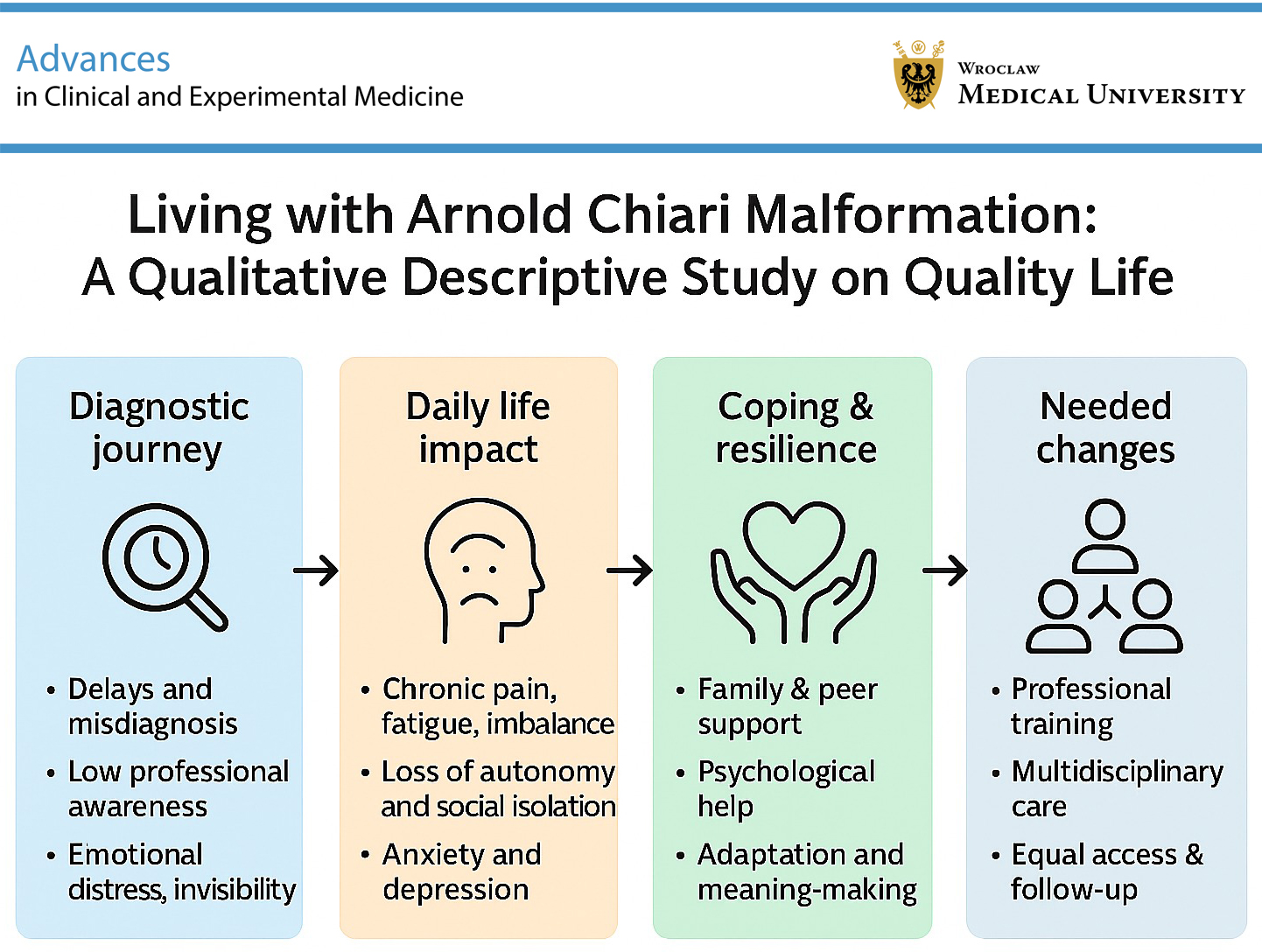
Results. Fourteen participants with type I ACM (79% women; mean age: 50.5 years) were interviewed. Most had undergone surgery, and half had lived with the diagnosis for more than 10 years. The mean self-reported QoL score was 6.71/10. Five main themes emerged: diagnostic journey, symptoms, impact on QoL, treatment experiences, and coping strategies/support networks.
Conclusions. This study underscores the urgent need for more accessible, compassionate, and specialized healthcare for individuals with ACM. Key obstacles include delays in diagnosis, limited clinical knowledge, and insufficient follow-up care. Enhancing the training of healthcare professionals and implementing specific care protocols are essential. In addition, greater institutional support and recognition within public policy are crucial for improving the QoL of individuals living with this condition.
Key words: quality of life, rare diseases, patient experience, Arnold–Chiari malformation, qualitative research
Background
Rare diseases (RDs) are conditions that affect fewer than 5 individuals per 10,000 population and are often associated with a high risk of long-term disability or premature death. While each disease is rare individually, collectively they affect approx. 6–8% of the population in developed countries, posing a considerable health, social, and political challenge.1 The challenges associated with RDs arise from their nonspecific symptoms, difficulties in diagnosis and treatment, limited training opportunities for healthcare professionals, and the lack of disease-specific public policies. Consequently, patients often experience substantial delays in diagnosis, difficulties accessing specialized care, and limited treatment options.2, 3 Craniocervical junction malformations, such as Arnold–Chiari malformation (ACM), are considered RDs. Arnold–Chiari malformation is a neurological condition in which parts of the cerebellum, and sometimes the brainstem, herniate through the foramen magnum into the cervical spinal canal. It is estimated to occur in approx. 1 in 1,000 live births; however, owing to the increased use of magnetic resonance imaging (MRI), more cases are currently being diagnosed.4, 5, 6 The most widely accepted classification system identifies 5 types of ACM, with type I being the most common. This form typically manifests during adolescence or early adulthood.7, 8 Arnold–Chiari malformation predominantly affects females and is most frequently diagnosed between the 2nd and 4th decades of life, suggesting that hormonal or anatomical factors may contribute to its development.9
The clinical presentation is highly variable and may include occipital headache (often triggered by Valsalva maneuvers), cervicalgia, vertigo, paresthesias, muscle weakness, sleep disturbances, and neuropsychiatric symptoms. In advanced stages, ACM may be associated with syringomyelia, a fluid-filled cyst or cavity within the spinal cord that can impair neurological function and worsen the functional prognosis.7, 10 The treatment of choice is usually surgical, specifically posterior fossa decompression, particularly in patients who are symptomatic or show signs of clinical progression and/or syringomyelia.6, 11, 12, 13 However, it is important to recognize that surgery does not always guarantee symptom relief and may result in serious complications, such as cerebrospinal fluid fistulas, meningitis, or even persistence or worsening of symptoms. For patients who cannot undergo surgery, or as an adjunct to surgical treatment, clinicians may consider pharmacological therapies, such as analgesics and anticonvulsants, combined with a multidisciplinary rehabilitation approach that includes physiotherapy, occupational therapy, and psychological support.10, 14 From a biopsychosocial perspective, health-related quality of life (HRQoL) has become a central focus in the clinical management of patients with ACM. Owing to the unpredictability of symptoms, their chronic nature, and their functional impact, ACM can significantly impair quality of life (QoL) through both physical limitations and emotional and social difficulties.15, 16, 17, 18 To better understand the impact of ACM, specific assessment tools have been developed, such as the Chiari Symptom Profile (CSP) and the Chiari Health Index for Pediatrics (CHIP). These instruments help evaluate changes before and after surgery, as well as the impact of these changes on daily life and overall wellbeing.18, 19, 20 Recent research highlights the importance of using a range of measures that encompass physical, emotional, social, and work-related dimensions. Ultimately, wellbeing is not limited to symptom management; it also includes psychological resilience, social support, and a sense of connection with the community.7, 17, 21, 22, 23, 24 In this context, it is essential to explore the subjective experiences of affected individuals, identifying not only physical symptoms but also emotional experiences, social relationships, and coping strategies.
Objectives
It is important to understand, from a holistic perspective, how this condition affects patients’ autonomy, functionality, and emotional wellbeing, as well as their family and social environment. Therefore, the present study aims to explore the experiences of individuals with ACM across various aspects of daily life and their impact on perceived QoL.
Materials and methods
Study design
A descriptive qualitative study was conducted to explore the experiences of individuals with ACM and the impact of the condition on various aspects of their daily lives and overall QoL. The study was conducted in accordance with the Standards for Reporting Qualitative Research (SRQR), ensuring methodological transparency and rigor.25
Experience and role of researchers
The research team consisted of 4 men and 5 women, including 3 nurses with experience in qualitative research design (E.G.C.-B., P.D.P.H., and A.T.-R.) and 1 researcher with clinical experience in RDs (A.M.S.). Data triangulation was performed by 2 external researchers (R.J.V. and E.C.S.). None of the members of the research team had any prior relationship with the participants. At the outset of the study, the researchers’ positions were established on the basis of their beliefs, prior experiences, theoretical framework, and motivation for conducting the study.
Participants and setting
A purposive sampling strategy was employed, whereby individuals with ACM voluntarily participated in the study following initial recruitment through social media platforms. Subsequently, a snowball sampling technique was used to recruit additional participants. Data saturation was achieved by the 14th interview, as no new significant information emerged that warranted further coding.26 At this point, the research team determined that additional recruitment was unnecessary. The demographic characteristics of the participants are presented in Table 1.
Data collection instrument
Data were collected in 2025 through in-depth interviews. These interviews were conducted in a semi-structured manner, following a question guide designed to explore specific topics of interest (Table 2). Semi-structured, in-depth interviews were employed as the primary method of data collection. A question guide, developed based on a review of the relevant literature (Table 2), facilitated a comprehensive exploration of participants’ perceptions and experiences of living with ACM.26 The flexible interview format allowed participants to express themselves freely while enabling the researchers to explore areas of interest in greater depth. Two researchers (A.E.C. and A.M.S.) conducted the face-to-face interviews, all of which were audio-recorded with participants’ consent. Given the sensitive nature of the subject matter, participants were informed that they could pause or terminate the interview at any time if they experienced emotional distress. Each interview lasted approx. 40 min on average. Following transcription, the interview transcripts were returned to participants for review and additional comments. All data were securely stored in a digital repository with access restricted to the principal investigator (A.M.S.).
Data analysis
A qualitative analysis of the interviews was conducted using an inductive thematic approach, as described by Braun and Clarke.27 Initial coding focused on identifying the most descriptive content, which was subsequently refined and grouped into broader categories representing meaningful units. This iterative process led to the emergence of thematic areas that captured the core experiences of the study participants. Three researchers (E.G.C.-B., A.T.-R., and P.D.P.-H.) independently performed double coding of each interview and the corresponding field notes. They subsequently met to compare and discuss their interpretations, collaboratively refining the categories and themes derived from the data. The same procedure was applied to the development and refnement of themes. Additional joint meetings were held to review and validate the analytical outcomes, including an external audit conducted by an independent researcher to enhance the confirmability of the findings. All coding decisions were discussed until consensus was reached regarding the final categories and themes, which were organized into a comprehensive analytical matrix. Data analysis was supported by ATLAS.ti 24 software.28 To ensure the accuracy and reliability of the data, the criteria proposed by Guba and Lincoln were considered (Table 3).
Ethical considerations
The study was conducted in accordance with the Declaration of Helsinki and received ethical approval from the Research Ethics Committee of the University of Valencia, Spain (approval No. 2025-ENFPOD-3938759). All participants were informed about the objectives of the study and signed a written informed consent form prior to the interviews, ensuring their right to withdraw at any time without consequences. The interviews were conducted anonymously, voluntarily, and confidentially, without collecting personal data or using devices that could identify the participants. They were audio-recorded with the participants’ permission and subsequently transcribed verbatim. The information obtained was treated anonymously and confidentially, in compliance with the General Data Protection Regulation (EU) 2016/679 of the European Parliament and Organic Law 3/2018. The researchers reported no conflicts of interest, whether ethical, moral, or legal, and did not receive any financial compensation. Similarly, the participants did not receive compensation for their participation in the study.
Results
Fourteen individual interviews were conducted with people diagnosed with type I ACM, the majority of whom were women (78.6%). The mean age of the participants was 50.5 years (standard deviation (SD): 10.85). Almost all participants had undergone surgery, with the exception of 2 individuals. Syringomyelia was present in 10 of the 14 cases. Regarding time since diagnosis, half of the participants had been living with the condition for more than 10 years. In terms of QoL, participants rated their experiences on a scale from 0 to 10, yielding a mean score of 6.71 ±1.94. This finding indicates that the condition has a substantial impact on their daily lives.
Themes
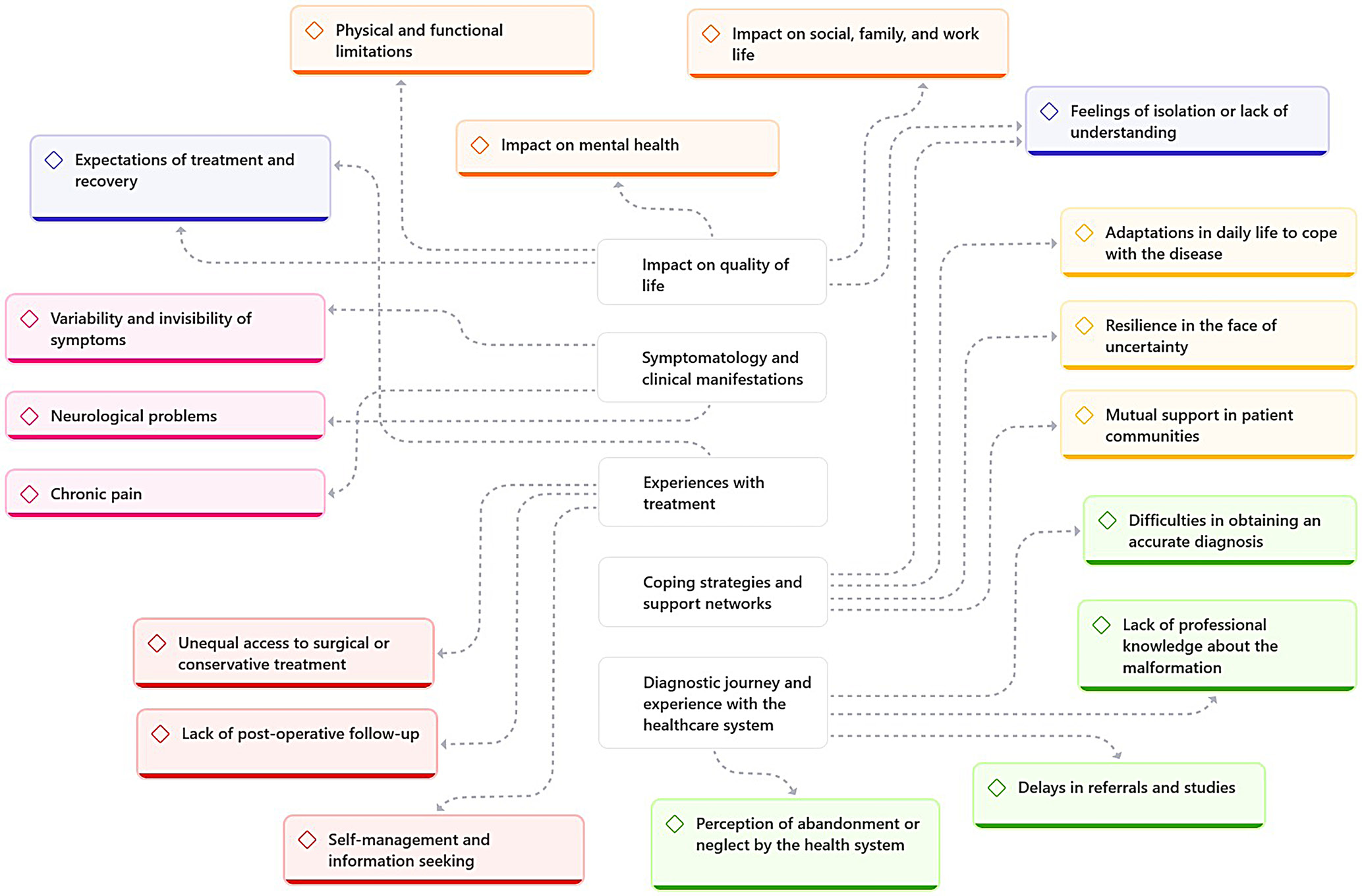
Five themes and their corresponding categories were identified: (T1) diagnostic pathway and experiences with the healthcare system, (T2) symptomatology and clinical manifestations, (T3) impact on quality of life, (T4) experiences with treatment, and (T5) coping strategies and support networks (Table 4).
Theme 1. Diagnostic journey and experience with the healthcare system
Participants described a long, frustrating, and painful process leading to the diagnosis of ACM. This journey was often marked by misinformation, emotional distress, and a pervasive sense of invalidation. Many participants recounted consulting numerous healthcare professionals over several years without receiving clear or consistent answers, which intensified their feelings of loneliness and misunderstanding. As one participant explained: “It’s not that they’re unprepared or uneducated – I think they just don’t keep themselves updated… A rare disease comes along and they automatically say it’s nothing” (P. 1). This persistent dismissal of symptoms also led some participants to question their own perceptions of pain: “The last time I left the neurologist, I left crying... He said something that made me think: You’re making it all up” (P. 1). In contrast, some individuals who used private healthcare services or mutual insurance providers received a faster and more efficient diagnosis. As one interviewee explained: “Actually in my case it was quite fast because the mutual insurance company made the process quite fast... They asked me for a magnetic resonance, and they found ACM type I” (P. 5). However, even when the diagnosis was established, it was not always a relief. For some individuals, it represented a profound emotional shock, particularly when it was accompanied by an alarming prognosis: “When the neurosurgeon told me 2 years later... that if I didn’t have the operation I would be in a wheelchair” (P. 12).
Theme 2. Symptomatology and clinical manifestations
The symptoms described by the participants were varied, persistent, and profoundly disabling. Pain, particularly cervical and suboccipital pain, was a recurring feature in most accounts. As one participant expressed: “I have always headache, cervical pain and occipital pain” (P. 6). In addition to pain, dizziness, balance disturbances, visual and auditory impairments, and a sensation of lightheadedness were commonly reported: “At the moment I have dizziness, I get some vertigo, suboccipital headache... loss of vision and hearing” (P. 5). Some participants reported that their gait was often misinterpreted by others: “Especially the loss of balance a lot... Every time I walk I look like I’m drunk” (P. 14). In many cases, symptoms had been present since childhood, although they were not adequately recognized or addressed at the time. “I was always very ill as a child... I used to get dizzy, when I jumped, I had to hold my head down” (P. 15), recalled one participant. Another commented: “They called me clumsy... Headaches... They said that it was because I read a lot” (P. 14). Neurological symptoms were also described, including sensory disturbances: “I picked up something hot... and the next day I had nasty blisters” (P. 2), and motor impairments: “My limbs started to go to sleep... Then my hand went to sleep at night... My leg didn’t respond well” (P. 13). In more advanced stages, some participants developed urinary incontinence, which added a considerable emotional burden: “Incontinence... In my sleep I don’t know about it and it’s unpleasant, and it can happen at any time, at work” (P. 14).
Theme 3. Impact on quality of life
The progression of the disease led to profound changes across all areas of daily life. Activities that had once been routine began to require disproportionate effort, resulting in a loss of autonomy for many individuals. As one participant described: “A simple window cleaning meant that I was in bed the next day” (P. 11). Persistent fatigue also made it difficult to maintain work routines: “If I started work on Monday, by Wednesday I was tired... I didn’t feel like moving” (P. 8). These limitations extended beyond daily responsibilities and affected leisure and social activities as well: “...I used to like going to the mountains... and that’s been a lot of years now, it’s cut me off a lot” (P. 9). Emotionally, some participants expressed resignation or an attitude of gradual acceptance: “My personal life... I have many limitations, but I live day by day” (P. 7). Others expressed a greater sense of hopelessness: “Well... the impact has been total. Let’s see... What quality of life I had before and what quality of life I have now” (P. 8). At the social level, the illness affected interpersonal relationships. Difficulties participating in conversations or keeping up with others led to a degree of social isolation: “It is very difficult for me to carry on a lengthy conversation...” (P. 6). A lack of understanding from others also generated emotional distress: “My mother has always seen me as very active... No matter how much I tell her she won’t understand” (P. 3), and in some cases resulted in hurtful criticism: “My brother said that I was very hypochondriacal” (P. 1).
Theme 4. Experiences with treatment
Most participants had undergone surgical intervention, which in some cases resulted in significant improvement, particularly with regard to pain relief and neurological symptoms. As one participant expressed: “Since I had surgery... the first improvement was to stop having that sleep and that immense pain... then also neurocognitive problems” (P. 14). However, other testimonies described very negative surgical experiences, characterized by complications, repeated procedures, and long-term sequelae: “They operated 4 times plus the tracheostomy... my whole brain filled with air... stroke” (P. 2). In these situations, family support was crucial. Some participants deeply valued the care they received: “My son cleaned me perfectly at the age of 25, he was great, he behaved well” (P. 2). The role of informal support networks was also highlighted: “Super proud... They are my hands and my feet...” (P. 7). However, not all interventions succeeded in eliminating symptoms, as one participant explained: “I had an operation and as a result of the operation I improved, because I can walk, I have a little more quality of life, but I have the same symptoms as before, or almost the same” (P. 8). Psychological treatment was also identified as a critical need. Several participants reported experiencing periods of despair and even suicidal thoughts. “I tried to jump out of the window because of awful situations... I found myself in a general state of abandonment that makes you die. I was aware and asked for help” (P. 9). When mental healthcare was received, it was evaluated very positively: “I got it from the social security... A psychologist who sees you every 15 days...” (P. 9).
Theme 5. Coping strategies and support networks
Faced with pain, disability, and major life changes, many participants developed personal coping strategies. Some adopted a positive, present-focused attitude: “I have learned that I have to live a stress-free life... I have a good quality of life” (P. 8). Others described a deeper process of personal transformation: “You learn to value what is really important... a 10” (P. 7). These strategies included both adjusting the pace of life and re-evaluating personal priorities. Coping was not a linear process but involved moments of frustration, acceptance, and re-signification of one’s own body and the meaning of life. The ability to adapt to a new reality was experienced as a form of empowerment in the face of an illness that is often invisible to the rest of society. These results illustrate the complexity of perceptions among people with ACM. Figure 1 presents a map of agents and interactions, enabling the identification of the interrelated themes: the diagnostic journey and experience with the healthcare system, the role of symptomatology and clinical manifestations, the impact on QoL, experiences with treatment, and the use of coping strategies and support networks. The figure was created using ATLAS.ti 24 software, which was used to code and synthesize the data.
Discussion
This study examined the experiences of individuals with ACM across various aspects of their daily lives and the impact of this condition on their QoL. The findings reveal a characteristic pattern of difficulties in accessing care, feelings of being misunderstood, and coping strategies that reflect considerable personal resilience. The narratives collected in this study highlight a prolonged and often frustrating diagnostic journey, characterized by multiple referrals to various specialists and a noticeable lack of disease-specific training among healthcare professionals. This experience is consistent with recent findings, which estimate that the average time required to obtain a diagnosis of an RD is approx. 4–5 years and often involves numerous consultations before a definitive diagnosis is established.3, 29 Access to appropriate, timely, and empathetic care is a fundamental right, particularly for individuals with rare and complex conditions such as ACM, who often face significant barriers within the healthcare system.22, 30
The results of this study highlight patients’ perceptions of healthcare professionals’ preparedness to manage their condition, revealing substantial differences in the quality of care they receive. While some professionals demonstrate a willingness to learn and provide respectful and attentive care, others lack the necessary knowledge or sensitivity, leading to frustration and mistrust among patients. These difficulties may even discourage patients from seeking timely consultations or follow-up care. To address this issue, healthcare professionals require targeted training in RDs, including ACM, to ensure that care is informed, empathetic, and respectful of patients’ experiences.31, 32 Incorporating knowledge about complex neurological conditions into both undergraduate and continuing professional education programs could improve early detection and comprehensive management for affected individuals.1 Furthermore, the lack of coordination between healthcare and social services for individuals with RDs can adversely affect physical and mental wellbeing, as well as financial stability. This issue underscores the need for more integrated and patient-centered models of care, as demonstrated by successful approaches to the management of other rare conditions.33, 34, 35 Participants frequently described experiences of stigmatization, primarily related to the invisible nature of their symptoms. Numerous studies have explored the stigma associated with conditions that are not readily apparent, highlighting the general lack of awareness among both the public and healthcare professionals.36, 37 In this context, awareness campaigns and health education initiatives play a crucial role in combating prejudice and validating patients’ experiences. When social and healthcare systems fail to recognize these conditions, stigma, misunderstanding, and feelings of isolation may result. The hidden nature of their suffering adds an additional emotional burden, which not only perpetuates stigma but also leaves individuals feeling unsupported, similar to what has been reported in other rare conditions such as fibromyalgia, which likewise lack clear physical indicators.10, 38, 39 This invisibility can adversely affect emotional wellbeing, strain relationships with family and friends, and hinder access to appropriate medical care. Moreover, the ongoing need to explain and justify one’s symptoms may intensify emotional distress, creating a painful cycle of silent suffering.29, 40
Significant barriers to accessing appropriate treatment have also been identified, particularly with regard to surgery, which is highly dependent on the availability of resources.41, 42, 43 The lack of structured postoperative follow-up and the frequent use of palliative medications with limited efficacy contribute to dissatisfaction and a persistent sense of abandonment.44 These challenges reinforce the need to implement standardized protocols and multidisciplinary teams that ensure comprehensive and continuous care, from diagnosis through rehabilitation and emotional support.42, 45, 46 However, the implementation of clinical guidelines is often hindered by limited professional knowledge, inadequate infrastructure, and high technological costs, thereby exacerbating inequalities in access to specialized treatments.47
Participants utilized a variety of personal and collective coping strategies. Key resources for resilience included self-management, the reorganization of life priorities, and involvement in patient associations. This finding is consistent with research emphasizing the importance of social support in managing stress and predicting psychological wellbeing among individuals living with chronic diseases and RDs.48, 49 Support networks, both formal and informal, provide emotional validation, practical guidance, and a sense of community, making them essential components of patients’ experiences. Interpersonal relationships offer emotional, instrumental, and informational support, enhancing resilience and empowering both patients and caregivers, which is vital for navigating the psychological and practical challenges of chronic illness.50
Studies have shown that emotional support and companionship are beneficial for individuals with RDs regardless of their stress levels, and that fostering this type of support can improve life satisfaction in this underserved population.49, 51 Participation in patient associations enables affected individuals to re-signify their experiences, reconstruct their identity, and develop a sense of belonging, which is essential for coping with the social suffering associated with these diseases.
When examining the resilience of individuals with chronic illnesses and their caregivers, it becomes evident that family support, self-esteem, and a positive attitude toward care play a significant role,52 as highlighted by the study participants. The exchange of information and mutual support within virtual communities or patient groups provides emotional support and strengthens self-management, fostering resilience in the face of uncertainty and the chronic nature of illness.53 The promotion of these networks and the institutional recognition of their value are essential for improving the wellbeing and QoL of this population and their caregivers. Strategies should also include educational and preventive measures, taking into account that improvements in QoL and psychological wellbeing may enhance resilience.44, 54
Finally, adaptations in daily life, such as modifying activities and using assistive devices, demonstrate the continuous effort of patients to maintain their autonomy and functionality despite the limitations imposed by ACM. These findings underscore the importance of a holistic approach that considers not only medical aspects but also psychosocial consequences and individual needs, thereby facilitating person-centered care for patients and their caregivers.
The implementation of multidisciplinary teams that actively integrate nursing, physiotherapy, and mental healthcare has been shown to provide more comprehensive and sustained care. According to a recent review,55 coordination within primary care through shared models of care for RDs improves diagnostic timelines, continuity of care, and patients’ QoL. Nurses play a crucial role in fostering resilience through family interventions, stress management, and psychosocial support from the time of diagnosis and throughout the course of the disease, ultimately contributing to improved QoL for both patients and caregivers.52, 56
Practical implications for healthcare professionals
This study provides valuable insights into the experiences of individuals living with ACM within the Spanish healthcare system, highlighting the challenges they face in obtaining an accurate diagnosis, accessing appropriate treatment, and receiving coordinated, long-term care. It also underscores the pressing need to enhance healthcare professionals’ training in RDs and to establish specific care protocols that promote more empathetic and person-centered approaches. Within this context, all healthcare professionals, including physicians, nurses, physiotherapists, psychologists, and social workers, play a crucial role in the comprehensive management of patients with ACM. Early recognition of symptoms, effective interdisciplinary communication, and continuity of care are essential for improving health outcomes. Furthermore, providing patients and their families with clear information, emotional support, and guidance on coping strategies can help reduce anxiety and enhance self-management and adherence to treatment.
In particular, nurses play a fundamental role in patient education, empowerment, and ongoing support. Through health education, symptom monitoring, and continuous communication, nursing professionals can help patients better understand their condition, manage postoperative care, and navigate the healthcare system more effectively. Their close and sustained interaction with patients also positions them as essential facilitators of emotional wellbeing and adherence to long-term treatment plans. A holistic approach that integrates medical, psychological, and social perspectives is essential. Understanding patients’ coping strategies and support networks contributes to a more comprehensive understanding of their psychosocial needs and provides valuable guidance for designing interventions aimed at improving their QoL. Ultimately, these findings highlight the importance of coordinated, compassionate, and informed care across all healthcare settings to promote wellbeing and resilience among individuals affected by ACM. Among the strengths of this study are the in-depth qualitative exploration of patients’ experiences, which enables the capture of nuances and aspects that are not readily apparent in quantitative studies, as well as the diversity of participant profiles, reflecting different stages and trajectories of the disease.
Limitations of the study
However, this study has several limitations. Although the sample size was small, data saturation was achieved, ensuring that the information collected adequately captured the range of participants’ experiences. In addition, cultural and contextual factors specific to the Spanish healthcare system, such as the structure of public health services, pathways to specialist care, and prevailing sociocultural attitudes toward RDs, may have influenced participants’ experiences. These characteristics may differ substantially from those observed in countries with different healthcare policies, referral systems, or levels of awareness of rare neurological conditions, which may affect the transferability of the findings to other contexts. The sensitive nature of the topic may have led some participants to refrain from sharing highly personal or particularly negative experiences related to the healthcare system. Finally, the implementation of the recommendations derived from this study will require institutional commitment, adequate resources, and a cultural shift in the care of individuals with RDs, which may encounter resistance within healthcare systems.
Conclusions
This study underscores the importance of enhancing the training and awareness of healthcare professionals, improving access to and continuity of treatment, and fostering support networks that address the genuine needs of individuals with ACM. The implementation of these measures will help ensure more equitable, respectful, and appropriate healthcare for this population, thereby promoting QoL and the overall wellbeing of those living with this complex condition. This study highlights the urgent need to improve early diagnosis and comprehensive care for individuals with ACM, owing to diagnostic delays and a lack of clinical expertise. It is essential to strengthen the training of healthcare professionals and to establish specific protocols that guarantee a multidisciplinary approach, including postoperative follow-up and psychological support. The importance of ensuring equitable access to both surgical and non-surgical treatment is also emphasized as a means of reducing inequalities in care. Coping strategies based on mutual support, self-management, and resilience emerged as key elements of patients’ wellbeing. Ultimately, it is crucial to implement public policies that recognize and address the unique characteristics of this RD, thereby ensuring dignified, inclusive, and high-quality healthcare that enhances the QoL of affected individuals.
Data Availability Statement
Participants in this study did not provide written consent for their data to be shared publicly, and therefore, due to the sensitive nature of the research, the supporting data are not available.
Consent for publication of personal information
Not applicable.
Use of AI and AI-assisted technologies
Not applicable.