Abstract
Background. Adverse effects of medical treatment (AEMT) represent a global public health issue that imposes a substantial burden on both patients and healthcare systems. As the world’s 2nd most populous country, with an advanced healthcare system and broad healthcare coverage, China plays an important role in the global disease burden profile, making its health data particularly relevant.
Objectives. This study aimed to analyze global trends in AEMT between 1990 and 2021 using data from the Global Burden of Disease (GBD) 2021 database.
Materials and methods. Data were categorized according to age, sex, region, and Sociodemographic Index (SDI). The study analyzed the incidence, mortality, and disability-adjusted life years (DALYs) associated with AEMT. Future trends in age-standardized incidence rates (ASIRs) and age-standardized death rates (ASDRs) over the next 15 years were projected using an autoregressive integrated moving average (ARIMA) model.
Results. In 2021, the global number of incident AEMT cases reached 12.48 million (95% uncertainty interval (95% UI): 10.89–14.29), representing a 68% increase since 1990. However, the ASIR decreased by 5% over the same period. In China, the number of incident cases reached 343,390 (95% UI: 277,740–427,060), representing a 21% reduction, whereas the ASIR increased by 33%. Globally, the number of DALYs decreased from 5.74 million (95% UI: 4.88–6.61) to 4.85 million (95% UI: 3.91–5.49). A similar decline was observed for years of life lost (YLLs), whereas years lived with disability (YLDs) remained relatively stable. Forecasts indicate a global decline in both ASDR and ASIR over the next 15 years. In contrast, the ASIR is projected to increase in China.
Conclusions. Adverse effects of medical treatment continue to impose a substantial burden worldwide. Regional and age-related disparities highlight the need for improved patient safety strategies. A multifaceted approach that includes health system strengthening, enhanced data collection, targeted interventions, and international collaboration is essential to reduce AEMT and improve patient safety.
Key words: adverse effects of medical treatment, Global Burden of Disease study, epidemiological trends, patient safety, forecasting models
Background
More than 30 years ago, the Harvard Medical Practice Study provided one of the first estimates of medical injuries occurring in hospitals in the USA and defined adverse effects of medical treatment (AEMT) as injuries caused by medical treatment rather than by the underlying disease, resulting in prolonged hospitalization, disability at discharge, or both.1, 2 Although AEMT have received considerable attention since 1999, and substantial efforts have been undertaken by governments, healthcare organizations, and multidisciplinary teams to strengthen patient safety monitoring, AEMT continue to occur at clinically significant rates.3 Available data indicate that the estimated annual increase in AEMT-related mortality between 2014 and 2019 was approx. 15.6%.4 Globally, AEMT are widespread, posing serious risks to patients’ health and quality of life while imposing substantial economic burdens. They also contribute to increased healthcare expenditures, reduced public trust in healthcare systems, productivity losses, and inefficient allocation of healthcare resources.5 These findings underscore AEMT as a major public health concern with important policy implications in the context of rising healthcare demands.
Encouragingly, research indicates that more than half of AEMT in developed countries and over 80% in developing countries could be prevented through effective interventions, such as improved pharmacovigilance, systematic monitoring, and education of healthcare professionals.6 Recognizing the preventability of AEMT, the World Health Organization (WHO) launched the Third Global Patient Safety Challenge: Medication Without Harm in 2017. This initiative aims to reduce severe, avoidable medication-related harm by 50% worldwide within 5 years.7 Despite the implementation of strategies designed to reduce the burden of AEMT, including rapid response teams, prevention of adverse drug events through medication reconciliation and pharmacovigilance, healthcare professional education, clinical decision support systems, and quality monitoring programs, significant challenges persist.8, 9, 10 These challenges are further exacerbated by insufficient awareness of AEMT, advances in medical interventions, and the increasing demands associated with an aging population.11, 12 Further analysis and targeted actions are needed to address these challenges effectively.
This study focuses on AEMT because of their substantial global burden and high degree of preventability. Previous studies investigating AEMT have relied primarily on retrospective medical record reviews or voluntary reporting systems, both of which are subject to limitations, including substantial resource and time requirements, reliance on point estimates, selection bias, and low sensitivity.13, 14, 15, 16, 17
The Global Burden of Disease (GBD) 2021 study provides a robust and comprehensive standardized dataset for quantifying health losses attributable to diseases, injuries, and risk factors.18, 19 Therefore, the GBD 2021 database was used in the present study. China, the world’s 2nd most populous country, with a well-developed healthcare system and comprehensive healthcare coverage, represents a critical component of the global disease burden landscape. Currently, research based on Chinese data remains limited. Examining China separately enables a targeted assessment of its disease burden relative to global patterns and may directly inform strategies aimed at reducing the national healthcare burden.
Objectives
This study uses the GBD 2021 database to quantify trends in the incidence, prevalence, mortality, disability-adjusted life years (DALYs), years lived with disability (YLDs), and years of life lost (YLLs) associated with AEMT between 1990 and 2021. Furthermore, it projects these metrics over the subsequent 15 years, addressing gaps in predictive analyses based on the most recent data to inform targeted interventions, improve AEMT management, and reduce the associated burden.
Materials and methods
GBD 2021 and assessment indicators
The GBD database (https://vizhub.healthdata.org/gbd-results) was used to collect data for this study. Global Burden of Disease 2021 estimated the incidence, prevalence, mortality, YLLs, YLDs, and DALYs attributable to 371 diseases and injuries and 88 risk factors across 204 countries and territories, as well as 811 subnational locations.20, 21 Epidemiological data with known sources of bias were adjusted using correction factors estimated through MR-BRT (meta-regression – Bayesian, regularized, trimmed).20 The GBD study adopts a distinct approach by providing 95% uncertainty intervals (95% UIs) for all estimates. These UIs were generated using the 25th and 975th percentiles of a 1000-draw distribution for each metric.22
Adverse effects of medical treatment
The causes of death and injury in the GBD database are categorized within a structured hierarchical framework consisting of 4 levels of detail. Levels 3 and 4 represent the most specific classifications of causes reported in GBD 2021.23, 24 The cause category “adverse effects of medical treatment” selected for this study belongs to level 3 of this hierarchy. The International Classification of Diseases (ICD; ICD-9 and ICD-10) coding systems were used as standardized tools to extract data related to AEMT from the GBD database.
Assessment indicators
Incidence, prevalence, YLLs, YLDs, and DALYs were used to measure disease burden in this study. Incidence measures the frequency of new cases within a specific population and time period, whereas prevalence includes all existing cases (both new and pre-existing) during a given observation period. YLLs represent the years of life lost due to premature death caused by a disease, whereas YLDs indicate the years lived with illness or disability. Prevalence and incidence were modelled using the Disease Modelling Meta-Regression V2.1 tool (https://github.com/ihmeuw/dismod_mr), spatiotemporal Gaussian process regression (ST-GPR), or custom models. YLLs were calculated by multiplying cause-specific deaths by the standard life expectancy at the age of death, whereas YLDs were derived by multiplying the prevalence of specific sequelae by their corresponding disability weights.20, 21, 23 Disability-adjusted life years (DALYs) were calculated as the sum of YLLs and YLDs and provided a comprehensive estimate of overall disease burden by quantifying total health loss at the population level as a single measure.
Statistical analyses
To analyze global data, subgroup analyses were conducted according to age, sex, and region. To ensure a comprehensive assessment, estimates are presented as both absolute counts and age-standardized rates (ASIR) per 100,000 population. Age standardization adjusts demographic data according to a standard age structure. This method accounts for differences in age composition across populations, thereby eliminating demographic distortions and enabling valid comparisons of epidemiological indicators. The age–period–cohort (APC) model is a theoretical framework used to examine the effects of age, period, and cohort on health outcomes.25 This study primarily focused on the age effect, which refers to variations in outcome risk across different age groups.26 Data were categorized into 20 age groups using 5-year intervals (<5 years, 5–9 years, 10–14 years, 90–94 years, and >95 years). Countries were grouped into quintiles according to the Socio-demographic Index (SDI). The SDI is a composite measure of income, education, and fertility that categorizes countries according to their level of socioeconomic development and is strongly associated with health outcomes.27, 28 Based on 2019 SDI values, countries were classified into the following categories: high SDI (>0.81), high-middle SDI (0.71–0.81), middle SDI (0.62–0.71), low-middle SDI (0.47–0.62), and low SDI (<0.47).
The autoregressive integrated moving average (ARIMA) model was used to predict age-standardized incidence, prevalence, and mortality rates over the next 15 years globally and in China. The ARIMA model is a widely used time-series forecasting method that comprises 3 components: the autoregressive (AR) model, moving average (MA) model, and integrated (I) component.29 In the ARIMA modelling process, the auto.arima() function was employed to identify the optimal model based on the Akaike information criterion (AIC) and Bayesian information criterion (BIC). The model parameters are presented in the Results section. Data visualization and statistical analyses were conducted using Microsoft Excel 2021 (Microsoft Corp., Armonk, USA), R v. 4.4.2 (R Foundation for Statistical Computing, Vienna, Austria), and the R packages ggplot2, forecast, and ggpubr.30
Results
Integral data analysis
In 2021, there were approx. 12.48 million new cases of AEMT globally (95% UI: 10.89–14.29) across all age groups, representing a 68% (95% UI: 61–77) increase since 1990. The global ASIR was 150.44 cases per 100,000 population (95% UI: 131.19–171.81), reflecting a 5% (95% UI: 3–8) decrease since 1990. In China, the number of new AEMT cases was approx. 343,390 (95% UI: 277,740–427,060), representing a 21% (95% UI: 12–28) decrease since 1990. However, the age-standardized incidence rate in China was 24.65 cases per 100,000 population (95% UI: 19.55–31.02), representing a 33% (95% UI: 29–37) increase since 1990. Detailed data on deaths and DALYs are presented in Table 1.
Mortality, incidence, and prevalence
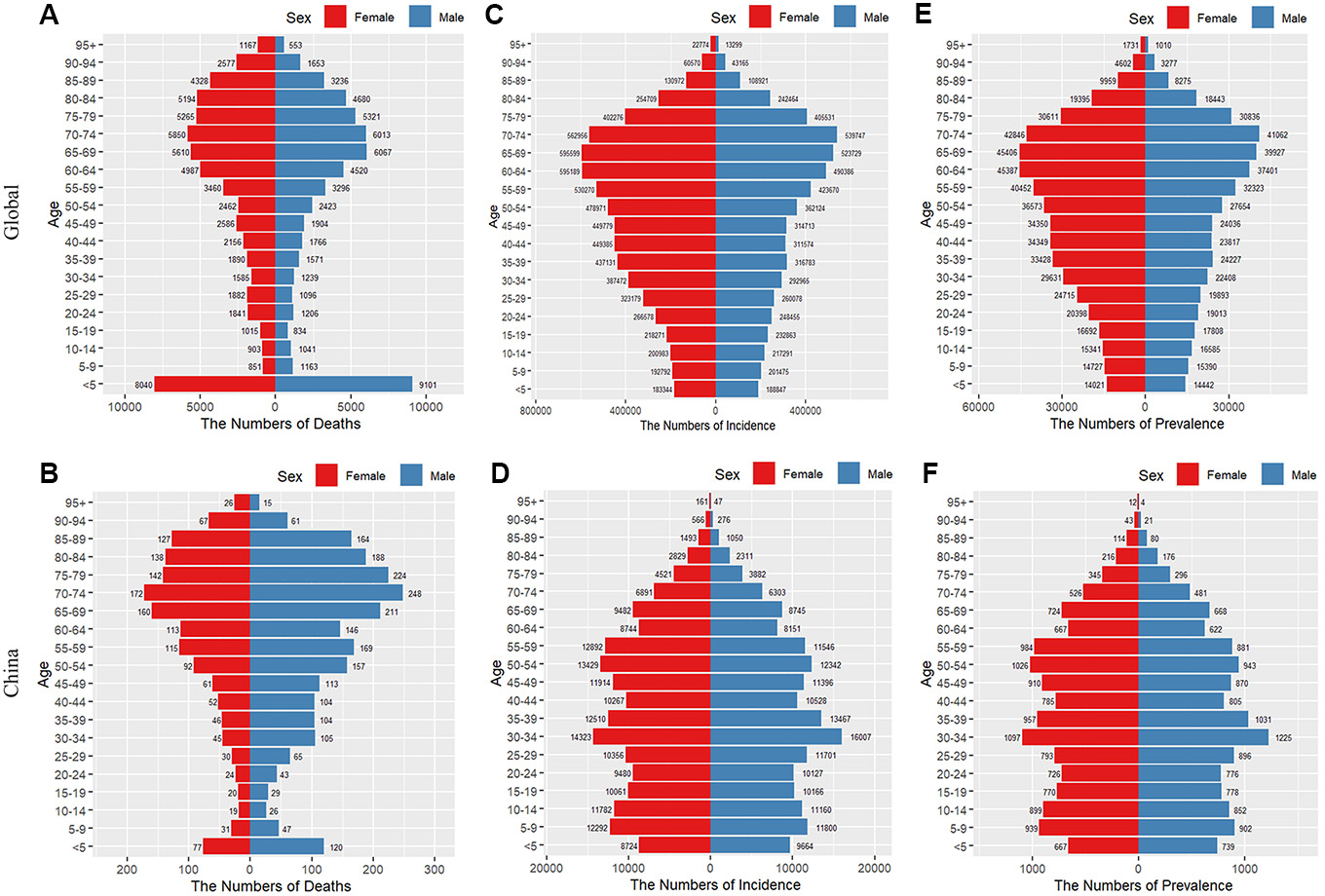
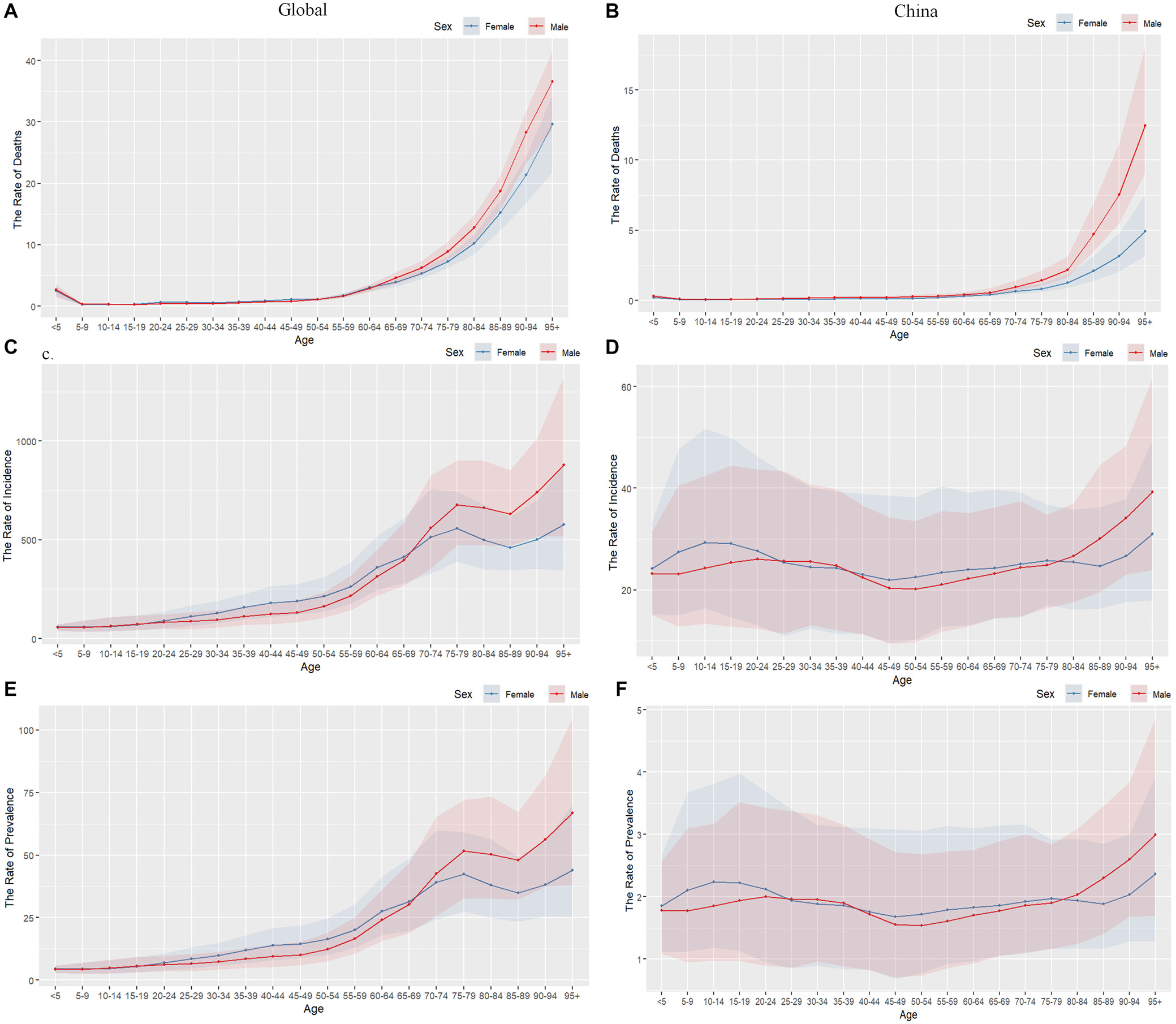
Analysis by age and sex revealed distinct mortality patterns for AEMT in 2021. Globally, the highest number of deaths occurred among children younger than 5 years, with a secondary concentration in the 65–74-year age group. In China, deaths peaked among individuals aged 70–74 years in both sexes, followed by women aged 65–69 years and men aged 75–79 years (Figure 1A,B). Incidence patterns also differed geographically. Globally, the 65–74-year age group showed the highest incidence, whereas in China, incidence peaked in the 30–39-year and 50–54-year age groups (Figure 1C,D). Regarding prevalence, the global peak occurred in the 60–74-year age group, in contrast to the 2 peaks observed in China among individuals aged 30–39 years and 50–59 years (Figure 1E,F). According to the APC model, a clear relationship between age and mortality was observed both globally and in China (Figure 2A,B). The light-red and light-blue curves represent the local drift. Mortality rates increased with age in both populations, with males older than 65 years exhibiting higher rates than females, and this disparity widened with advancing age. Globally, both the incidence and prevalence of AEMT increased with age. Males showed higher rates than females after the age of 70 years, whereas females had higher rates between 20 and 69 years of age (Figure 2C,E). In China, the effects of age and sex on incidence and prevalence were less pronounced. Significantly higher rates were observed in males only among individuals older than 80 years compared with females (Figure 2D,F).
DALYs, YLDs, and YLLs
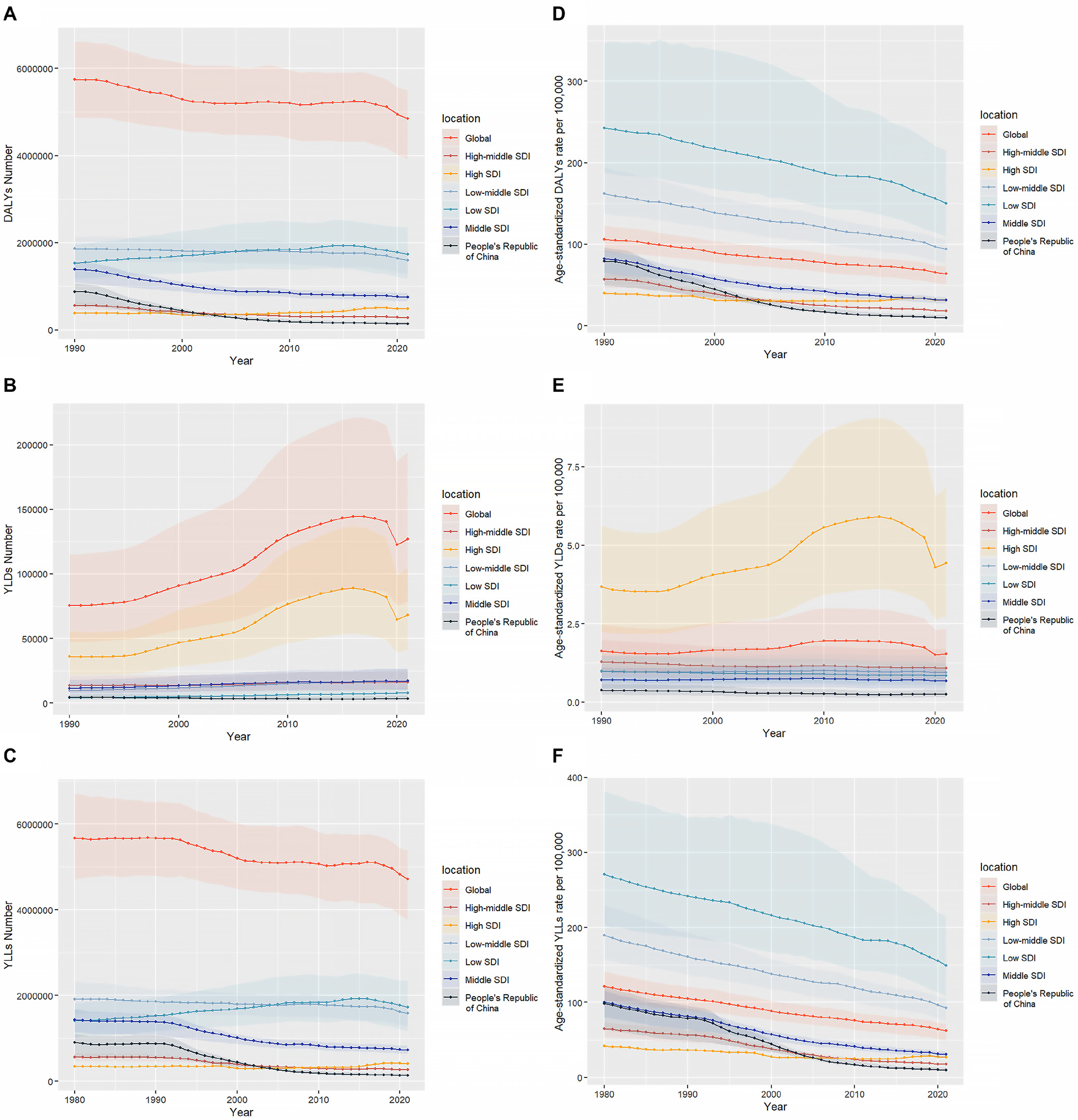
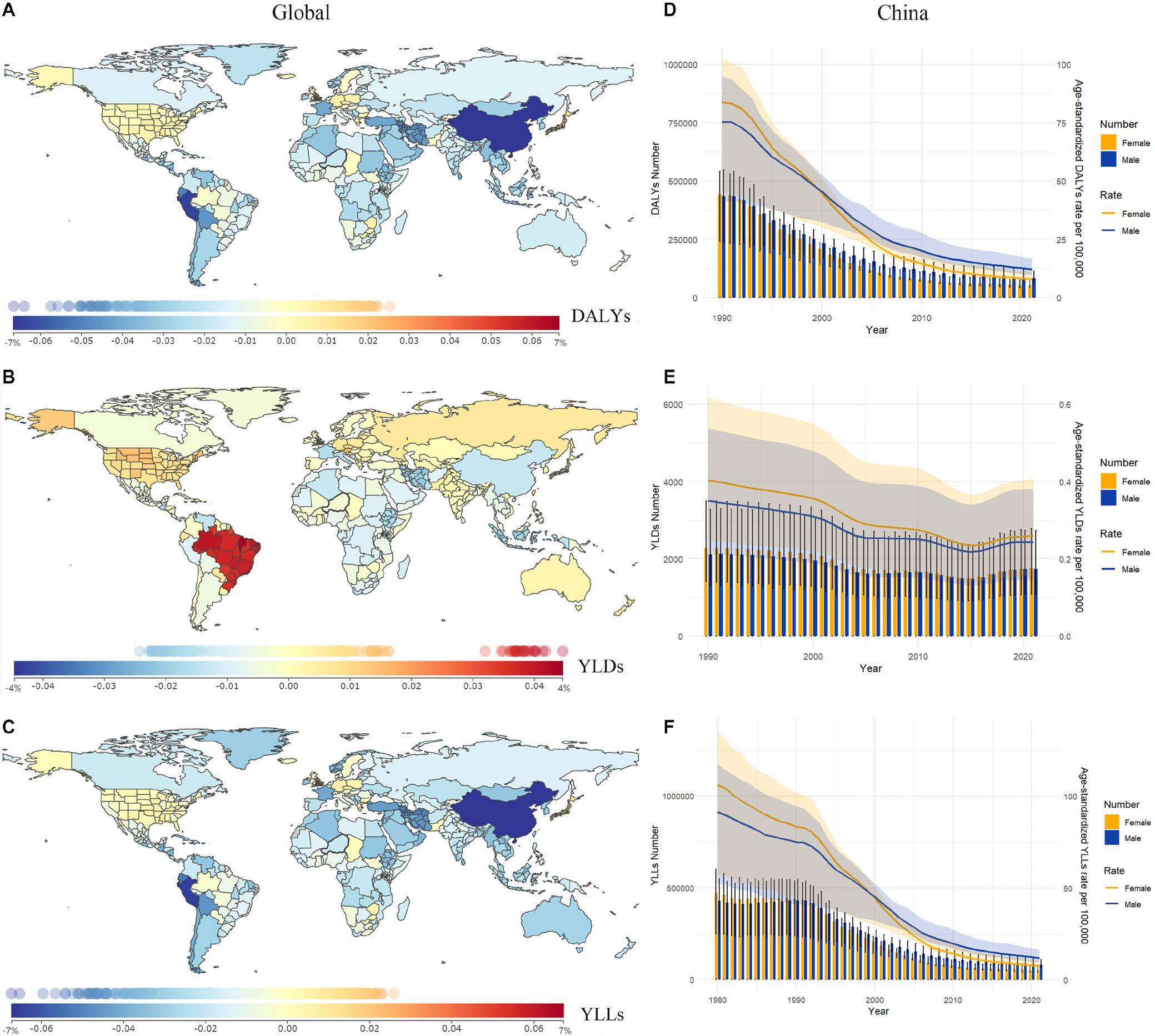
From 1990 to 2021, global DALYs attributable to AEMT showed an overall decline, decreasing from 5,744,998.26 (95% UI: 4,880,763.79–6,613,203.16) in 1990 to 4,846,980.93 (95% UI: 3,914,845.00–5,494,171.09) in 2021. Similarly, AEMT-related YLLs declined from 5,669,602.16 (95% UI: 4,792,603.19–6,511,808.88) to 4,720,045.59 (95% UI: 3,779,648.40–5,376,782.99), whereas YLDs showed an upward trend (Figure 3A–C). The global age-standardized DALY rate decreased from 106.49 (95% UI: 91.17–122.52) per 100,000 population in 1990 to 64.19 (95% UI: 51.06–73.11) per 100,000 population in 2021. Similarly, the age-standardized YLL rate declined from 104.88 (95% UI: 89.66–120.86) per 100,000 population to 62.66 (95% UI: 49.42–71.79) per 100,000 population during the same period (Figure 3D–F). When comparing regions according to SDI, age-standardized DALY and YLL rates were higher in low-SDI regions (green-blue line) than in high-SDI regions (yellow line) (Figure 3D,F), whereas age-standardized YLD rates were highest in high-SDI regions (Figure 3E). Globally, between 1990 and 2021, China experienced the largest decrease in age-standardized DALY and YLL rates, followed by Peru. In contrast, countries such as the UK and Germany showed increases in age-standardized DALY and YLL rates (Figure 4A–C).
Focusing on China, both YLL counts and age-standardized YLL rates showed a significant decline between 1990 and 2021. YLL counts decreased from 872,441.82 (95% UI: 544,181.42–1,063,963.84) to 130,995.20 (95% UI: 108,394.21–174,668.33), while the age-standardized YLL rate declined from 78.81 (95% UI: 49.19–96.11) to 9.80 (95% UI: 8.19–12.72) per 100,000 population. YLD counts and age-standardized YLD rates showed a slight decrease over the same period. Consequently, DALYs in China decreased from 876,847.03 (95% UI: 548,963.45–1,066,499.32) in 1990 to 134,494.35 (95% UI: 111,717.57–178,512.06) in 2021, while the age-standardized DALY rate declined from 79.19 (95% UI: 49.60–96.43) to 10.05 (95% UI: 8.46–12.97) per 100,000 population (Figure 4D–F).
Projections of age-standardized incidence, prevalence, and death rates for the next 15 years
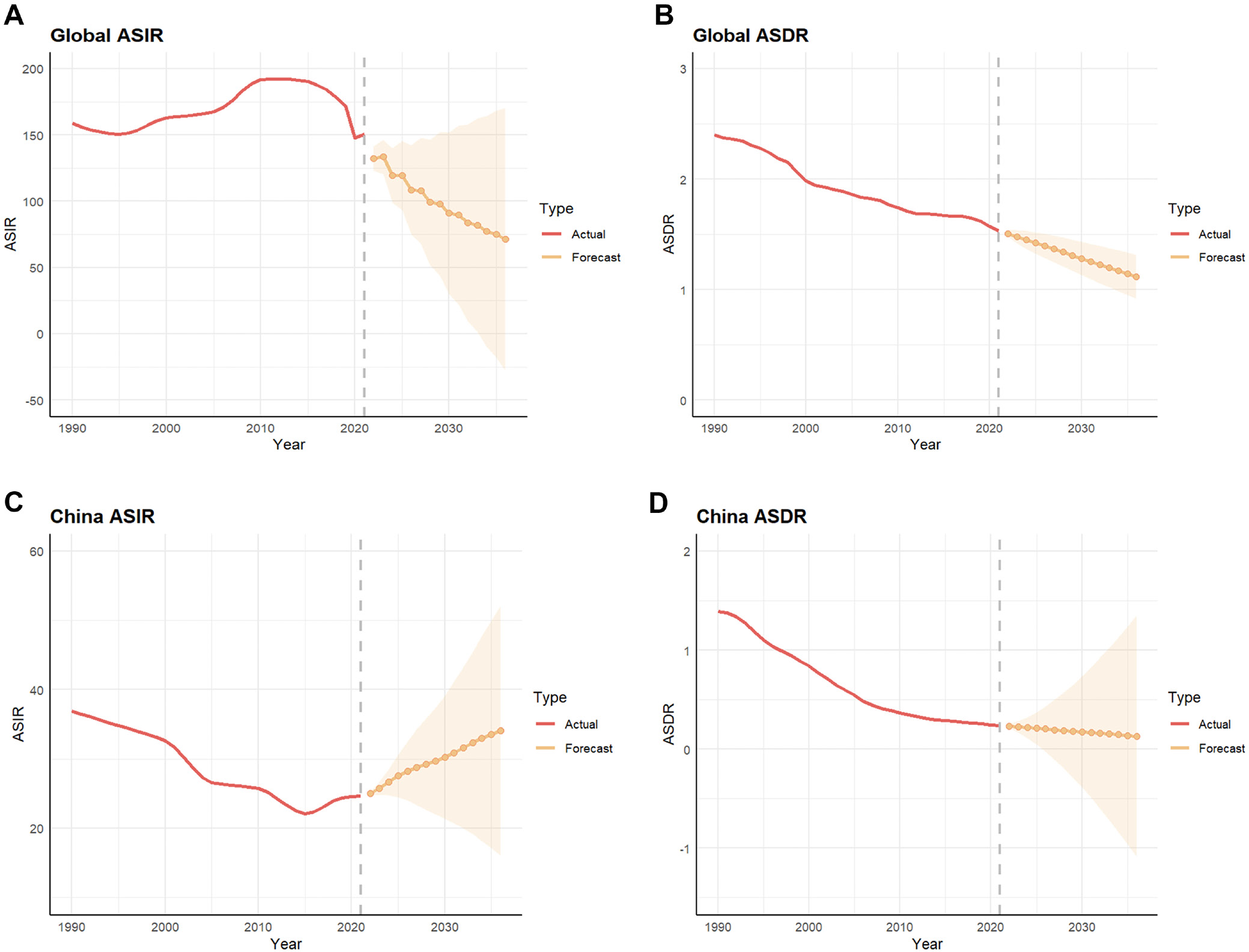
This study applied a quantitative approach using the ARIMA model to forecast age-standardized death rates (ASDRs) and ASIRs for AEMT globally and in China over the next 15 years. The optimized ARIMA (0,1,1) model for the global ASDR of AEMT was developed using the auto.arima() function, yielding an AIC value of −164.75 and a BIC value of −160.45. Residuals were confirmed to be normally distributed, and the Ljung–Box test indicated that the residuals of this model constituted white noise (χ2 = 0.89, degrees of freedom (df) = 1, p = 0.346). The model also exhibited excellent predictive performance, as evidenced by a mean error (ME) of 0.00, a root mean square error (RMSE) of 0.02, and a mean absolute percentage error (MAPE) of 0.02%. For the global ASIR, the ARIMA (2,1,0) model was selected, with an AIC value of 188.94 and a BIC value of 194.67. The Ljung–Box test (χ2 = 0.00, df = 1, p = 0.98) confirmed the stability of the model. The error metrics (ME = 0.04, RMSE = 4.29, MAPE = 1.51%) further indicated excellent forecasting accuracy. For projections specific to China, the ARIMA (1,2,0) model was selected for ASDR, with an AIC value of −180.61 and a BIC value of −177.81. The Ljung–Box test (χ2 = 0.02, df = 1, p = 0.88) indicated white-noise residuals, and the model demonstrated good fit and predictive accuracy (ME = 0.00, RMSE = 0.01, MAPE = 1.17%). For ASIR in China, the ARIMA (2,2,0) model was selected, with an AIC value of −28.21 and a BIC value of −24.01. The Ljung–Box test (χ2 = 0.54, df = 1, p = 0.46) confirmed white-noise residuals, together with high predictive accuracy (ME = 0.02, RMSE = 0.13, MAPE = 0.30%). Figure 5, based on the projected values, shows that the age-standardized death and incidence rates of AEMT are expected to decline globally, with the ASDR projected to decrease to 1.12 and the ASIR to 71.15 by 2036. In contrast to this global trend, the ASIR of AEMT in China is expected to increase between 2022 and 2036, reaching 34.07. However, the ASDR in China is projected to continue declining, reaching 0.13 by 2036.
Discussion
The analysis of GBD 2021 data provides a comprehensive understanding of the burden of AEMT. The findings indicate a significant 68% increase in the global incidence of AEMT between 1990 and 2021, with approx. 12.48 million cases reported in 2021. This suggests that the overall burden of AEMT remains substantial, particularly in the context of population growth and aging.31 Despite this increase, the ASDR and ASIR have shown a slight decline, indicating that although the number of cases is rising, the rate of new cases per population has not increased proportionally. This may be attributable to improvements in healthcare access and reporting systems.32, 33 The downward trend in global DALYs and YLLs attributable to AEMT reflects progress in reducing the mortality burden associated with AEMT. However, the increase in YLDs highlights the ongoing challenge of managing AEMT-related morbidity. This underscores the urgent need to shift the focus beyond mortality reduction toward optimizing long-term medication safety and functional outcomes, particularly through pharmacist-led medication therapy management (MTM) and deprescribing initiatives in high-risk populations. Efforts should continue to focus on mitigating the long-term impact of AEMT on quality of life.34
Over the past 3 decades, global AEMT incidence rates have increased, likely driven by factors such as greater healthcare utilization, advances in medical technology, and population aging. The APC model used in this study provided a nuanced understanding of how age effects contribute to changes in AEMT incidence rates while accounting for cohort and period effects. To address this challenge, various management strategies have been implemented and should be adapted to the specific context of each region. These include patient safety initiatives, the use of electronic health records and artificial intelligence (AI) to improve medication management, and the implementation of quality improvement programs.10, 35 Although these measures may have contributed to the decline in DALYs and YLLs, their effectiveness should be thoroughly evaluated, and further research is needed to identify the most effective strategies for reducing AEMT incidence.10, 36 The decrease in DALYs and YLLs suggests progress in reducing the impact of AEMT. However, the stabilization of age-standardized YLD rates emphasizes the need for continued efforts to address long-term disabilities associated with AEMT.37, 38, 39, 40 The study highlights significant regional variations in the burden of AEMT, with low-SDI regions experiencing higher age-standardized DALY and YLL rates than high-SDI regions. These disparities may stem from differences in healthcare infrastructure, access to quality healthcare, implementation of patient safety measures, and population demographics. Addressing these disparities requires a multifaceted approach, including equity-focused policy interventions,41 resource allocation, investments in healthcare infrastructure, strengthening reporting systems, public awareness campaigns, and promotion of best practices across regions.42, 43 Global collaboration and knowledge sharing are crucial for reducing the burden of AEMT and enhancing patient safety worldwide. Although high-SDI regions exhibit higher YLD rates, their declining DALY and YLL rates suggest that healthcare systems in these regions are increasingly managing the long-term consequences of AEMT.
Age-related disparities in the burden of AEMT are evident, with older adults generally exhibiting higher incidence rates. This finding is consistent with public perceptions and previous research.44, 45 This is particularly apparent in high-SDI regions, where older adults are especially vulnerable to AEMT due to factors such as frailty, polypharmacy, and the complexity of care. The APC model used in this study revealed that age-related biological factors play a significant role in changes in AEMT incidence rates over time. This vulnerability arises from age-related physiological changes affecting drug metabolism and clearance, multimorbidity and polypharmacy increasing the risk of drug–drug interactions, and decline in cognitive and functional status reducing medication adherence. These factors are further compounded by concurrent geriatric impairments, such as sensory deficits, malnutrition, and mobility limitations.10, 46, 47 Managing AEMT in older adults requires a holistic approach that addresses not only medical aspects but also social, psychological, and functional needs. This includes promoting healthy aging, optimizing pharmacotherapy, deprescribing unnecessary medications, and providing adequate support for caregivers and families. Clinical practice should evolve beyond reactive harm mitigation; proactive, pharmacist-conducted comprehensive geriatric medication assessments should be considered. Future research should focus on identifying the specific causes underlying the higher occurrence of AEMT in older populations to help reduce the associated mortality burden.44
Managing AEMT presents several challenges, including underreporting of adverse events, limitations in data quality and availability, and the complexity of healthcare systems.7 Underreporting remains a significant issue because it leads to an underestimation of the true burden of AEMT and impedes efforts to improve patient safety. Data limitations may also hinder a comprehensive understanding of the factors contributing to AEMT and the effectiveness of interventions.11 The increasing trend in YLDs signifies a growing burden of individuals living with poor health due to AEMT, underscoring the need for stronger policies and practices to address this public health issue. Effective management requires investment in surveillance systems, promotion of best practices, and the provision of adequate training and resources for healthcare professionals. Ultimately, current strategies are either insufficiently implemented or lack specificity. Policy frameworks need to reduce regional disparities, place greater emphasis on geriatric care and complex polypharmacy management, and translate technological advances into tangible risk reduction in clinical settings. By addressing these challenges, more effective strategies can be developed to mitigate the impact of AEMT and improve healthcare outcomes.
Limitations of the study
The limitations of this study include its reliance on secondary data derived from the GBD database rather than data collected directly from clinical settings. This approach depends on the quality and completeness of the primary data sources, which may be subject to various biases and limitations. Underreporting of AEMT-related disabilities may also affect the accuracy of the estimates. Furthermore, heterogeneity in healthcare resources and clinical practices exists across countries. For example, definitions and criteria used to identify adverse events may vary between regions. Additionally, projections of future trends are based on historical data and may not account for unforeseen factors, such as changes in healthcare policies or economic conditions.
Conclusions
From 1990 to 2021, the global incidence of AEMT increased by 68%, reaching 12.48 million cases, driven by population aging and the expansion of healthcare services. However, age-standardized incidence and death rates declined modestly, likely reflecting improvements in patient safety. Regional variations persist, with low-SDI regions exhibiting higher DALY and YLL rates due to deficits in healthcare infrastructure, whereas high-SDI regions show elevated YLD rates associated with prolonged morbidity. Age effects remain prominent, increasing risks among older adults through polypharmacy and multimorbidity. This study advances current knowledge through multi-metric trend analysis and 15-year projections using the ARIMA model. The findings highlight the stabilization of age-standardized YLD rates despite declining mortality and predict the persistence of a substantial burden of AEMT. Key implications include the need for targeted policies, such as strengthening pharmacovigilance in resource-limited settings, implementing deprescribing strategies for older adults, and promoting global data sharing to address regional disparities, thereby supporting evidence-based improvements in patient safety.
Data Availability Statement
Data sharing is not applicable to this article, as all data are already included in the manuscript.
Consent for publication of personal information
Not applicable.
Use of AI and AI-assisted technologies
Not applicable.