Abstract
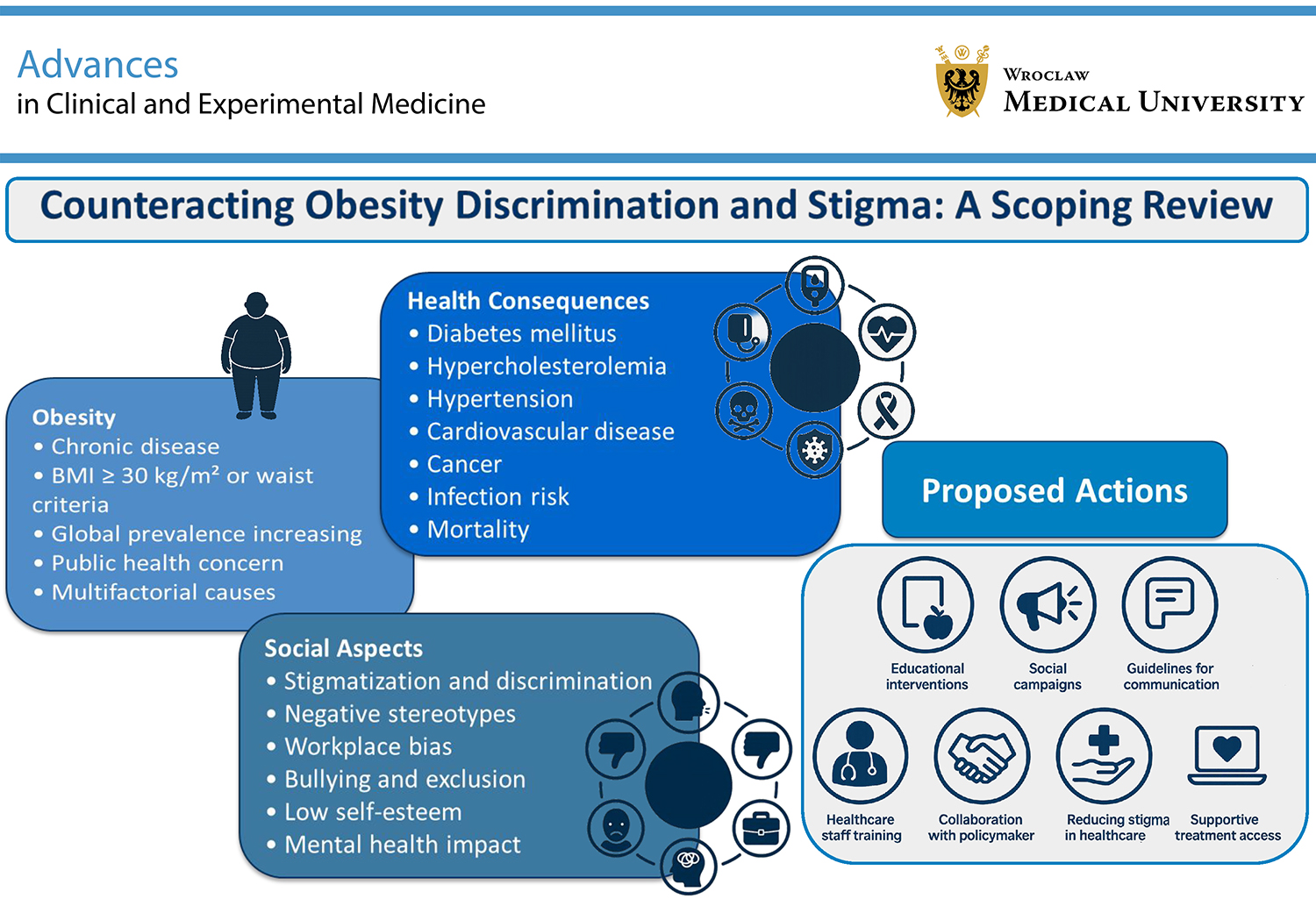
Obesity is a chronic disease that is widespread worldwide. Its diagnosis is based on specific criteria, including a body mass index (BMI) ≥30 kg/m2 or waist circumference measurement. The consequences of obesity include type 2 diabetes mellitus, hypercholesterolemia, hypertension, an increased risk of infectious complications, cancer, and even death. Patients living with obesity are subjected to constant negative evaluation by society through the process of stigmatization. Available data suggest that people with obesity experience stigma in the workplace, at school, on the Internet, and in healthcare settings. Stigmatization is largely driven by a lack of understanding and knowledge about obesity and its underlying causes. People living with obesity are often judged as lazy and accused of having excessive body weight as a consequence of an inappropriate lifestyle. In Poland, the high level of stigmatization of patients with obesity is accompanied by a low level of knowledge about the disease. However, the willingness to help patients, as declared by medical professionals in Poland, offers hope that appropriate education may improve access to effective treatment. Well-designed educational interventions, social campaigns, and the activities of medical societies in developing guidelines, recommendations, and communication manuals for healthcare professionals working with patients living with obesity should constitute essential elements in the fight against stigma. In addition, cooperation with decision-makers to prevent the exclusion of patients with obesity from the healthcare system is necessary.
Key words: obesity, obesity-related diseases, fat phobia, weight stigma, obesity-related stigma
Introduction
Obesity is a chronic disease that affects 13% of adults worldwide, and this percentage is increasing every year.1 In a 2024 Polish multicenter study of a population of adults with no prior cardiovascular disease (CVD), type 2 diabetes, or chronic kidney disease (CKD), obesity was diagnosed in 22.2% of subjects.2 The most common and established diagnostic criterion for obesity is body mass index (BMI). A BMI ≥ 30.0 kg/m2 confirms the diagnosis of obesity.3 In addition, the International Diabetes Federation (IDF) defines abdominal obesity as a waist circumference of ≥94 cm in men and ≥80 cm in women.4 Obesity is associated with an increased risk of CVD (one of the leading causes of death worldwide) and predisposes patients to numerous health complications.5 More than 200 obesity-related conditions have already been identified.6 Among them, the most prevalent are hypertension, type 2 diabetes, and CVD. Patients with obesity are also at risk of premature death due to untreated comorbidities.7, 8, 9, 10, 11 Obesity increases the risk of cancer, can cause infertility, affect the course of pregnancy, and increase the possibility of fetal complications.12, 13, 14 Obesity adversely affects the course of inflammatory bowel disease (IBD) and asthma control, and increases the risk of complications. 15, 16, 17, 18
In addition to the numerous health consequences that patients with obesity have to face, they are also affected by the experience of stigmatization.19 Stigmatization can be described as public condemnation and rejection in social interactions. Fat phobia refers to negative stereotypes and attitudes toward individuals with higher body weight, often portraying them as lazy, lacking willpower, or personally responsible for their condition.20 Various stigmatizing behaviors toward individuals with obesity can not only deteriorate their psychological wellbeing but also negatively influence the course and management of the disease itself.21 Seventy-four percent of respondents participating in a Polish survey on stigma in obesity considered people with obesity unattractive, and 32% of respondents considered obesity a reason for shame. Such perceptions lead to discrimination in the workplace and worsening interpersonal relationships, and ultimately causes progression of the disease.22 In addition, being subject to pervasive stigma affects the development of depressive and anxiety disorders, leads to social isolation, and causes inertia in obesity treatment.23
Moreover, the problem of stigma also affects interactions between healthcare professionals and their patients with obesity. It can reduce the quality of care, with patients often reporting that they are blamed or receive less attention. As a result, many avoid or delay medical visits and screenings due to fear of judgment, leading to lower trust in the healthcare system and poorer health outcomes.24 In a Polish survey, 57% of healthcare workers claimed that they were willing to help patients with obesity while scoring an average level of stigma on the Fat Phobia Scale and observing a significant level of discrimination against people with obesity in society.25 At the same time, 82.6% of Polish patients indicated that they had experienced inappropriate behaviors from medical personnel due to obesity, such as unpleasant comments and even refusal of treatment due to coexisting obesity.26 For years, the phenomenon of self-stigmatization, i.e., the negative self-perception of people with abnormal body weight, has also been highlighted. Moreover, it has been suggested that low self-esteem is not always directly related to the amount of excess weight, while it may be more pronounced in people affected by stigmatization from peers during childhood.27, 28
Objectives
The aim of our study was to review the existing literature on stigma in obesity. We explored various areas of obesity-related stigma, including its manifestations, types, severity, and management.
Materials and methods
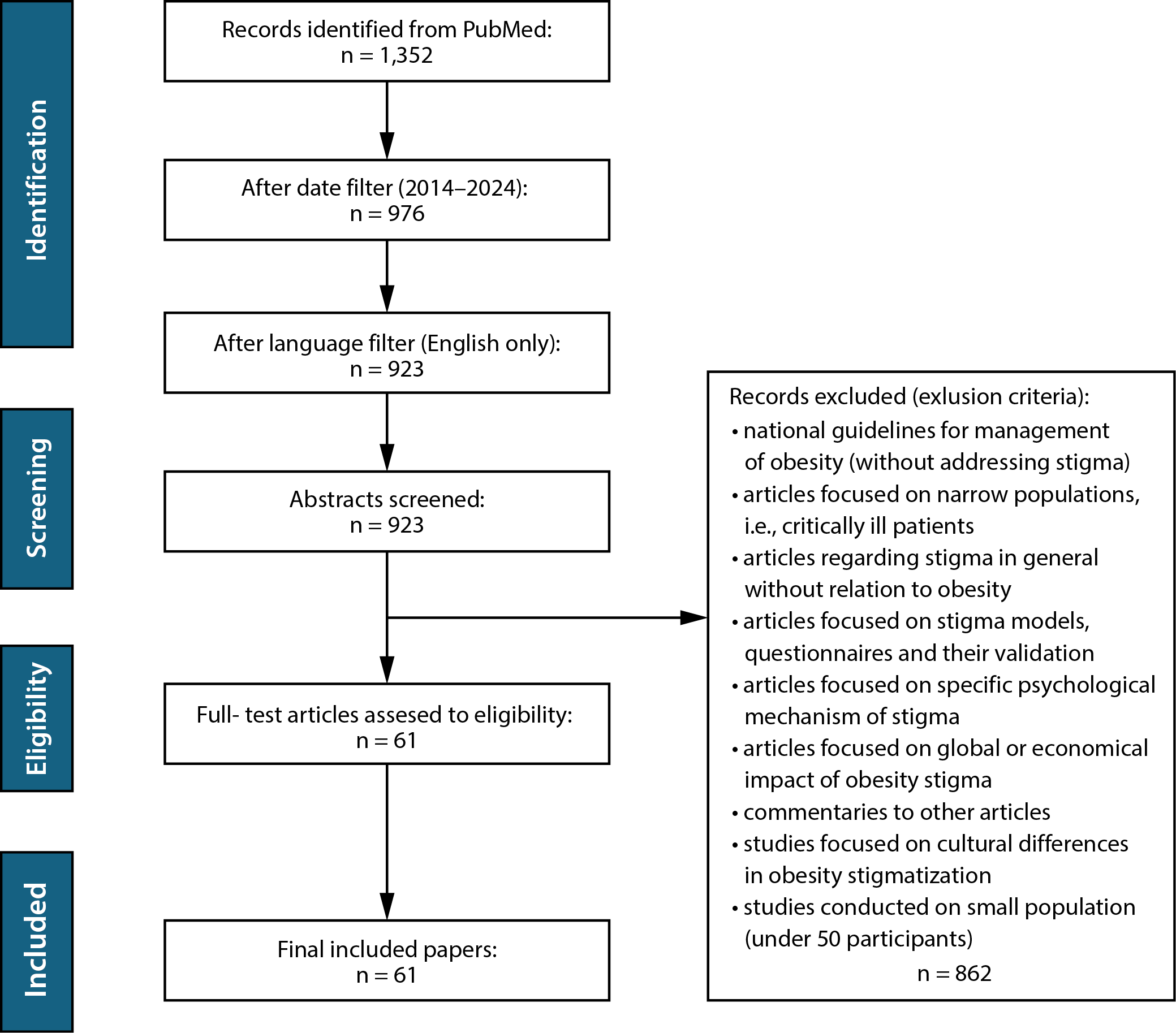
The literature review was conducted in accordance with the PRISMA (Preferred Reporting Items for Systematic reviews and Meta-Analyses) 2020 guidelines for systematic reviews.29 The PubMed database was screened using the keywords (initially narrowed to MeSH terms): “obesity stigma” OR “fat phobia” OR “weight stigma” (n = 1,352). In the next step, the following inclusion criteria were applied: 1) publication date between 2014 and 2024 (n = 976); 2) articles published in English (n = 923).
We selected 923 articles for further abstract review. Two researchers (K.Ś. and J.Z.L.) independently reviewed the abstracts of the selected articles using the following exclusion criteria: 1) national guidelines for the management of obesity (without addressing stigma); 2) articles focused on narrow populations, e.g., critically ill patients; 3) articles regarding stigma in general without relation to obesity; 4) articles focused on stigma models, questionnaires, and their validation; 5) articles focused on specific psychological mechanisms of stigma; 6) articles focused on the global or economic impact of obesity stigma; 7) commentaries on other articles; 8) studies focused on cultural differences in obesity stigmatization; and 9) studies conducted in small populations (fewer than 50 participants).
Results
The inclusion and exclusion criteria were agreed upon by the co-authors to focus on the prevalence, consequences, and potential solutions to obesity stigmatization, especially those applicable to European populations. After applying the exclusion criteria and cross-checking between the 2 researchers, we selected 61 articles for this review. In preparing this review, we analyzed the issue of weight-related stigma, focusing on its incidence, factors contributing to its occurrence, psychosociological implications, and consequences for physical and mental health. Figure 1 illustrates the methodological phases of this research, along with the inclusion and exclusion criteria used in the study synthesis.
Incidence of weight-related stigma
Discrimination is a widespread phenomenon worldwide, affecting millions of people; according to World Obesity Federation estimates, as many as 60% of people with obesity experience stigma because of their weight.30 In a Mexican study of weight discrimination in job recruitment, it was found that people whose photographs were attached to application documents and had been modified using graphic software to appear as if they were living with obesity were less likely to receive a response to a submitted résumé.31 On social media, teasing, harassment, and stigmatization of people with obesity are very common. What is more, an analysis conducted by Polish researchers showed that posts containing unfavorable opinions about obesity are more likely to be followed and receive more reactions than other topics addressed by the same users.32
It has been noted that the level of weight discrimination has been increasing in recent years.33 In a study conducted among children, as many as 27% reported that they had been victims of stigmatizing behavior at school due to excessive weight.34 Recent analyses have shown that discrimination against people with obesity is a global problem, with documented incidence in the workplace, schools, the home, and healthcare facilities.35 Moreover, studies indicate that elements of stigmatizing behavior, such as the selection of peers based on body weight, already occur in young children. Childhood stigma may be reinforced by the presence of stigmatizing attitudes among parents.36 In a review of occupational characteristics and obesity, it was shown that people with obesity experience greater difficulties in finding employment and are paid less than people with normal weight in equivalent positions.37 Widespread access to social media and the trend of portraying unrealistic and retouched images of the human body, thereby creating inappropriate standards, contribute to the perpetuation of negative attitudes toward people who do not meet the aesthetic expectations of the online world.38
Factors contributing
to weight-related stigma
Social perceptions of the causes of obesity often describe it as a consequence of insufficient willpower to control weight and a lack of responsibility for one’s health.39 Current knowledge contradicts these views. Despite exposure to the same environmental factors, susceptibility to weight gain differs, indicating a genetic contribution.40 Moreover, binge eating, which is considered a main characteristic of people with obesity, is also present among people of normal weight.41 The current advertising industry often presents the view that the “problem” of obesity can be solved through increased exercise and special diets. There is also a strong advertising message suggesting that a slim figure is the key to success in many areas of life.42 Unfortunately, public health campaigns also often include slogans suggesting that all one needs to do is choose a better diet and exercise more to achieve weight reduction.43 Among teenagers, social media plays a crucial role in creating ideals of beauty and drives the pursuit of “perfection” in the form of a slim figure for girls and a muscular physique for boys.44 The more time adolescents spend online and the more they use social media platforms, the more distorted their self-perception becomes, making them more susceptible to developing eating disorders.45
Psychosocial implications of stigmatization
It has been proven that children who experience stigma due to excessive weight are more likely to feel dissatisfied with their appearance, experience anxiety about social interactions, and have an increased risk of developing eating disorders in the future. These factors lead to worsening weight-control problems and, consequently, poorer health outcomes.46 It appears that children also experience shame due to their parents’ use of insulting terms in relation to their weight.47 An alarming issue is the stigma-induced feelings of guilt, fear, and frustration experienced by parents of a child with obesity.48 Parents are often blamed directly for their children’s lack of weight control. They are accused of being insufficiently concerned with their child’s health and diet, and are sometimes even suspected of neglect.49 Studies have shown that children with obesity are considered less intelligent because of their weight. Children living with obesity actually demonstrated reduced learning ability, but only when subjected to obesity-related stigma.50
Consequences of stigma
for physical health
In observational studies, an association has been demonstrated between experiencing teasing due to excessive weight during childhood and future weight gain (compared to children who did not experience stigma).51, 52 In addition, students who were subjected to weight-based stigma were more likely to use alcohol or other psychoactive substances.53 As many as 24% of parents of children with obesity who had experienced stigma in their interactions with healthcare professionals reported that they intended to avoid future consultations with physicians.54 Stigma leads to physical health disorders through increased weight gain as a consequence of avoiding exercise or engaging in emotional overeating.55, 56 It has also been shown that negative evaluation of individuals with obesity causes therapeutic inertia, including avoidance of referral for bariatric surgery, which, if delayed, can put the patient’s health at risk.57 Moreover, constant exposure to discrimination can lead to abnormalities in laboratory parameters, such as elevated cortisol and C-reactive protein (CRP) levels. These abnormalities may contribute to increased cardiovascular risk and premature death.58, 59, 60 Interestingly, similar associations between health deterioration and experiences of stigmatization have been demonstrated among individuals stigmatized on the basis of nationality, skin color, or origin.61, 62
Consequences of stigma for mental health
In large cohort studies focusing on the relationship between depression and body weight, obesity has been shown to significantly increase the risk of depressive disorders. Moreover, it has been confirmed that the diagnosis of obesity preceded the diagnosis of depressive disorders.63 There is also evidence that the relationship between the 2 diseases is bidirectional, although, according to some data, the evidence supporting this correlation is not equally distributed across all age groups.64 Interestingly, in the UK, participants in the Behavioral Weight Control Program were studied to assess the effect of participation in the program on the occurrence of depressive and anxiety symptoms, showing no differences between the initial results and those collected at 12 or 52 weeks after participation in the intervention.65 Studies have also found a 32% higher risk of depression in patients with obesity. However, a poorer mental health status was associated with experiencing weight-related stigma rather than BMI value.66 So-called motivational, yet still shaming, behaviors toward people with overweight were associated with weight gain and worsening health status.67 Moreover, patients subjected to obesity-related stigma focus more on their appearance and weight and present lower self-esteem, whereas those who do not experience this kind of stigma pay more attention to their health, which may positively affect obesity treatment outcomes.68 Interestingly, women with lipedema report greater social and occupational disability than women with obesity, despite having a lower BMI. This paradox suggests that, similar to obesity, stigma and misperceptions about body weight (including delayed diagnosis and misclassification of lipedema as obesity) may significantly impair quality of life. These findings underline the shared psychosocial burden of weight-related stigma across both conditions.69
Stigma due to obesity in medical facilities
The phenomenon of stigmatization in medical institutions can lead to multiple negative health outcomes. An interesting issue highlighted by the authors is how obesity is often assessed by emergency medical teams, who tend to rely on visual impression alone. While such an approach may seem practical in urgent situations, it is problematic because obesity is a medical condition with clearly defined diagnostic criteria and should not be reduced to outward appearance. Reliance on subjective visual assessment not only risks misclassification but may also reflect underlying weight-related stigma, which is particularly concerning in the context of providing equitable medical care.70
Stigmatization can cause a patient’s or their parents’ unwillingness to cooperate with a medical professional who exhibits a stigmatizing attitude. Therefore, it can affect the entire treatment process.71 The data show that despite access to knowledge about obesity-related disease among healthcare professionals, patients experience stigma from them, mainly in the form of inappropriate language.72 The problem is widespread around the world. A guide has been produced for healthcare professionals indicating how important it is to avoid stigmatizing behavior toward patients with obesity and to understand its consequences.73 People living with obesity who experience obesity-related stigma from healthcare professionals tend to avoid preventive examinations and healthcare appointments. What is more, insurance companies often exclude obesity from coverage, treating it as a behavioral or lifestyle choice rather than a chronic medical condition.74, 75 A clearly negative attitude toward patients receiving bariatric surgery as a form of obesity treatment has also been reported.76 Stigmatization by healthcare professionals most often manifests itself through the repetition of stereotypes. These stereotypes often portray patients with obesity as lazy and lacking willpower. This implies that such patients are perceived as having lower levels of adherence or compliance.77 Focusing on a patient’s weight as the main topic of medical recommendations, instead of striving to develop health-promoting attitudes, negatively affects cooperation between the physician and the patient.78
The phenomenon of stigmatization of patients living with obesity in Poland
Weight stigma in Poland affects the vast majority of patients with obesity, but is also experienced by people who are overweight.79 A study conducted via an online survey in 2023 showed a high level of stigma in Poland. Based on the responses of 1,705 participants, it was shown that Poles consider people with obesity to be weak, lazy, fond of food, and less attractive. Moreover, the high level of stigmatization is associated with a low level of knowledge about obesity, its causes, and treatment options.22 Among the respondents, 686 people represented occupations connected with the healthcare system, and they were also among those who identified people with obesity as less attractive. However, they also claimed that obesity is not a cause for shame and that patients suffering from the disease are not worse than people of normal weight. In addition, the majority of healthcare professionals expressed willingness to help patients with obesity. These findings, combined with increasing access to knowledge through new guidelines created by scientific societies, are likely to have a positive impact on the level of stigmatization of people with excessive body weight in Poland.24
Interventions to reduce the stigma of obesity
Increasing public awareness of the causes of obesity leads to a reduction in the stigmatization of people with obesity.80 Obesity-related scientific societies lead efforts to raise awareness among healthcare professionals that obesity is a disease. One tool facilitating communication with patients with obesity is the Communication Cards created by Canadian researchers.81, 82 It is important to note that placing too much emphasis on the weight-loss process may deepen the stigma associated with appearance. Instead, the promotion of a healthy lifestyle should target the entire population regardless of body weight.83 In China, a study examined engagement in physical education classes among students who experienced stigma related to body weight. It was shown that with appropriate support and understanding (e.g., allowing students to perform exercises at their own pace), they were able to overcome feelings of inferiority and inadequacy. Due to improved wellbeing and regained self-confidence, they were more willing to engage in physical activity, which increased the likelihood of improving their health status. This study highlighted the role of a single teacher who, through emotional support, contributed to a reduction in feelings of stigma among students with obesity.84
Various interventions have been implemented in many countries to reduce the negative impact of social media on body image and to promote self-esteem among young people. In Norway, a workshop on self-perception through the lens of internet imagery was conducted, and the results indicated a positive effect after 12 months.85 A similarly designed British study found that girls reported even fewer stigmatizing attitudes after the educational intervention, and the study follow-up continued for 36 months.86 Similar educational content was provided to adolescents in Australia; however, the results were not as promising, as no differences in body image perceptions were observed.87 There are also “Body Positive” movements on the Internet that seek to influence perceptions of people with visible disabilities, illnesses, or physical characteristics that differ from the media-imposed ideal of beauty. These campaigns improve self-esteem and promote acceptance of body diversity and human diversity.88
A conference convened by the American Society of Clinical Endocrinology (AACE) in 2022 emphasized that obesity is a chronic disease and highlighted its causes and complications. By shifting the goal of treatment from BMI reduction to addressing chronic disease and its complications, attention is drawn to the nature of the disease itself. This change in perception results in reduced stigma and improved treatment of patients by healthcare professionals. Moreover, the authors of the consensus pointed out the need to proactively verify whether a patient suffering from obesity is experiencing stigma and to implement appropriate psychotherapy to improve the response to treatment.89 Attention was also drawn to such basic matters as the availability of properly adapted equipment for the examination of patients with obesity.90 When this basic intervention is not implemented, it can increase the sense of being misunderstood and not treated equally compared with other patients among people with obesity. In 2024, the Polish Society for the Treatment of Obesity published guidelines that included information on preventing attitudes that stigmatize patients with obesity, emphasizing the importance of creating a space in physicians’ offices that is tailored to the patient and paying particular attention to the goal of treatment, namely improving health rather than simply reducing body weight.91 One outcome of the work of the Polish Society for the Treatment of Obesity is the Obesity Patient’s Bill of Rights, which highlights that patients living with obesity have the right to receive healthcare services appropriate to their needs, with respect for dignity and self-determination, in a safe environment, and that they should be protected from violence, humiliation, and inhumane treatment.92
Future directions
A key step in reducing weight stigma at a structural level is formally recognizing weight-based discrimination as a prohibited form of bias within anti-discrimination legislation. Including weight or body size as a protected characteristic in employment law would provide legal recourse to individuals facing discrimination in employment, promotion, or dismissal based solely on their weight. Public institutions and service providers, such as schools, hospitals, and public transport, should also be legally required to ensure that spaces and equipment are accessible and inclusive for people of all body sizes. Media regulation is another crucial area. Legislation or ethical guidelines could limit the portrayal of individuals with obesity in stereotypical or demeaning ways in advertising, television, and social media. Establishing media standards that promote body diversity and discourage weight-based ridicule would help reshape public attitudes. Additionally, healthcare institutions should be required to adopt anti-stigma protocols, including staff training in weight-neutral care and respectful communication. Education also plays a critical role. A promising approach involves integrating body image and weight stigma topics into national curricula, covering body diversity, health beyond appearance, the psychological effects of stigma, and the complex causes of obesity. In the future, it would be worthwhile to design an interventional study to assess the effectiveness of long-term educational programs in schools that combine knowledge of the causes of obesity with empathy training and critical thinking about stereotypes. Another direction could be to study the impact of social campaigns involving people with lived experience of obesity on changing social attitudes and reducing both declared and hidden stigma in various professional groups, such as healthcare workers.
Discussion
Obesity is increasingly recognized as a chronic disease with physiological rather than behavioral roots. Farr et al. demonstrated that liraglutide, a GLP-1 receptor agonist, influences appetite regulation through direct effects on brain regions involved in food reward and satiety. These neural changes are associated with reduced signals for food intake. Liraglutide characteristically reduces appetite not only through peripheral metabolic pathways but also by modulating central mechanisms involved in food intake, suggesting disturbances in these mechanisms in individuals with obesity.93
Due to the prevalence of discrimination, attempts are being made to combat it by creating regulations aimed at reducing or prohibiting stigma. Given the broad impact of stigmatization, affecting not only individuals but society as a whole, policymakers should prioritize the development and implementation of strategies aimed at reducing obesity-related stigma.94 However, U.S. legal documents make no reference to people with obesity being protected from discrimination. Although the UK Equality Act (amended in 2010) explicitly prohibits discrimination on the basis of age, disability, gender reassignment, marriage or civil partnership, pregnancy, maternity, race, ethnicity, religion or belief, sex, and sexual orientation, it does not address obesity.95, 96 Efforts should be made to reduce the incidence of stigmatization of people living with obesity, as its effects are visible in many aspects of life and have negative consequences. It is important to emphasize that obesity is a disease, not an unattractive appearance caused by the consumption of unhealthy, high-calorie foods or insufficient physical activity. Interventions aimed at educating people about the causes of obesity should also target children and adolescents, as the disease affects minors, and stigma in youth groups is widespread and may influence the entire adult life of the stigmatized person. It is important to note that the goal of obesity treatment is to improve health, not merely to achieve weight loss. This approach may reduce the likelihood of self-stigmatization. Healthcare professionals should be educated about both the diagnosis and treatment of obesity.
Education aimed at improving communication with patients across different medical specialties is an equally important component. Using appropriate language, without judging patients or attributing negative character traits to them as causes of their illness, would facilitate the establishment of a therapeutic relationship and the achievement of treatment goals for diseases commonly associated with obesity. Moreover, it is essential to inform patients, as well as the general public, that obesity, as a chronic disease, often requires pharmacological or surgical treatment. Taking medications or undergoing surgical procedures is as necessary in obesity as it is in most other chronic diseases and should not be perceived as a “shortcut.”
As part of communication training support for healthcare professionals in Poland, under the auspices of the Polish Society for the Treatment of Obesity, a guide titled “How to Supportively Talk About Obesity” has been published. The guide explicitly identifies phrases directed at people with obesity that are stigmatizing and should not be used, while also indicating appropriate language for discussing obesity.
Discussing this topic is highly valuable for people living with obesity, as it provides support, without which it is often difficult to initiate and maintain the therapeutic process. Such a process is typically multi-stage, requires significant commitment, and involves changes in various aspects of daily life.
The Association for the Study of Obesity on the Island of Ireland (ASOI) guideline adaptation highlights strategies to reduce weight bias in obesity care. Policymakers are encouraged to avoid stigmatizing language and prioritize health over weight-centered policies. Healthcare professionals should reflect on personal biases, use people-first language, ensure inclusive environments, and receive training on obesity as a chronic disease. People living with obesity are encouraged to address internalized stigma and seek non-judgmental, patient-centered care.97
Many countries are taking action to improve the situation of people living with obesity through stigma-reduction initiatives, including public education campaigns, online initiatives, conferences and training courses for healthcare professionals, and psychological support for individuals with obesity. In Poland, a social campaign was launched in 2024 under the slogan “Obesity is a disease. Do not judge, do not diet, just treat.” It is also reasonable for decision-makers involved in organizing healthcare systems to recognize the needs of people living with obesity and, through decisions about funding medical services, provide broader access to obesity treatment.
Limitations of the study
The literature review conducted by 2 independent reviewers is subject to certain methodological limitations. Due to the absence of a fully systematic approach and the limited number of reviewers involved in the selection and appraisal process, there is a potential risk of selection bias and the omission of relevant studies. Consequently, the results of this review should be interpreted with caution and cannot be considered a comprehensive representation of the existing body of literature within the examined field.
Conclusions
The reviewed studies show that the stigmatization of people living with obesity is widespread throughout the world, both in face-to-face interactions and on social media. The main cause of such widespread stigmatization is a misunderstanding of the nature of obesity and, consequently, an unjustified negative assessment of people living with obesity. Being subjected to stigma has consequences for both mental health and disease severity, leading to social exclusion. In addition, the prevalence of stigma in healthcare causes patients to avoid contact with medical professionals, which may hinder or prevent effective treatment. Nevertheless, thanks to the active efforts of scientific societies dedicated to obesity treatment, patient advocacy organizations, and educational programs implemented among young people, there is hope that stigma will become less common.
Use of AI and AI-assisted technologies
Not applicable.